Help Me Raise $20K to End AIDS in NY by 2020!

Since 2008, I’ve participated in BRAKING AIDS® Ride, an annual 3-day, 300-mile journey from Boston to NYC by bicycle. Over that time, I’ve ridden thousands of miles on my trusty blue bicycle, The Blue Streak, to elevate awareness about HIV/AIDS. (Over 13,000 miles and counting—no joke!)

image

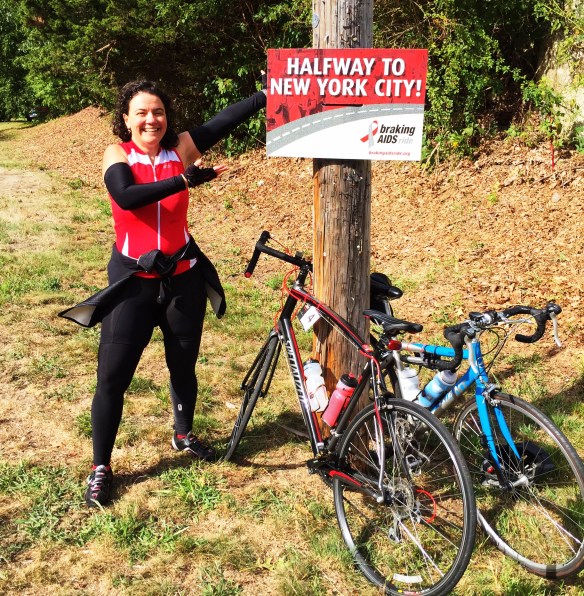
me, halfway through last year’s BRAKING AIDS Ride

We’re at a pivotal moment in the fight to end AIDS. Individual donations from hundreds of kind souls every year have been essential in helping me raise $70,000 and counting to support Housing Works’ many life-saving services for those living with HIV as well as its efforts toward ending the AIDS epidemic once and for all. Last year, I raised more than $14K. This year, I’m counting on the support of everyone I know to raise $20K for 2020—$20,000 to end AIDS as an epidemic in New York by 2020. (And yes, you read that correctly. I’m attempting to raise $20,000 in the next 7 weeks before the ride.)

I started myself off with a $500 donation—using the handy monthly donations option—and am aiming to kick in another $200–300 of my own by the ride. As of this writing I am at nearly $6,200, roughly 31% of my $20K goal.

If you already know the deal and want to just DONATE NOW, click here or scroll down to the “How You Can Help” section for details.

image

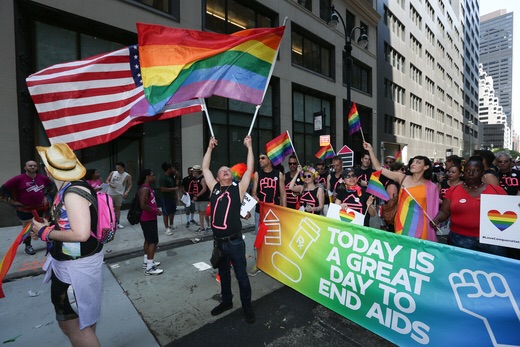
with Advocacy Dept. colleagues at this year’s NYC LGBT Pride march

The Hard Work is Working

It bears repeating: We can end AIDS as an epidemic, even without a cure or a vaccine. Along with many allies at the city, state, and national levels, Housing Works remains at the forefront of that movement. Once the epicenter of AIDS, New York is now at the forefront of progress. New data just released by the NY State AIDS Institute underscores that we are on track to end the epidemic: State HIV diagnoses are at a historic low, and the number of HIV+ New Yorkers who have reached “undetectable” status, the optimal health outcome for those with HIV, is at its highest ever.

What was once considered impossible, even crazy, or just overly optimistic sloganeering, is now a discernible future within reach. The audacity that it has taken to achieve the above milestones is taking hold and inspiring others to follow suit: San Francisco now has its own plan to end AIDS, and similar plans are in the works in other states and jurisdictions.

Why I’m Doing More

image

Someone said to me recently, “when you’re close to reaching a finish line, you don’t slow down or take your foot off the proverbial gas. You floor it.”

In the spirit of flooring it and daring to push harder, I am making my own move toward audacity by raising my fundraising bar this year—A LOT. In support of NY’s 2020 goal, in the hopes of what it may inspire others to reach for, and in support of all the Housing Works initiatives that will help us get there, I’m aiming to raise $20,000 for BRAKING AIDS® Ride 2016. In 2015, I raised over $14,000, so this year’s $20K goal is an ambitious stretch. But with your help and the help of other donors, it is more than possible.

The future of ending AIDS is up to us. We know how to do it with the existing prevention and treatment tools; we just need to invest in and expand upon the strategies that make those tools accessible to everyone who needs them.

image

Every day is a great day to end AIDS.

How You Can Help

CLICK HERE TO DONATE TODAY & DIG DEEP. Donations of all sizes are welcome, but a $150 contribution or more will go a long way toward getting me to my $20,000 target. A $150 donation to Housing Works feeds 75 homeless youths during evening drop-in hours at Housing Works’ East New York Health Center. (More details on what different donation amounts will support can be found here.)

PLEASE CLICK HERE TO MAKE A TAX-DEDUCTIBLE DONATION NOW.

Some ways to make giving easier, to make your donation go further & to help me reach or exceed my $20K goal sooner:

  • PLEASE CHECK WITH YOUR HR DEPT. & SEE IF YOUR COMPANY WILL MATCH YOUR DONATION! Then check the “YES” bullet in the Company Matching section of the online donation form. (It’s the click-box under the donation amounts that’s labeled “This gift is matching eligible.”) You may be able to double or even triple your contribution! In 2015, over $3K of the $14K+ I raised came from company matches, so I cannot underscore enough how much this helps.
  • Recurring Gift: On the donation page, select the bright pink “Repeat Monthly” option at the bottom of the list of donation amounts to set up a recurring donation of any size over your desired period of time. I prefer to donate this way because I can give more with a smaller hit to my wallet each month.
  • Opt to cover the online donation processing costs. Right under the bright pink bar with the “Repeat Monthly” option, there’s another click-box that gives you the option to absorb the online processing fee that otherwise comes out of your donation. It’s a 7% fee, which is pretty small amount per individual donation, but if every one of my donors chose to cover this fee, it would mean thousands more overall in unrestricted donations to Housing Works.
  • Please forward this information to EVERYONE. Spread the word to your family, friends & colleagues! Send the link to this blogpost or share my donation link with your own networks on Facebook, Twitter, Instagram & other social media.


image

Thank you in advance for your generosity, kindness, encouragement, and support! I can’t do this without you.

Mika, BRAKING AIDS Rider #32

Please join me & Housing Works in the fight against AIDS/HIV by donating to Braking AIDS Ride 2016 (Boston to Manhattan, Sept. 23-25)—Mika De Roo, Rider # 32. Donation site: http://tinyurl.com/Mika20KforAIDSFreeNY2020

On Possibility

I have been thinking a lot lately about possibility. How I go about determining what is possible for certain, what seems possible but hard, what is unlikely, and what is impossible.

It isn’t that I don’t ever get ambitious or dream big. It is that I also tend to be a realist. I am the person in the room who has vision but who’s also good at figuring out how to take an idea and create a process that turns the idea into a reality. I assess possible approaches, saying, “well, doing it that way won’t work” or “let’s try this instead.” Some of this may be temperament; some of it may be that I have spent a lot of my life around big-picture talkers. I am talking about people who need realists and makers—people who Do and Manage Concrete Stuff and turn imaginative talk into something more—to get anything done. Some of these big-picture folks have genuine vision with potential brilliance in them and some don’t; regardless, they tend to be people with authority and in some cases big ambitions about Making a Certain Outcome Happen. In my experience, however, many of these people set a high bar for others but offer up little by way of planning, knowledge, or proposed steps about how to get their desired result. They also don’t tend to care much about determining what will or won’t be entailed and which resources are essential and which are nice to have but not crucial. They rely on other people to do that—creative implementers, managers, analysts, builders—to translate abstraction into creative visions, interpret vague demands and desired results, arrange processes and people, outline a plan with concrete steps, manage the whole business, and in the end, make something happen. You can’t make anything happen with your head in the clouds all the time. It takes having at least one foot and better yet two feet on the ground at least some of the time. And at least in my career life, I am right a fair amount of the time about what does and doesn’t work, enough anyway that the realist, maker skills have gotten a lot of play in my workplaces and kept me employed.

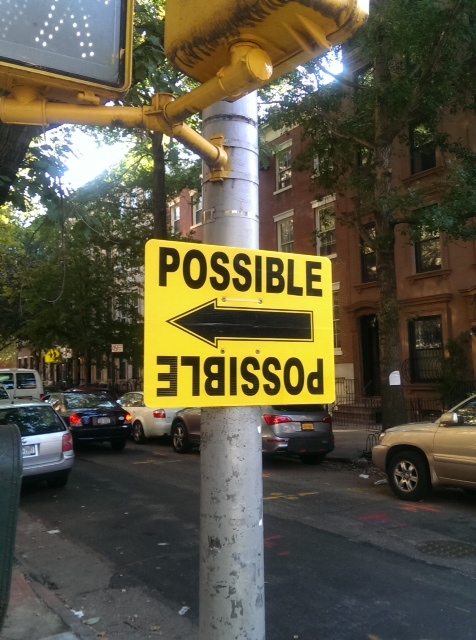
I encountered this mysterious street sign near a construction site on Henry Street in Brooklyn a few weeks ago while walking home. It was as though the universe was trying to tell me something. Turn left?

I encountered this mysterious street sign near a construction site on Henry Street in Brooklyn a few weeks ago while walking home. It was as though the universe was trying to tell me something. Turn left?

I have a mentor who has pointed out to me that our strengths and our weaknesses are often the same aspects of self. Whether they are operating as one or the other or both depends on how and when we are using them. The same person has also observed that I have a lot of experience and comfort with articulating to myself why something isn’t possible. I have spent a lot less time letting myself dream and imagine what I want, irrespective of whether it is possible or impossible. That tendency to gravitate toward hyper-realism and always be sussing out the odds has served me in good stead in some ways, but the problem with that frame of mind is that it’s prevented me from imagining in other parts of my life. How one can dream about what might seem impossible but is possible. That in turn has stopped me from imagining something that I desire but seems nuts—unrealistic or unlikely—and trying to do it anyway. It’s stopped me from trying and perhaps failing but maybe getting closer than I had thought. It has stopped me from seeing the value of a free imaginative space if I can’t guarantee a particular outcome. It has stopped me from trying and perhaps failing but in doing so learning something that might make the next attempt more effective. It has certainly stopped me from trying something unlikely and discovering I was wrong—that the effort was hard, maybe harder than even I thought it would be but that the goal was in fact possible. Not impossible as I had believed.

In short, the editor in me outshouts the writer in me. A lot of the time. I tend to talk myself out of a lot of ideas before I have even let myself dream them up much less gotten started on attempting them. Usually, it’s so unconscious and familiar a mental process—an internal argument, a whittling down of options, of paths to travel—that I am not even fully aware that I’ve had a hand, and a pretty significant one, in narrowing what’s possible for me and what I choose to pursue right from the beginning.

The fact that typing that last two paragraphs made me tear up a little underscores not only its veracity but also why it matters: Because it’s me holding myself back and getting in my own way. I am my own biggest obstacle. I don’t have any control over what gets in my way outside of me. But I do have agency over the role I play, the choices I make, the ideas I allow myself to contemplate and the paths I allow myself to carve out and walk.

One of the things I love about being part of BRAKING AIDS® Ride is it is a concrete, physical manifestation of challenging my own certainties about what is possible and what is impossible. It has also forced me to re-evaluate my own beliefs about what is going to prove to be hard or challenging in a given ride season. The first year I signed up for the ride, I didn’t know I could ride 100 miles at a stretch. I had no idea I would be able to slowly crank my ass up a hill that seemed like a mountain. I had never raised what ended up as almost $13,000 for anything. Other people may not have been surprised, but I didn’t know I could be relentless in asking family, friends, colleagues, and even acquaintances and strangers to donate money, even if it is for a worthy cause. I go back to BRAKING AIDS® Ride each year, yes, because I believe in and am passionate about the cause and because I love the spirit of the ride community, but also because the ride and the annual process of training and fundraising leading up to it force me to re-think what I believe my obstacles are every year and to keep showing up. Every year, I think to myself this is the year everyone who knows me will get fed up with hearing about HIV/AIDS and stop giving money. This is my sixth year doing this since 2008 and that fear—that little slice of reality, such as it is—has yet to materialize. Which is a way of saying I underestimate myself and perhaps more important, I underestimate the ongoing kindness, generosity, empathy, compassion, and interest of other people, all the individuals who have supported me with donations but also with love, encouragement, wisdom, humor, you name it. And perhaps I underestimate whatever small impact I have on them, and that their support has on me, too, because I worry about disappointment—expecting more of others and of myself and then being hurt when they or I fall short.

The ride is a space that has let me try to visualize and then do things I didn’t think were possible and, on my good days, to care a little bit less than I do in other parts of my life about failure and disappointment that things don’t turn out how I planned or imagined or dreamed. It’s forced me to redefine what is success and what is failure. It’s challenged me to see that the process of showing up and seeing what happens—and being open to the actuality, whatever it might be, often different than anything I could have imagined or planned or trained for—is more important than any outcome. I keep showing up and along the way, I hope that these life lessons sink in a little more and gets a little more integrated into my self and how I move in the world. My wish is that over time, these lessons also become something that I can live out not only on the ride but in the other parts of my life, too.

Training and fundraising for this event multiple times has also made me see again and again that I struggle with taking the many things I can’t see or hear on faith. I operate a lot of the time with a strong desire to see visible signs that who I am and what I do in the world make a difference, make something better for someone other than myself. Sometimes I think that longing is an insatiable part of me, and it’s difficult for me not to judge myself for that kind of ego, to yearn for that kind of constant reassurance and positive reinforcement so much it feels like a need—a prerequisite for attempting anything at all—rather than a want.

I’ve been doing this ride since 2008, so I can speak first-hand to the amazing collective energy in doing a community physical event. I am also a storyteller, so the power of the symbols and metaphors BRAKING AIDS® Ride offers when it comes to raising money and awareness for an important cause aren’t lost on me. The parallels between doing a daunting physical and financial challenge and living with a chronic disease like HIV are certainly inexact, but they still bring home messages about helping one another, about working and fighting together, about endurance, about pain, about compassion, and about love in a way that few direct-mail solicitations asking for donations can. Seeing HIV+ positive riders, who can choose to self-identify during the ride by riding with an orange flag on their bikes, climb hill after hill over 300 miles inspires me more than any fundraiser gala and gives me a different perspective on what it might be like to have to live with HIV each and every day. Three days on the ride makes HIV more palpable than statistics or a report in The New York Times. I have also been amazed by some of the people we encounter along the road every year, strangers who come out and stand on their lawns with signs to cheer us on.

Still, in spite of all that, I have wondered about whose minds we are really changing and whose hearts we are opening with the ride itself, pedaling our way across New England. At the very least, I know the ride has a transformative effect on everyone within our ride community. It connects a cause, which can easily become too much of an abstract idea, to our own friendships and families, to our goals and fears, and to our humanity. The stigma-free, passionate, and supportive environment of BRAKING AIDS® Ride is a profound enough experience that the ride is worth doing for those reasons alone. There’s also no question that the ride has an effect on the many clients who rely on the Housing Works life-saving services by raising funds that support those crucial programs. But even after years of being part of this experience, it’s sometimes hard to know—to see and recall in concrete ways—who we are reaching outside of the immediate ride and Housing Works community with our moving presence on the road.

Eric Epstein, President of Global Impact, which produces the event, calls BRAKING AIDS® Ride a civil-rights march on wheels. I don’t think he’s wrong, but I confess I have sometimes wondered whether we’re preaching to the already converted or whether our presence changes anyone. Who is hearing us as we cycle, rain or shine, through the suburbs of Boston, in small towns in Rhode Island, in Lyme, in New Haven, in Milford, in Yonkers, in the South Bronx, the signs on our bikes and messages on our bike jerseys publicly reminding folks that AIDS is still around and we still need to work together to fight it and someday, end it?

It isn’t lost on me that this same doubt nags at me in other parts of my life. Who is listening and does it matter? Is anyone out there? When I was a teacher, I wondered it about my students. Whenever I write something that other people read, I wonder if anyone’s reading, and if so, if my words and stories are resonating with anyone at all. Most of the time I haven’t the slightest clue.

But something happened during last year’s ride that gave me pause and made me think again about how we all have an impact on people all the time, in big and small ways. We just don’t always know it. In fact, most of the time, we won’t know it.

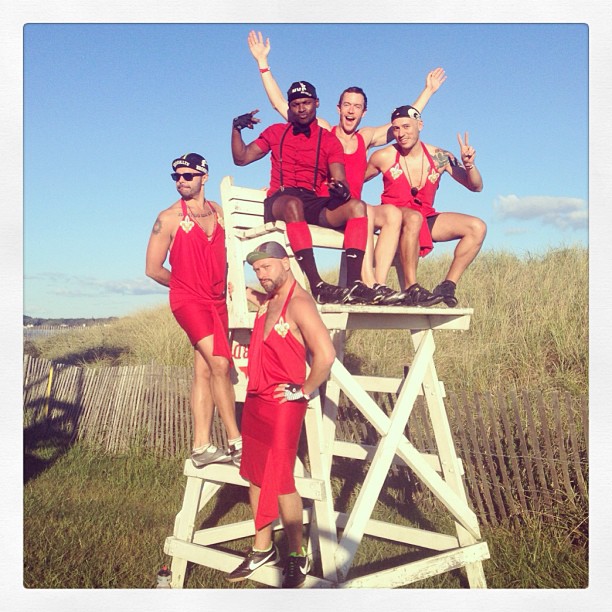
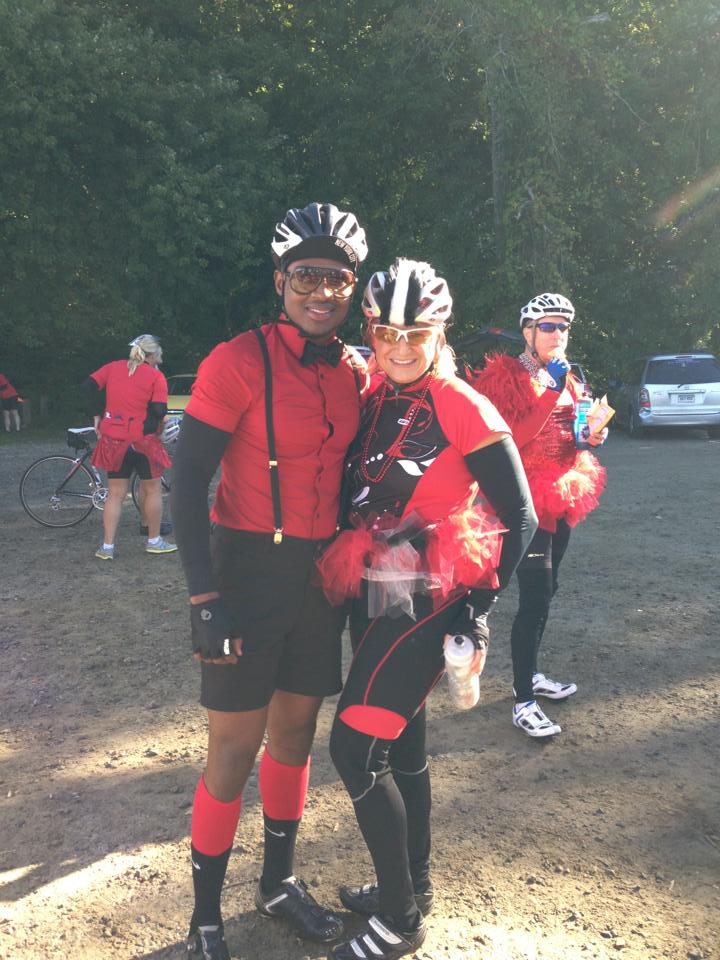
Every year on the ride, one day is declared Red Dress Day. Originally called Dress-in-Red Day, the concept came from one of the early AIDS rides many years ago; the idea is to have every rider wear something red so that from a distance, the riders cycling along the road would look like a red ribbon. The BRAKING AIDS® community being the creative, kooky, fun-loving bunch that it is, it’s also the day that many riders don an elaborate costume of one sort or another—everything from a red bike jersey to an Incredibles superhero outfit to a vinyl red bustier to a red tutu to red fishnet stockings to yes, a red cocktail dress.

red dress day beach group shot

Some riders posing during lunch at the beach, Red Dress Day, BRAKING AIDS® Ride, September 2013.

Riders Henry Bolden and Brigid Siegel, hotties dressed for success, Red Dress Day, Braking AIDS Ride, September 2013.

Riders Henry Bolden and Brigid Siegel, hotties dressed for success, Red Dress Day, BRAKING AIDS® Ride, September 2013.

The effect this visual parade has on the spectators who encounter us during the course of Red Dress Day varies. Some people are rude cat-callers, but many are simply curious, and some have even donated money on the spot when they find out why we’re riding. But overall, suffice it to say, Red Dress Day garners attention: It’s hard not to notice over one hundred people cruising through small New England towns, all of them wearing red, many of them in costumes or drag of one sort or another.

Tom Dwyer, riding through new England in style in his self-described "Tragic 'Ho" outfit, Red Dress Day, Braking AIDS Ride, September 2013.

Tom Dwyer, hitching a ride with one of our amazing moto-safety crew guys and cruising through new England in style in his self-described “Tragic ‘Ho” outfit, Red Dress Day, BRAKING AIDS® Ride, September 2013.

A small group of riders and crew gather during lunch at the beach to make a red ribbon, Red Dress Day, Braking AIDS Ride, September 2013.

A small group of riders and crew gathering during lunch at the beach to make a red ribbon, Red Dress Day, BRAKING AIDS® Ride, September 2013.

Another BRAKING AIDS® Ride tradition is that we all eat dinner together each night of the ride. During the course of the meal, various announcements are made by staff and crew, and for a portion of the evening the mic is opened up for anyone—rider or crew member—to share something from that day on the road. The moments people share run the gamut in tone and emotion: Some regale us with the silly or lewd comments they overheard people say. Others tell us what moved them or inspired them that day. On more than one occasion, brave souls have used that space to come out about their HIV status, sometimes for the first time to anyone.

Last year, crew member Linda Zipko got up at dinner one night and told us the following story: When she and a bunch of other BRAKING AIDS® Ride folks arrived at our host hotel en masse earlier that day, it turned out to be the same place we had stayed at the previous year. While she was in the lobby, one of the people who worked there walked up to her, perhaps recognizing her from the year before and said something like, “See? I heard you guys were coming back this year, so I wore a red shirt to work today.” Linda was warmed by the gesture and the two of them ended up hugging, two virtual strangers, right there in the hotel lobby. Normally a hug of that sort doesn’t last more than a second or two. But the hotel staff member held on, and it became clear to Linda something beyond a kind gesture of solidarity was happening. Tears began streaming down the face of the staff person, who clung to Linda, couldn’t quite release her, and who whispered in her ear that a close family member—father?—had been diagnosed with HIV during the previous year. I don’t recall what else the person said to Linda; I believe the words “thank you” were repeated a lot.

A number of other BRAKING AIDS® crew and riders were in the lobby at the time. They said later they could sense something big was transpiring as they witnessed the hug and the exchange; they just didn’t know what. Someone had the forethought to snap a photo of the moment as it took place, even without knowing what it was or what it meant.

Crew member Linda Zipko hugs a new friend, who wore a red shirt for Red Dress Day, BRAKING AIDS® Ride, September 2013.

Crew member Linda Zipko hugging a new friend, who wore a red shirt for Red Dress Day, BRAKING AIDS® Ride, September 2013.

I wasn’t in the hotel lobby that afternoon. I was probably somewhere out on the road, trying to get my bike, the Blue Streak, which was having mechanical shifter troubles, through another 25 miles. I didn’t witness any of what Linda experienced first-hand, and yet I have found myself returning to this story again and again during the past year.

The story is touching, to be sure, but it doesn’t give me solid, neat answers. I don’t know what happened to that stranger in the hotel lobby afterward. Perhaps the moment with Linda unfolded, it was powerful and moving, and then like a thundershower, it was over. I can’t say what that person felt or whether the moment resonated and had ripple effects later. I don’t know whether this person has told any of what was shared with Linda to anyone else, before or since. Likewise, I don’t know whether the person told anyone about wearing the red shirt, before or after doing it. I only know that showing up in a red shirt that day last September meant that this singular person had been waiting, for months, possibly all year, to have some kind of brief connection with us, with our ride community, a bunch of strangers, for a few minutes—to say in some small way “HIV affects my life, too,” and in doing so, perhaps to feel a little less alone in the world with whatever challenges might come with that.

It also means that our presence as a ride community had an impact on someone, long before that person chose to say something to one of us about it. I wondered later about that, about that choice to say something to Linda. The person could have worn the shirt as a private gesture and said nothing at all, and might even have had the same feeling of connection, just without any of us knowing it. What if the person hadn’t recognized someone from the ride or felt too vulnerable and didn’t have the nerve to say something in the moment? What if Linda had been tired that night and not up to sharing the story with the rest of us? We would still have had an impact, possibly a big one, on a stranger. The difference is we wouldn’t know it.

That refrain hums in my head sometimes now like a strange, minor-key mantra. We don’t always know, we don’t always know.

We affect one another. All the time. We can’t always know how or when.

We don’t always know, we don’t always know.

That might sound pessimistic to some, but it isn’t. I try not to dwell too long on whether I’ll recognize those moments when signs of connection and impact and meaning rise to the surface, if and when they happen, or if I’ll be lucky enough to be present for them—literally and emotionally—when they do make themselves visible. I think of how many teachers and mentors and surrogate-parent figures and friends I’ve had over the years, of how much they have shaped who I am today. I think of the BRAKING AIDS® Riders and crew who have moved me, some who became close friends, and others who I haven’t seen recently. I think of how sometimes it has been the smallest moment that struck a chord or changed something in me—a gesture, a smile, a word of reassurance, a moment of tough love when I needed it, a split second where the eyes met in recognition. Then I observe to myself how rarely I ever shared the fact of that impact with those people, often because I wasn’t aware of it myself until much later.

We all matter. We don’t always know.

We don’t always know.

I keep returning to that moment with Linda and the hotel staff person. Then I think to myself that for every moment like that, one we get to witness and hear and talk about—to see some tangible proof that who we are and what we do matters—a dozen other moments like that may be happening to other people, changes inside the shell of their selves that are happening because of us, because of something we said or did, that we aren’t aware of and may never know of. Something that changes their perspective or their trajectory forever, however slightly.

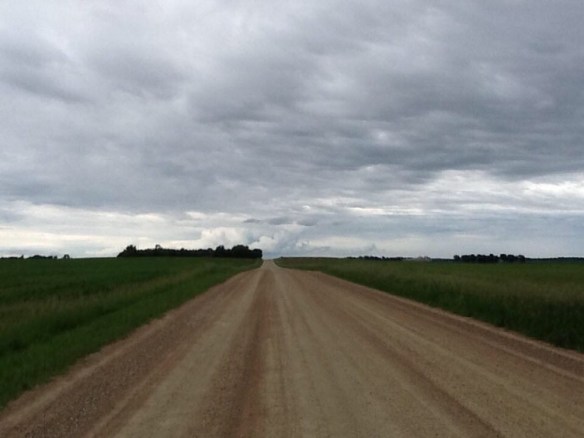
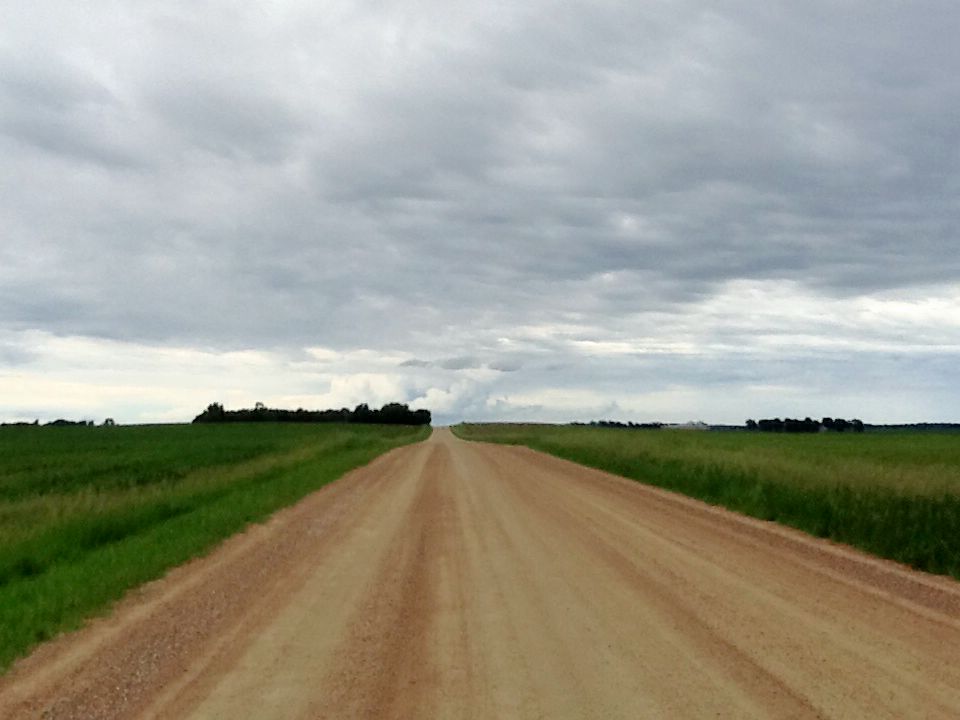
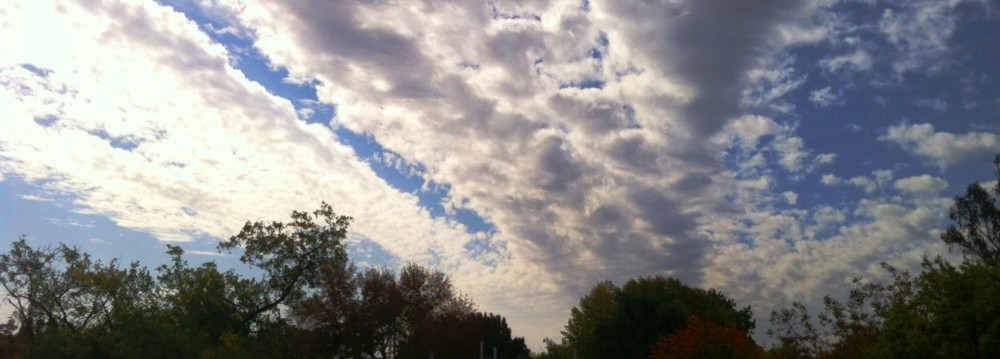
I imagine the vastness of that big cloud of all we don’t know, of all those invisible moments of meaning and connection and impact—both the ones I benefit from and the ones in which I affect others in some way. It’s a big cloud that stretches the expanse of the sky, like something Magritte would have painted. I take great comfort in dreaming about its possibility.

Northfield road with sky

CLICK HERE TO DONATE TO SUPPORT ME & HOUSING WORKS FOR BRAKING AIDS® RIDE 2014.

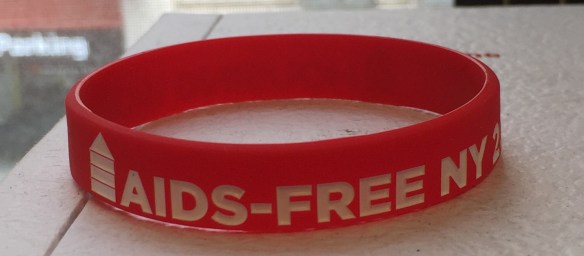
Next Stop: AIDS-FREE NY 2020

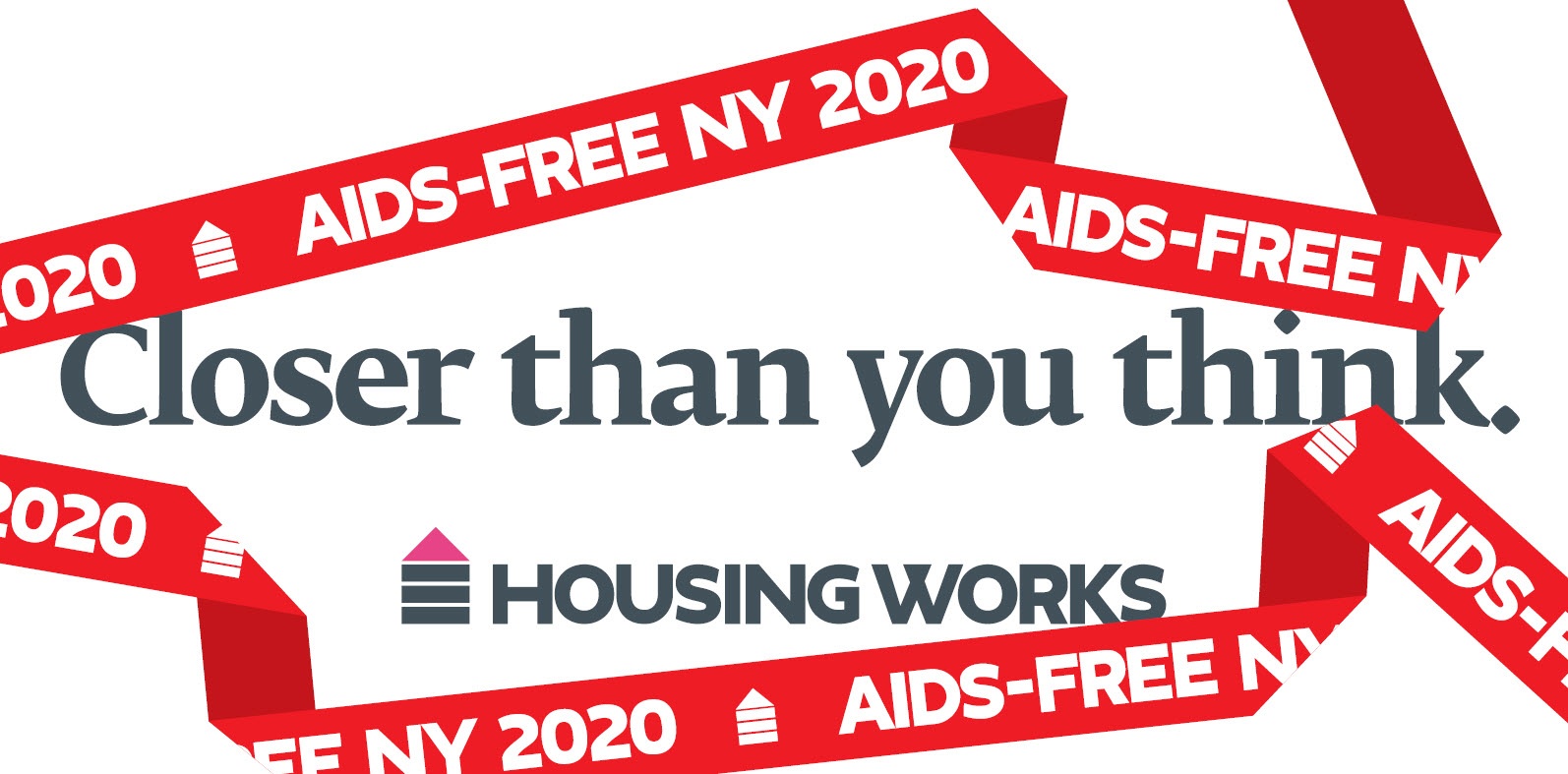
A graphic from the newly branded Housing Works AiDS-FREE NY 2020 campaign.

A graphic from the newly branded Housing Works AIDS-FREE NY 2020 campaign.

One of the advantages of working at Housing Works is that I get to see and hear firsthand the impact of our advocacy efforts. On June 29, coinciding with NYC Gay Pride, we achieved a big victory: Governor Andrew M. Cuomo made history with his public declaration of an advocacy-based plan to end the AIDS epidemic in New York by 2020, as reported in The New York Times and in a press release issued by the Governor’s office.

Later the same morning, Housing Works and other AIDS and LGBT advocates held a press conference to praise the Governor for stepping up. A video montage of the statements made appears below.

To anyone who has some knowledge of the history of the AIDS epidemic for over three decades, this may perhaps sound like a daunting goal. But Governor Cuomo’s announcement reflects his recognition that the landscapes of HIV and health care have changed. Although there are more New Yorkers living with HIV than in any other state in the nation, New York has the people, institutions, resources, and tools needed to end the epidemic that has plagued us for more than 30 years by stopping new HIV infections and halting AIDS-related deaths. Based on progress and an expansion of advancements that have already been made—from new prevention and testing technologies to highly effective antiretroviral treatments—we have the science to make the ambitious goal of decreasing new HIV infection to below epidemic levels by 2020 viable. A successfully treated HIV+ person can live a healthy life and is virtually unable to transmit HIV to others. New HIV prevention tools beyond condoms, such as PrEP (pre-exposure prophylaxis, in which an HIV-negative person takes a daily pill to reduce the risk for HIV infection) and PEP (post-exposure prophylaxis, or meds taken following possible HIV exposure to reduce the risk of transmission), combined with these advances, mean we can end AIDS as an epidemic even without a cure. For more on PrEP, see this recent New York Magazine cover story or this post on PrEP on the Housing Works advocacy blog.

New York State has already been laying the groundwork to reach that goal. Always a leader and center of innovation in the fight against AIDS, New York has experienced a decrease in new HIV diagnoses of nearly 40% in the last decade, with fewer new infections each year. By contrast, there has been no decline in the number of new HIV infections diagnosed nationally each year, which has remained static at roughly 50,000.

Reacting to the news of Cuomo’s commitment, Housing Works CEO Charles King put it best:

“This step by Governor Cuomo, setting a clear goal to end the AIDS crisis in New York State, is absolutely courageous. In doing so, the Governor is reshaping the way we think about the AIDS epidemic and is setting a new standard for leaders of other jurisdictions in the United States and, indeed, around the world.”

And now that the Governor has gone all in, the real work begins—creating a blueprint to end AIDS by 2020 and implementing it. Toward that end, Housing Works and its allies continue to urge the Governor to convene a high-level State Task Force to develop and design a strategic roadmap with concrete steps and benchmarks for the Cuomo Plan to End AIDS in New York State.

Housing Works staff, clients, volunteers, and allies, celebrating during NYC Gay Pride 2014.

Housing Works staff, clients, volunteers, and allies, celebrating during NYC Gay Pride 2014.

For its own part, the same day that the Governor made his historic public commitment, Housing Works officially launched the New York segment of the ongoing Housing Works AIDS-FREE advocacy campaign during Gay Pride, marching behind the above “AIDS-FREE NY 2020: Closer than you think.” banner during the parade. Housing Works’ AIDS-FREE Campaign is a collaborative, multi-year initiative committed to ending the AIDS epidemic—in New York State by 2020, in the United States by 2025, and worldwide by 2030. For an overview of the campaign, click here.

The tag line on the banner isn’t merely aspirational. We are closer to making the end of AIDS a reality than we’ve ever been.

How You Can Support the Work Housing Works Is Doing
to Reach an AIDS-FREE New York by 2020

By and large, Housing Works’ advocacy—the grassroots organizing and political lobbying work it does in Albany, D.C., and across the globe to promote an AIDS-FREE future—is not funded by grants or by corporate or government dollars.

That’s one reason events like Braking AIDS Ride are so important. The funds raised by the ride to support Housing Works are unrestricted and can be used when and how they are needed across the organization.

As of this writing, I’m a little more than halfway to my $5,000 fundraising goal.

Please donate today to help me reach the finish line!

Red Hook, Bklyn, Post-Hurricane

It is 5:40pm on Saturday, November 3. The worst of Hurricane Sandy has been over for five days. Jen and I just got home from walking to the southern part of Red Hook in Brooklyn, where the post-storm devastation is ongoing.

We didn’t stay home during the storm. We spent the days of the hurricane with generous friends who live inland in Brooklyn, two neighborhoods away. The rear side of our apartment building faces west and is on the eastern side of Columbia Street, a narrow, two-lane street that runs parallel to the waterfront. Prior to Hurricane Irene last August, a close look at the city’s hurricane zone street maps revealed that this location places us exactly on the border of an evacuation zone. Everything north, west, and south of the west side of Columbia Street is designated as part of the mandatory hurricane evacuation area—and with good reason. It is one block from the water. The only street located west of Columbia in our little part of the neighborhood is Van Brunt Street, which runs parallel to Columbia and overlooks the commercials piers and stevedores that dot the south Brooklyn waterfront.

In the Google map I created below, our section of the neighborhood—distinct from the more gentrified Carroll Gardens because it is located west of the Brooklyn Queens Expressway, and only accessible by four overpasses and one pedestrian footbridge going over the highway—is marked in green. The dark red line marks the division between where we live and the red mandatory evac zone to the west. Our little green plot is technically the northern section of Red Hook, but because it is just north of the Brooklyn side of the Brooklyn Battery Tunnel and Hamilton Avenue, a commercial thoroughfare that runs directly underneath the BQE (Route 278 on the map), it is also cut off from the main part of Red Hook. On the map, Hamilton is denoted by the diagonal lavender line, and the primary parts of Red Hook, all part of the mandatory evac zone, are to the left of that line, marked in red.

I like maps, but I also understand them well enough to know that many of their borders are artificial; just because a map says we live, just barely, on the advantageous side of an evacuation line doesn’t guarantee a hurricane will pay any attention to that particular distinction and stay on its side of the divide. In addition, the two drains in our building courtyard are partial to flooding during thunderstorms, and we live on the first floor. That being the case, both last year during Irene and this past week during Sandy, we decided to be on the safe side and move inland because we could. We spent from Sunday to Tuesday evening safe and dry, six flights up in downtown Brooklyn. By Monday morning, long before the landfall and the worst of the storm, we were seeing photos from the southern part of Red Hook that looked like the one below, which was taken by a local resident from the southern-most end of Van Brunt, where the Fairway supermarket is located. Our building is a 15-minute walk or a three- to five-minute bike ride from where this snapshot was taken, so we had no idea what to expect when we finally returned home.

Nick Cope

A now infamous image of flooding in southern Red Hook, Brooklyn, the morning of Oct. 29, 2012, from the southern-most end of Van Brunt Street near the Fairway supermarket. Photo by Nick Cope/Green Painting

In the past three days, I’ve said, emailed, and texted—more times than I can count—that we were very lucky. Our little stretch of Columbia Street was spared. Amazingly so. No flooding. No power outage. Our minor difficulties have all been inconveniences rather than genuine, serious problems. The lack of any viable transportation to Manhattan has kept us at home. The cable has gone out periodically, our internet signal was out entirely until this afternoon, and phone service all over the neighborhood has been and remains spotty at best. All week, I sent and received email sporadically via a weak and equally spotty 3G signal. Texting has proved to be the most reliable communication channel—even though it takes three to six failed attempts before any message goes through and incoming messages often don’t show up for hours if at all.

We spent most of Wednesday at home; I don’t think we realized how stressed out we were about what might be happening to our apartment until we got back. On Thursday morning, my work laptop and I headed to Maybelle’s, the one local coffee house with both wifi and electrical outlets for three-prong computer plugs. The small place was mobbed all day and freezing, but I spent most of the day there anyway, grateful that I had anywhere to go where I could attempt to get some work done. On Friday, we were out of luck again in trying to find an online hook-up; Jen trotted off to Maybelle’s in the morning only to return a while later saying their wifi signal was kaput.

These are all good problems to be having. When we were still at our friends’ house on Tuesday morning, our friend and neighbor Andi, whose building two blocks from ours had also held up fine, relayed to us via text that everything south of Hamilton Avenue and the Brooklyn Battery Tunnel, just a five-minute walk from us, was a mess. “…Red Hook looks pretty bad,” she reported. “Power out there, bad flooding, gas/oil/chemicals on the sidewalks.” The photos that have been posting online in the days since then have confirmed that description and documented worse.

We didn’t doubt that the damage was severe. When I went to the bodega next door on Wednesday afternoon to pick up milk, the owner, Mrs. Li, asked, in her halting English, after me and Jen. As we were talking about the storm, she told me about a customer from that morning who lived on Staten Island. The winds were so strong that the woman’s brand-new outdoor fence was carried away hours before the main part of the storm hit. The surge that followed was so encompassing, boats from the marina smashed into floating cars and drifted into her yard. The flood level in her house was soon so high, she and her family had to swim out to safety.

Hearing a harrowing story like that made it all the more strange to be walking around Carroll Gardens, where everything was mostly the usual. Aside from the huge, downed trees and the shelves at local stores that are low on stock if not entirely out of certain key items—batteries, flashlights, bottled water, candles—the signs of damage and storm impact are minimal. Even on our grittier side of the highway, although the streets are quieter than usual and many of the local businesses remain closed, you wouldn’t know from appearances how truly lucky we are. The only visual signs that something is amiss are increased bicycle traffic and long lines at the grocery stores, bakeries, and restaurants that are open. The view from our bedroom window facing the street doesn’t show how close we are to staggering losses, places where people are still living under terrible, near-unimaginable conditions that show no signs of dramatically improving any time soon.

Like a lot of locals, we thought it was important, essential really, to show our gratitude for how unscathed we are by trying to offer some help to our neighbors. As Jen put it to me last night, “I was scared for us. For our home. For what could have happened to everything we own. I don’t think I could show my face in the neighborhood if we didn’t do something to try to help the people down the street.” Jen has been following the Twitter feed of the Red Hook Initiative (RHI), a local community center that offers a range of health, education, employment, and neighborhood development program. In the wake of the storm, RHI is redirecting all its efforts and resources toward hurricane recovery work, becoming a de facto focal point for relief efforts and support, so that’s where we headed. The Twitter updates have offered up useful  information about the kind of volunteer work that is available, about the kinds of supplies and help that are most needed, all in real time.

Our first stop was the Met Food on Henry Street in Carroll Gardens. On our way there, we passed by Maybelle’s again. Crystal, a student who we know because she’s worked part-time at various cafes in the neighborhood, was sitting on the bench out front having a cigarette, so we stopped to chat and ask her how she was. “Your expression looked so serious,” remarked Jen, “I almost didn’t recognize you.” Crystal works in and around Carroll Gardens, and her mom lives there, but Crystal herself lives with her aunt and uncle on Staten Island. She’s spent the past few days shuttling between her mom’s and trying to repair the severe damage back in her own neighborhood, where many people have lost their homes altogether. Those who haven’t are still waist deep in flood water, with no running water or heat, and the only people with electricity are those with generators. Crystal described trying to drive through there at night to pick up salvageable clothes and supplies. “It’s pitch black, no light at all except from the headlights of my car. It looks like the zombie apocalypse.” She told us she’s been pretty freaked out, and today was the first day she could even talk about it without choking up. But she also noted that nearly everyone has been resilient and helpful. “We wouldn’t have any power at all at my house if our neighbors didn’t have a generator that they loaned to us. I bought a bunch of blow-up air mattresses, and I’m telling friends they can crash at my house for as long as they need to. We’re all doing what we can and what we gotta do. Last night,” she said, pausing to grin in a mixture of what looked like self-consciousness, shyness, and pride, “we made twenty pounds of pasta and then spent all night serving dinner to anyone who needed to eat.”

After hearing that, suddenly our trip that afternoon became more real, more urgent, more sober. Jen had a list of supplies that were atop the RHI want list for the afternoon, and first at Met Food on Henry Street and then at Winn Discount on Court Street, we filled our granny cart with as much as we could find. It sounded like a lot of people were already bringing in bottled water and food that won’t spoil easily and doesn’t require cooking, so we focused on the other miscellaneous things one wouldn’t necessarily think about under normal circumstances: dry dog and cat food, maxi pads, diapers, mops, replacement mop heads, rubber gloves, sponges, bleach and other cleaning supplies, industrial-strength garbage bags, buckets, batteries, flashlights, candles, matches.

RHI is located on the corner of Hicks and 9th Streets in the heart of Red Hook. It’s mere blocks away from the NYCHA Red Hook Houses, the biggest public housing project in Brooklyn, with between 5,000 and 6,000 residents, and also among the poorest and most dangerous and crime-ridden. Because Met Food and Winn Discount, both located in Carroll Gardens east and north of our apartment, were the best places to stop and get cleaning supplies, we took a more indirect route to get to RHI than we might have, had we gone straight from home. After leaving Winn Discount, we walked south on Court Street, Jen pushing the heavy shopping cart, and then we took a right at 9th Street, crossed the treacherous, heavily trafficked Hamilton Avenue, and continued heading back west down 9th until we reached Hicks Street. We passed by the Red Hook shelter on the way, and the lines of people waiting outside to see if they could get a place to stay for the night were four and five people deep and extended all the way down the block in both directions.

We hadn’t been to RHI before, but we didn’t have to look at the street signs to find it. The crowds of people, the flash of emergency lights from police cars, and the cluster of double- and triple-parked vehicles told us. Volunteers were unloading cars and vans full of aluminum trays of food, pallets of water and paper towels, blankets, and clothing. Inside, through the windows, I could see an elaborate assembly line set up for feeding people, and the line of hungry locals waiting to get a meal snaked out the door. Supplies were in such high demand, most weren’t even making it into the facility. They were being organized by category by the wall outside, so people could drop donations off quickly and others could easily locate and pick up what they needed. Everyone was carrying something, bags laden with food, shopping carts, backpacks, and they were all moving quickly, trying to make it to safety, wherever that might be, before the sun went down and the neighborhood became pitch-black again.

It was a sobering sight. A far cry from Maybelle’s and Carroll Gardens, where some of the local kids had been able to go trick-or-treating on Halloween. Once our cart was empty, Jen and I kept walking west on 9th Street, where two blocks later, another clog of people and city buses being used to transport resources was clustered in front of a Catholic church that was also offering recovery assistance. We didn’t say anything to one another as we walked along. There wasn’t anything to say. The air was clammy and cold. The sky looked strange, sunny and piercingly blue in some stretches, and in others, swollen and claustrophobic, heavy with menacing, low-hanging clouds shaped like giant tunnels. We took a quick right onto Columbia Street, and a left at Verona Street, which runs along the northern edge of Coffey Park. Earlier in the day, people had been distributing food and water there, but now that nightfall was only a few hours away, the park was empty, littered with fluttering, yellow police tape and massive downed trees. We stayed on Verona until we hit Van Brunt, which is the main drag and which offers the quickest access back north, across Hamilton Avenue and to our side of the neighborhood. It’s also the primary part of the regular route we take on weekends when we walk Sadie down to Louis Valentino Pier, a park beautiful park overlooking the harbor, with the Statue of Liberty in the distance.

I’m not sure what we expected as we walked up Van Brunt. Because we had accomplished our small mission, because five full days had passed since the worst of the hurricane had subsided, because that particular spot is only four blocks south of Hamilton Avenue, some six or seven from my house, some part of me must have thought, hoped really, that what we were to encounter there would be an improvement, well on its way to being back to normal. I had heard about and anticipated the waterlogged debris and garbage sagging in clumps on street corners and on curbs, pools of gas and oil on the sidewalks. I didn’t expect the steady stream of runoff water tricking along the street gutters, not from street flooding, but rather from all the water still being pumped or carried out of the surrounding houses and properties. I didn’t expect to find our friend Danielle, surveying her demolished front yard, sorting through her waterlogged, mostly ruined belongings, fielding calls from her kids, who have been spending their nights at friends’ houses.

We don’t hang out socially with Danielle and her husband, but we have known them and been their clients and neighbors for many years. They own the local dog and cat daycare place, just a block from our house; they do dog-walks, too, and they have cared for our dog Sadie for over a decade. Their business space, located on our side of the highway, was, like our building, spared: no flooding, all the animals were safe, and they were open for business again by Wednesday. Because Jen and I didn’t know whether we would or wouldn’t be able to go into work each day this week, we’d exchanged emails with Danielle each day, first with her letting us know when everything was fine and up and running at her end and then confirming whether we needed to have Sadie walked. Those exchanges were so business-focused, and so stoic, we had no idea until we walked by this afternoon that Danielle’s house, located just five minutes away from our house, had been pummeled by the storm.

That Danielle and her family still have no power isn’t surprising. No one on that side of the highway does right now. But the only source of heat is a makeshift wood fire she and her husband built on a barbecue grill. When we walked by, the grill was positioned at the foot of their front steps, and an elderly person we didn’t recognize, presumably a neighbor, was sitting on the stoop in front of the grill to keep warm. Most startling of all was the noise, the buzzing and rattling of an enormous electric pump, with one hose leading into the basement to siphon the water out and another pipe extending out the front yard, which was still belching flood water out of the house and into the street. Danielle’s house is two stories, plus a basement. The hurricane water surge filled her entire basement, floor to ceiling, and the first floor where they live was filled with nearly two feet of water. A fog of confusion drifted over Danielle’s face as she tried to describe the peculiar flood path of ordinary household items. The heavy, plastic container full of dog kibble that floated and drifted into another room. Her Christmas ornaments that ended up on the lawn, where she later caught a stranger looting through her soggy stuff, rooting through holiday decorations to steal the ones she wanted.

We tried to offer her help if she needs it in the coming weeks. Clean-up help, baby-sitting, somewhere for her kids to crash, a place to do laundry, an hour or two away from the mess to have a drink, take a nap, soak in a warm bath. For the moment, all we did was take in her pet love bird. The bird had been moved from Danielle’s house to the business space for safety reasons, but Danielle noted that the bird was probably unhappy there, from lack of attention and an overdose of barking and whining from the menagerie of other animals. So we picked up Izzy on our way home, and she’s chirping away in our office as I type this.

Aside from the Google map I annotated to give readers unfamiliar with the area a sense of its geography and scale, and the already widely posted photo of Red Hook flooding that went viral on Monday morning, I intentionally decided not to post any other images of the wreckage or the poignant, unsettling relief efforts. A ton of grim photos online mirror elements of the narrative I’ve tried to relay here—and these startling images have their place in helping to show how dire things are in certain parts of the city and how  much help is needed and where—but I am not a neutral journalist, conveying news objectively. I decided not to re-post those pictures for the same reason I didn’t take any photographs when I was walking through the neighborhood myself. It’s the same reason that it gave me the willies to see how visitors flocked to stare at and take their pictures in front of the 9/11 site while it was still a smoldering crater of dust and debris in the ground. Because the act of doing so, as someone who isn’t either a resident or a journalist, would have felt distancing, dehumanizing, and voyeuristic, like I’m some sort of disaster tourist coming to visit other people’s misfortune and suffering and observe it from afar like it’s a safari or an exotic Survivor-esque museum. It’s not a diorama. It’s not a made-for-TV disaster film. It’s not yet history. It’s real, daily life for flesh-and-blood people, many of whom don’t know when or where they’ll get their next warm, home-cooked meal or if they’ll have a dry, safe, heated place to sleep tomorrow night.

Likewise, I am not writing about any of this because of a lurid fascination with catastrophe sites. Or because it makes a good dramatic story. Or because I think it’s newsworthy that we spent a few hours helping out in our own neighborhood. In fact, none of this is about me or Jen or our family, except that it’s no more than mere chance that we’re fine, and Danielle and her family and lots of other neighbors are not.

This is why I’m writing: The hurricane will soon become old news in the media, especially once all the subways are up and running again, and most people, myself included, are able to get to work on Monday. It won’t be old news for Danielle or my other neighbors on that side of the neighbor hood. Those damaged sections of Red Hook may not have power again until at least November 11. No running water, no electricity, no heat, virtually no transportation, no fuel, and uneven, limited access to food, potable water, and supplies. The lack of power also means that all recovery work needs to take place during daylight hours, even as the days are getting shorter. I’m certain other similarly devastated areas are facing comparable challenges.

I am writing about all this because based only on the little I’ve seen, and I have seen very little of the worst pieces of what’s happening out there, I can say firsthand that the storm damage is deep, wide-ranging, and long-term. Help is needed now, a lot of it, and it’s going to continue to be need for weeks and months to come. And it’s pretty easy for most of us to help because there are a ton of places where people can do whatever is within their means, as well as a range of ways to contribute.

Please: If you are able, go find a way to help that works for you and do something. If you have time to volunteer, go spend a few hours helping with clean-up, or shelter efforts, or distributing food, water, and supplies at one of the relief centers. If you don’t have time, but have material goods you can either donate, or purchase and then donate, go online and look up what’s needed where, and give some clothing, food, water, cleaning supplies, toiletries, etc. If you’re unable to give time or donate supplies, and/or you’re too geographically removed from any of the disaster sites to be able to help physically, donating money is an equally helpful option. Every little bit counts. The point is that we all should do something if we can—because we can. At the end of this post, I’ve included some links to a handful of place where you can start exploring help options, but a simple Google search and scanning of news articles about the storm aftermath will yield more as well.

In addition, please expand the support network by re-posting information and links to available volunteer and donation options anywhere and everywhere: Facebook, Twitter, email.

Ways You Can Help

Because the national efforts via government agencies and large relief organizations like the Red Cross are already widely publicized in the press, and because they are farther removed from the actual sites needing help and it may take them longer to get their resources to where they need to be, the initiatives listed below focus more on localized, on-the-ground efforts:

Red Hook Initiative: http://www.rhicenter.org/.

Red Hook NYC Recovers: https://redhook.recovers.org/, an online resource coordinated by the folks at OWS and community organizations on the ground that was built to enable people to both offer and request assistance. Sites for donations and volunteering have been set up in multiple locations, some in Red Hook, but also in other areas like Sunset Park, the Rockaways, and Staten Island.

CityMeals-on-wheels: https://www.citymeals.org/, an organization whose mission is devoted to getting food and human company to home-bound elderly New Yorkers. This is one of the most vulnerable and least visible populations affected by the hurricane, especially elderly people living in high-rises that have lost functional elevators and power. Here is a great overview on the emergency services CityMeals is providing: a release on the CityMeals website about their post-hurricane response.

For tomorrow, Sunday, November 4. NYC Marathon of Relief Efforts (NYC MORE 2012): www.nycmore2012.org, a group of runners and volunteers who have turned the cancellation of the NYC Marathon into an all-day volunteer opportunity, with options to volunteer in the Rockaways, Staten Island, and Coney Island. Also includes ways to donate goods and funds.

Occupy Sandy Relief: http://interoccupy.net/occupysandy/, another online resource built by a coalition of people Occupy Wall Street, 350.org, recovers.org and interoccupy.net. Its offering are similar to Red Hook NYC Recovers, but its information is on facilities serving other affected areas, not just Red Hook. Includes volunteer and drop-off locations in Chinatown, the Lower East Side, Rockaway, Coney Island; drop-off-only locations in numerous locations in Manhattan, Queens, and Brooklyn; and a portal to help in New Jersey.
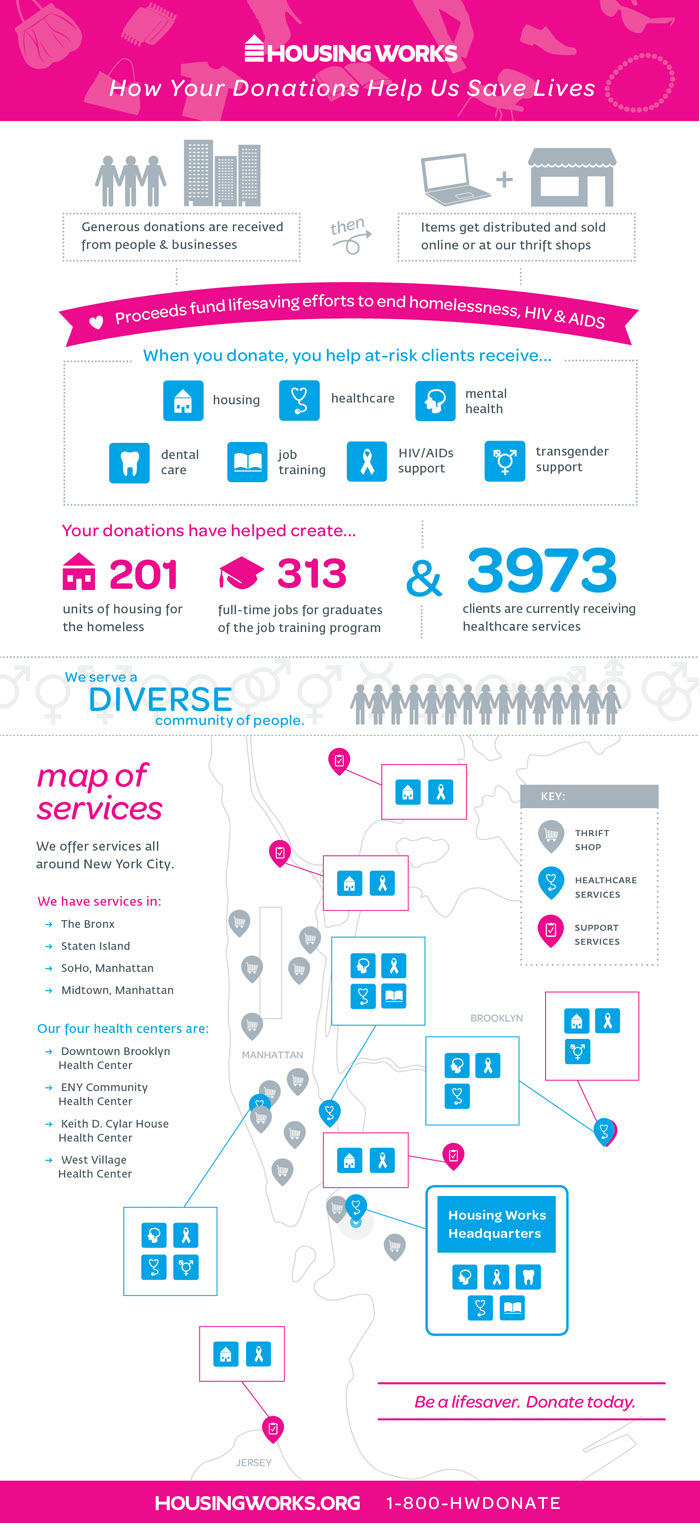
Braking the Cycle Postscript 2: Lifecycle of a Donation to Housing Works

Housing Works recently posted this infographic on their site. It’s a cool visual of how the generous donations made, via Braking the Cycle or in general, support the work and services being done there.