Why I Keep Coming Back to BRAKING AIDS Ride Every Year

This will be my eighth year participating in BRAKING AIDS Ride. One need look no further than this video of last year’s ride and of the amazing ride family I get to share this journey with each year to understand why I keep returning:

This year, I’m aiming to raise $20,000–much more than I’ve ever raised before–in support of Housing Works and New York’s ambitious plan end AIDS as an epidemic by the year 2020.

TO SUPPORT ME FOR BRAKING AIDS® Ride 2016, CLICK HERE. My goal is to raise $20,000 between now and September to benefit Housing Works life-saving HIV/AIDS services and to support the goal of reaching an AIDS-Free NY 2020.

IMG_0593

On Possibility

I have been thinking a lot lately about possibility. How I go about determining what is possible for certain, what seems possible but hard, what is unlikely, and what is impossible.

It isn’t that I don’t ever get ambitious or dream big. It is that I also tend to be a realist. I am the person in the room who has vision but who’s also good at figuring out how to take an idea and create a process that turns the idea into a reality. I assess possible approaches, saying, “well, doing it that way won’t work” or “let’s try this instead.” Some of this may be temperament; some of it may be that I have spent a lot of my life around big-picture talkers. I am talking about people who need realists and makers—people who Do and Manage Concrete Stuff and turn imaginative talk into something more—to get anything done. Some of these big-picture folks have genuine vision with potential brilliance in them and some don’t; regardless, they tend to be people with authority and in some cases big ambitions about Making a Certain Outcome Happen. In my experience, however, many of these people set a high bar for others but offer up little by way of planning, knowledge, or proposed steps about how to get their desired result. They also don’t tend to care much about determining what will or won’t be entailed and which resources are essential and which are nice to have but not crucial. They rely on other people to do that—creative implementers, managers, analysts, builders—to translate abstraction into creative visions, interpret vague demands and desired results, arrange processes and people, outline a plan with concrete steps, manage the whole business, and in the end, make something happen. You can’t make anything happen with your head in the clouds all the time. It takes having at least one foot and better yet two feet on the ground at least some of the time. And at least in my career life, I am right a fair amount of the time about what does and doesn’t work, enough anyway that the realist, maker skills have gotten a lot of play in my workplaces and kept me employed.

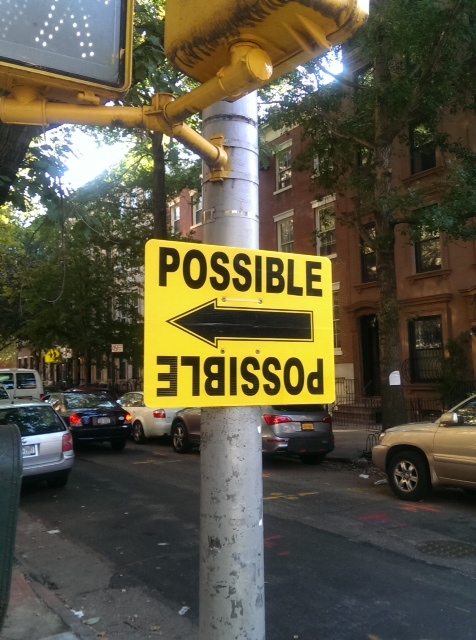
I encountered this mysterious street sign near a construction site on Henry Street in Brooklyn a few weeks ago while walking home. It was as though the universe was trying to tell me something. Turn left?

I encountered this mysterious street sign near a construction site on Henry Street in Brooklyn a few weeks ago while walking home. It was as though the universe was trying to tell me something. Turn left?

I have a mentor who has pointed out to me that our strengths and our weaknesses are often the same aspects of self. Whether they are operating as one or the other or both depends on how and when we are using them. The same person has also observed that I have a lot of experience and comfort with articulating to myself why something isn’t possible. I have spent a lot less time letting myself dream and imagine what I want, irrespective of whether it is possible or impossible. That tendency to gravitate toward hyper-realism and always be sussing out the odds has served me in good stead in some ways, but the problem with that frame of mind is that it’s prevented me from imagining in other parts of my life. How one can dream about what might seem impossible but is possible. That in turn has stopped me from imagining something that I desire but seems nuts—unrealistic or unlikely—and trying to do it anyway. It’s stopped me from trying and perhaps failing but maybe getting closer than I had thought. It has stopped me from seeing the value of a free imaginative space if I can’t guarantee a particular outcome. It has stopped me from trying and perhaps failing but in doing so learning something that might make the next attempt more effective. It has certainly stopped me from trying something unlikely and discovering I was wrong—that the effort was hard, maybe harder than even I thought it would be but that the goal was in fact possible. Not impossible as I had believed.

In short, the editor in me outshouts the writer in me. A lot of the time. I tend to talk myself out of a lot of ideas before I have even let myself dream them up much less gotten started on attempting them. Usually, it’s so unconscious and familiar a mental process—an internal argument, a whittling down of options, of paths to travel—that I am not even fully aware that I’ve had a hand, and a pretty significant one, in narrowing what’s possible for me and what I choose to pursue right from the beginning.

The fact that typing that last two paragraphs made me tear up a little underscores not only its veracity but also why it matters: Because it’s me holding myself back and getting in my own way. I am my own biggest obstacle. I don’t have any control over what gets in my way outside of me. But I do have agency over the role I play, the choices I make, the ideas I allow myself to contemplate and the paths I allow myself to carve out and walk.

One of the things I love about being part of BRAKING AIDS® Ride is it is a concrete, physical manifestation of challenging my own certainties about what is possible and what is impossible. It has also forced me to re-evaluate my own beliefs about what is going to prove to be hard or challenging in a given ride season. The first year I signed up for the ride, I didn’t know I could ride 100 miles at a stretch. I had no idea I would be able to slowly crank my ass up a hill that seemed like a mountain. I had never raised what ended up as almost $13,000 for anything. Other people may not have been surprised, but I didn’t know I could be relentless in asking family, friends, colleagues, and even acquaintances and strangers to donate money, even if it is for a worthy cause. I go back to BRAKING AIDS® Ride each year, yes, because I believe in and am passionate about the cause and because I love the spirit of the ride community, but also because the ride and the annual process of training and fundraising leading up to it force me to re-think what I believe my obstacles are every year and to keep showing up. Every year, I think to myself this is the year everyone who knows me will get fed up with hearing about HIV/AIDS and stop giving money. This is my sixth year doing this since 2008 and that fear—that little slice of reality, such as it is—has yet to materialize. Which is a way of saying I underestimate myself and perhaps more important, I underestimate the ongoing kindness, generosity, empathy, compassion, and interest of other people, all the individuals who have supported me with donations but also with love, encouragement, wisdom, humor, you name it. And perhaps I underestimate whatever small impact I have on them, and that their support has on me, too, because I worry about disappointment—expecting more of others and of myself and then being hurt when they or I fall short.

The ride is a space that has let me try to visualize and then do things I didn’t think were possible and, on my good days, to care a little bit less than I do in other parts of my life about failure and disappointment that things don’t turn out how I planned or imagined or dreamed. It’s forced me to redefine what is success and what is failure. It’s challenged me to see that the process of showing up and seeing what happens—and being open to the actuality, whatever it might be, often different than anything I could have imagined or planned or trained for—is more important than any outcome. I keep showing up and along the way, I hope that these life lessons sink in a little more and gets a little more integrated into my self and how I move in the world. My wish is that over time, these lessons also become something that I can live out not only on the ride but in the other parts of my life, too.

Training and fundraising for this event multiple times has also made me see again and again that I struggle with taking the many things I can’t see or hear on faith. I operate a lot of the time with a strong desire to see visible signs that who I am and what I do in the world make a difference, make something better for someone other than myself. Sometimes I think that longing is an insatiable part of me, and it’s difficult for me not to judge myself for that kind of ego, to yearn for that kind of constant reassurance and positive reinforcement so much it feels like a need—a prerequisite for attempting anything at all—rather than a want.

I’ve been doing this ride since 2008, so I can speak first-hand to the amazing collective energy in doing a community physical event. I am also a storyteller, so the power of the symbols and metaphors BRAKING AIDS® Ride offers when it comes to raising money and awareness for an important cause aren’t lost on me. The parallels between doing a daunting physical and financial challenge and living with a chronic disease like HIV are certainly inexact, but they still bring home messages about helping one another, about working and fighting together, about endurance, about pain, about compassion, and about love in a way that few direct-mail solicitations asking for donations can. Seeing HIV+ positive riders, who can choose to self-identify during the ride by riding with an orange flag on their bikes, climb hill after hill over 300 miles inspires me more than any fundraiser gala and gives me a different perspective on what it might be like to have to live with HIV each and every day. Three days on the ride makes HIV more palpable than statistics or a report in The New York Times. I have also been amazed by some of the people we encounter along the road every year, strangers who come out and stand on their lawns with signs to cheer us on.

Still, in spite of all that, I have wondered about whose minds we are really changing and whose hearts we are opening with the ride itself, pedaling our way across New England. At the very least, I know the ride has a transformative effect on everyone within our ride community. It connects a cause, which can easily become too much of an abstract idea, to our own friendships and families, to our goals and fears, and to our humanity. The stigma-free, passionate, and supportive environment of BRAKING AIDS® Ride is a profound enough experience that the ride is worth doing for those reasons alone. There’s also no question that the ride has an effect on the many clients who rely on the Housing Works life-saving services by raising funds that support those crucial programs. But even after years of being part of this experience, it’s sometimes hard to know—to see and recall in concrete ways—who we are reaching outside of the immediate ride and Housing Works community with our moving presence on the road.

Eric Epstein, President of Global Impact, which produces the event, calls BRAKING AIDS® Ride a civil-rights march on wheels. I don’t think he’s wrong, but I confess I have sometimes wondered whether we’re preaching to the already converted or whether our presence changes anyone. Who is hearing us as we cycle, rain or shine, through the suburbs of Boston, in small towns in Rhode Island, in Lyme, in New Haven, in Milford, in Yonkers, in the South Bronx, the signs on our bikes and messages on our bike jerseys publicly reminding folks that AIDS is still around and we still need to work together to fight it and someday, end it?

It isn’t lost on me that this same doubt nags at me in other parts of my life. Who is listening and does it matter? Is anyone out there? When I was a teacher, I wondered it about my students. Whenever I write something that other people read, I wonder if anyone’s reading, and if so, if my words and stories are resonating with anyone at all. Most of the time I haven’t the slightest clue.

But something happened during last year’s ride that gave me pause and made me think again about how we all have an impact on people all the time, in big and small ways. We just don’t always know it. In fact, most of the time, we won’t know it.

Every year on the ride, one day is declared Red Dress Day. Originally called Dress-in-Red Day, the concept came from one of the early AIDS rides many years ago; the idea is to have every rider wear something red so that from a distance, the riders cycling along the road would look like a red ribbon. The BRAKING AIDS® community being the creative, kooky, fun-loving bunch that it is, it’s also the day that many riders don an elaborate costume of one sort or another—everything from a red bike jersey to an Incredibles superhero outfit to a vinyl red bustier to a red tutu to red fishnet stockings to yes, a red cocktail dress.

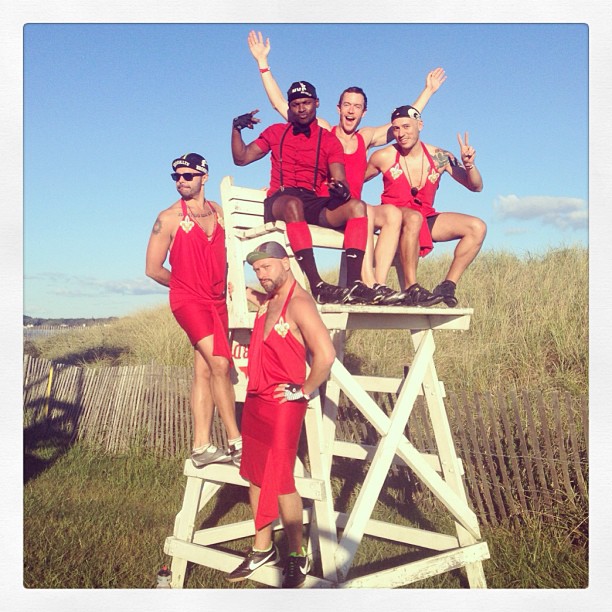
red dress day beach group shot

Some riders posing during lunch at the beach, Red Dress Day, BRAKING AIDS® Ride, September 2013.

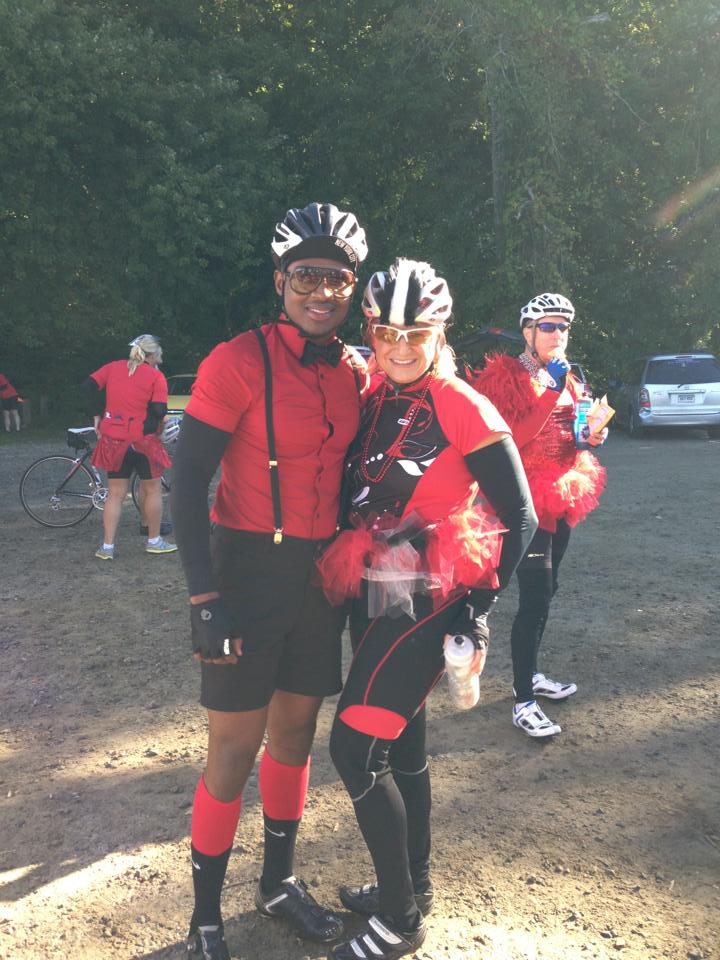
Riders Henry Bolden and Brigid Siegel, hotties dressed for success, Red Dress Day, Braking AIDS Ride, September 2013.

Riders Henry Bolden and Brigid Siegel, hotties dressed for success, Red Dress Day, BRAKING AIDS® Ride, September 2013.

The effect this visual parade has on the spectators who encounter us during the course of Red Dress Day varies. Some people are rude cat-callers, but many are simply curious, and some have even donated money on the spot when they find out why we’re riding. But overall, suffice it to say, Red Dress Day garners attention: It’s hard not to notice over one hundred people cruising through small New England towns, all of them wearing red, many of them in costumes or drag of one sort or another.

Tom Dwyer, riding through new England in style in his self-described "Tragic 'Ho" outfit, Red Dress Day, Braking AIDS Ride, September 2013.

Tom Dwyer, hitching a ride with one of our amazing moto-safety crew guys and cruising through new England in style in his self-described “Tragic ‘Ho” outfit, Red Dress Day, BRAKING AIDS® Ride, September 2013.

A small group of riders and crew gather during lunch at the beach to make a red ribbon, Red Dress Day, Braking AIDS Ride, September 2013.

A small group of riders and crew gathering during lunch at the beach to make a red ribbon, Red Dress Day, BRAKING AIDS® Ride, September 2013.

Another BRAKING AIDS® Ride tradition is that we all eat dinner together each night of the ride. During the course of the meal, various announcements are made by staff and crew, and for a portion of the evening the mic is opened up for anyone—rider or crew member—to share something from that day on the road. The moments people share run the gamut in tone and emotion: Some regale us with the silly or lewd comments they overheard people say. Others tell us what moved them or inspired them that day. On more than one occasion, brave souls have used that space to come out about their HIV status, sometimes for the first time to anyone.

Last year, crew member Linda Zipko got up at dinner one night and told us the following story: When she and a bunch of other BRAKING AIDS® Ride folks arrived at our host hotel en masse earlier that day, it turned out to be the same place we had stayed at the previous year. While she was in the lobby, one of the people who worked there walked up to her, perhaps recognizing her from the year before and said something like, “See? I heard you guys were coming back this year, so I wore a red shirt to work today.” Linda was warmed by the gesture and the two of them ended up hugging, two virtual strangers, right there in the hotel lobby. Normally a hug of that sort doesn’t last more than a second or two. But the hotel staff member held on, and it became clear to Linda something beyond a kind gesture of solidarity was happening. Tears began streaming down the face of the staff person, who clung to Linda, couldn’t quite release her, and who whispered in her ear that a close family member—father?—had been diagnosed with HIV during the previous year. I don’t recall what else the person said to Linda; I believe the words “thank you” were repeated a lot.

A number of other BRAKING AIDS® crew and riders were in the lobby at the time. They said later they could sense something big was transpiring as they witnessed the hug and the exchange; they just didn’t know what. Someone had the forethought to snap a photo of the moment as it took place, even without knowing what it was or what it meant.

Crew member Linda Zipko hugs a new friend, who wore a red shirt for Red Dress Day, BRAKING AIDS® Ride, September 2013.

Crew member Linda Zipko hugging a new friend, who wore a red shirt for Red Dress Day, BRAKING AIDS® Ride, September 2013.

I wasn’t in the hotel lobby that afternoon. I was probably somewhere out on the road, trying to get my bike, the Blue Streak, which was having mechanical shifter troubles, through another 25 miles. I didn’t witness any of what Linda experienced first-hand, and yet I have found myself returning to this story again and again during the past year.

The story is touching, to be sure, but it doesn’t give me solid, neat answers. I don’t know what happened to that stranger in the hotel lobby afterward. Perhaps the moment with Linda unfolded, it was powerful and moving, and then like a thundershower, it was over. I can’t say what that person felt or whether the moment resonated and had ripple effects later. I don’t know whether this person has told any of what was shared with Linda to anyone else, before or since. Likewise, I don’t know whether the person told anyone about wearing the red shirt, before or after doing it. I only know that showing up in a red shirt that day last September meant that this singular person had been waiting, for months, possibly all year, to have some kind of brief connection with us, with our ride community, a bunch of strangers, for a few minutes—to say in some small way “HIV affects my life, too,” and in doing so, perhaps to feel a little less alone in the world with whatever challenges might come with that.

It also means that our presence as a ride community had an impact on someone, long before that person chose to say something to one of us about it. I wondered later about that, about that choice to say something to Linda. The person could have worn the shirt as a private gesture and said nothing at all, and might even have had the same feeling of connection, just without any of us knowing it. What if the person hadn’t recognized someone from the ride or felt too vulnerable and didn’t have the nerve to say something in the moment? What if Linda had been tired that night and not up to sharing the story with the rest of us? We would still have had an impact, possibly a big one, on a stranger. The difference is we wouldn’t know it.

That refrain hums in my head sometimes now like a strange, minor-key mantra. We don’t always know, we don’t always know.

We affect one another. All the time. We can’t always know how or when.

We don’t always know, we don’t always know.

That might sound pessimistic to some, but it isn’t. I try not to dwell too long on whether I’ll recognize those moments when signs of connection and impact and meaning rise to the surface, if and when they happen, or if I’ll be lucky enough to be present for them—literally and emotionally—when they do make themselves visible. I think of how many teachers and mentors and surrogate-parent figures and friends I’ve had over the years, of how much they have shaped who I am today. I think of the BRAKING AIDS® Riders and crew who have moved me, some who became close friends, and others who I haven’t seen recently. I think of how sometimes it has been the smallest moment that struck a chord or changed something in me—a gesture, a smile, a word of reassurance, a moment of tough love when I needed it, a split second where the eyes met in recognition. Then I observe to myself how rarely I ever shared the fact of that impact with those people, often because I wasn’t aware of it myself until much later.

We all matter. We don’t always know.

We don’t always know.

I keep returning to that moment with Linda and the hotel staff person. Then I think to myself that for every moment like that, one we get to witness and hear and talk about—to see some tangible proof that who we are and what we do matters—a dozen other moments like that may be happening to other people, changes inside the shell of their selves that are happening because of us, because of something we said or did, that we aren’t aware of and may never know of. Something that changes their perspective or their trajectory forever, however slightly.

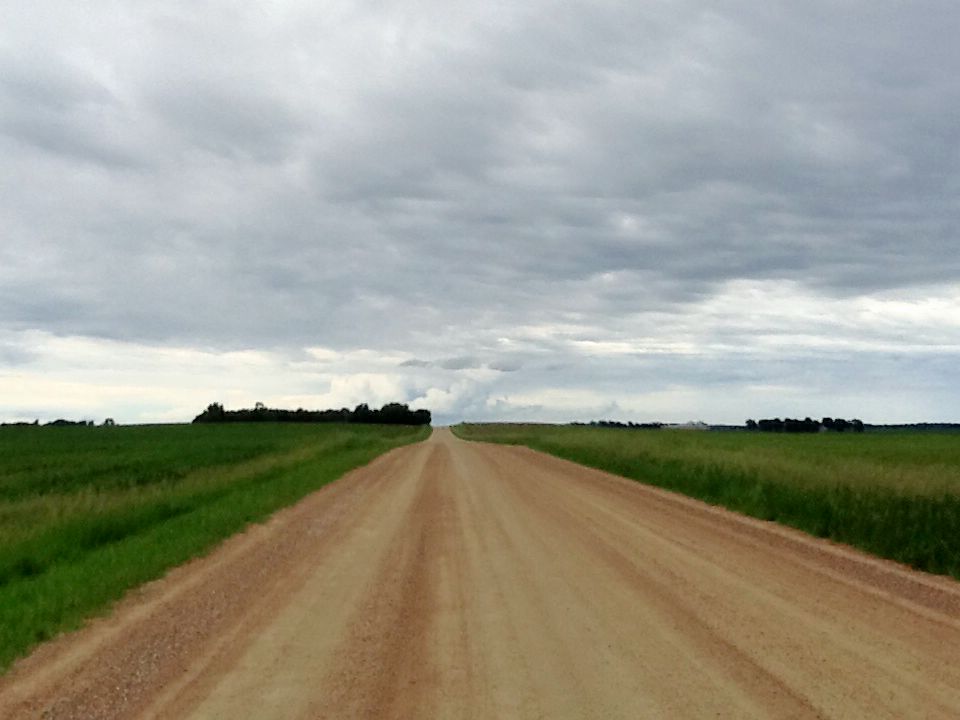
I imagine the vastness of that big cloud of all we don’t know, of all those invisible moments of meaning and connection and impact—both the ones I benefit from and the ones in which I affect others in some way. It’s a big cloud that stretches the expanse of the sky, like something Magritte would have painted. I take great comfort in dreaming about its possibility.

Northfield road with sky

CLICK HERE TO DONATE TO SUPPORT ME & HOUSING WORKS FOR BRAKING AIDS® RIDE 2014.

Next Stop: AIDS-FREE NY 2020

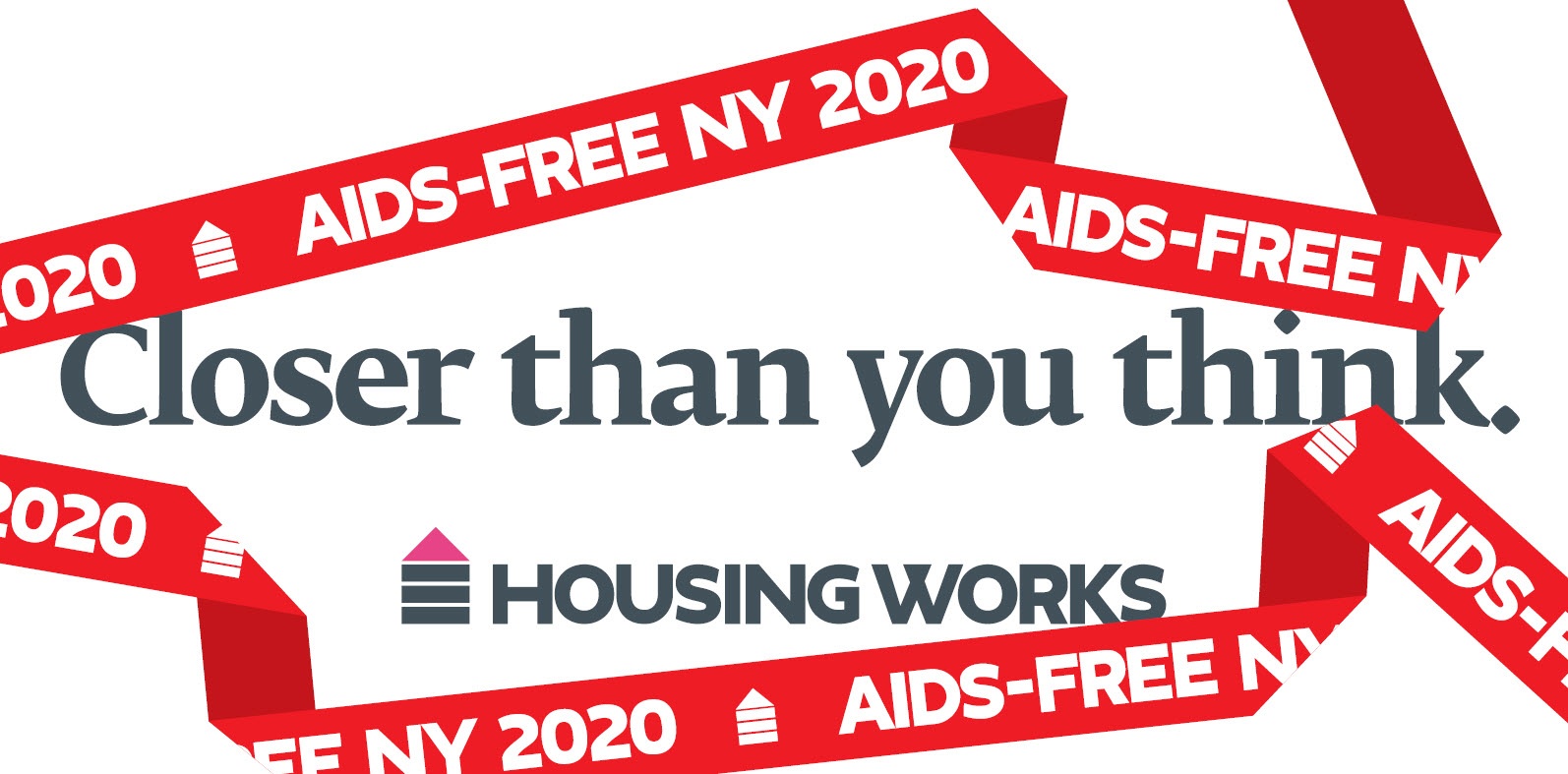
A graphic from the newly branded Housing Works AiDS-FREE NY 2020 campaign.

A graphic from the newly branded Housing Works AIDS-FREE NY 2020 campaign.

One of the advantages of working at Housing Works is that I get to see and hear firsthand the impact of our advocacy efforts. On June 29, coinciding with NYC Gay Pride, we achieved a big victory: Governor Andrew M. Cuomo made history with his public declaration of an advocacy-based plan to end the AIDS epidemic in New York by 2020, as reported in The New York Times and in a press release issued by the Governor’s office.

Later the same morning, Housing Works and other AIDS and LGBT advocates held a press conference to praise the Governor for stepping up. A video montage of the statements made appears below.

To anyone who has some knowledge of the history of the AIDS epidemic for over three decades, this may perhaps sound like a daunting goal. But Governor Cuomo’s announcement reflects his recognition that the landscapes of HIV and health care have changed. Although there are more New Yorkers living with HIV than in any other state in the nation, New York has the people, institutions, resources, and tools needed to end the epidemic that has plagued us for more than 30 years by stopping new HIV infections and halting AIDS-related deaths. Based on progress and an expansion of advancements that have already been made—from new prevention and testing technologies to highly effective antiretroviral treatments—we have the science to make the ambitious goal of decreasing new HIV infection to below epidemic levels by 2020 viable. A successfully treated HIV+ person can live a healthy life and is virtually unable to transmit HIV to others. New HIV prevention tools beyond condoms, such as PrEP (pre-exposure prophylaxis, in which an HIV-negative person takes a daily pill to reduce the risk for HIV infection) and PEP (post-exposure prophylaxis, or meds taken following possible HIV exposure to reduce the risk of transmission), combined with these advances, mean we can end AIDS as an epidemic even without a cure. For more on PrEP, see this recent New York Magazine cover story or this post on PrEP on the Housing Works advocacy blog.

New York State has already been laying the groundwork to reach that goal. Always a leader and center of innovation in the fight against AIDS, New York has experienced a decrease in new HIV diagnoses of nearly 40% in the last decade, with fewer new infections each year. By contrast, there has been no decline in the number of new HIV infections diagnosed nationally each year, which has remained static at roughly 50,000.

Reacting to the news of Cuomo’s commitment, Housing Works CEO Charles King put it best:

“This step by Governor Cuomo, setting a clear goal to end the AIDS crisis in New York State, is absolutely courageous. In doing so, the Governor is reshaping the way we think about the AIDS epidemic and is setting a new standard for leaders of other jurisdictions in the United States and, indeed, around the world.”

And now that the Governor has gone all in, the real work begins—creating a blueprint to end AIDS by 2020 and implementing it. Toward that end, Housing Works and its allies continue to urge the Governor to convene a high-level State Task Force to develop and design a strategic roadmap with concrete steps and benchmarks for the Cuomo Plan to End AIDS in New York State.

Housing Works staff, clients, volunteers, and allies, celebrating during NYC Gay Pride 2014.

Housing Works staff, clients, volunteers, and allies, celebrating during NYC Gay Pride 2014.

For its own part, the same day that the Governor made his historic public commitment, Housing Works officially launched the New York segment of the ongoing Housing Works AIDS-FREE advocacy campaign during Gay Pride, marching behind the above “AIDS-FREE NY 2020: Closer than you think.” banner during the parade. Housing Works’ AIDS-FREE Campaign is a collaborative, multi-year initiative committed to ending the AIDS epidemic—in New York State by 2020, in the United States by 2025, and worldwide by 2030. For an overview of the campaign, click here.

The tag line on the banner isn’t merely aspirational. We are closer to making the end of AIDS a reality than we’ve ever been.

How You Can Support the Work Housing Works Is Doing
to Reach an AIDS-FREE New York by 2020

By and large, Housing Works’ advocacy—the grassroots organizing and political lobbying work it does in Albany, D.C., and across the globe to promote an AIDS-FREE future—is not funded by grants or by corporate or government dollars.

That’s one reason events like Braking AIDS Ride are so important. The funds raised by the ride to support Housing Works are unrestricted and can be used when and how they are needed across the organization.

As of this writing, I’m a little more than halfway to my $5,000 fundraising goal.

Please donate today to help me reach the finish line!

Braking AIDS 2013 Raises $250K and Counting for Housing Works

In the week since I bicycled 300 miles from Boston to New York and completed Braking AIDS Ride 2013, I’ve been bogged down in the usual, overwhelming post-ride wash of feelings—elation, love, gratitude, sadness, achiness (emotional as well as physical), exhaustion, bliss—and in catching up with regular daily life. (The latter, I confess, pales in comparison to the ride experience at the moment.) It remains close to impossible to try to convey the experience of the ride itself, which is far more of a journey than even the daunting physical 300-mile route suggests.

That being the case, it’s unsurprising that the ride leaves something of a chaotic upheaval in its wake. Each year, I find the ride’s aftermath—re-entry to a life without either the demands or the satisfactions of day-to-day training and fundraising—to be discombobulating. That shift too is hard to capture fully, as is the confusion elicited by the sudden change in my focus and emotional intensity. Still, the photo below of my living room, taken by my wife Jen the day after the ride, gives a pretty decent indication of what the first 5 to 10 days after Braking AIDS Ride looks and feels like, literally and metaphorically:

1233556_10151905010098656_805799789_n

Jen, commenting on our living room after we got home from closing ceremonies: “It’s like Braking AIDS 2013 just blarfed all over our apartment.” Photo courtesy of Jennifer L. Anderson.

As a result of all that tumult, internal and external, I haven’t been able to land for long enough to do a proper post-ride recap. One thing I can and will say right now is that even though this is my fifth Braking AIDS Ride, the experience of it is different and transformative in new ways every year, which is one of many reasons I keep going back. I had a physically challenging journey this year, but not in the ways I expected, and those obstacles and detours led me to rich places and feelings I haven’t had before on the ride. I plan to write more about the ride experience itself in the coming weeks, but in the meantime, I wanted to send word on the fundraising piece of the ride.

I am thrilled to report that as of September 29, 2013, Braking AIDS Ride 2013 raised $250,000 net for Housing Works.

As of September 30, 2013, Braking AIDS Ride netted $250,000 for Housing Works. Donations can continue to come in for the 2013 ride through the end of October: http://bit.ly/ZGvJZl.

As of September 29, 2013, Braking AIDS Ride netted $250,000 for Housing Works. Donations can continue to come in for the 2013 ride through the end of October: http://bit.ly/ZGvJZl.  Photo courtesy of Gant Johnson.

That $250,000 total is all thanks to the support of my dear friends and family who have been such generous donors to my ride efforts, and to countless others like them who contributed to the fundraising of other riders and crew members. They are my heroes, in the truest sense of the word, and all the donations and well wishes from every single one of them are what make the continued crucial advocacy and services that Housing Works offers possible. It is their good will and commitment that enable Housing Works to keep fighting the good fight in pursuit of the end of AIDS.

To those heroes who supported me this year and to the friends and family who were unable to contribute financially but who offered much-needed love and emotional sustenance: Thank you. Every time I think of the notes of encouragement so many of you sent, of the calls and voicemails, and yes, of your boundless financial generosity these past five months, I feel the way I did on Day 2 of this year’s ride when this photo was taken:

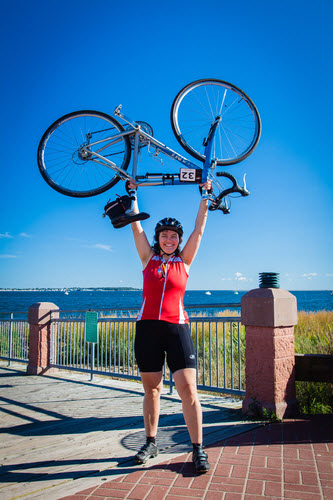
Me, celebrating near the end of Day 2, over 200 miles into the 300-mile ride, somewhere along  the Connecticut coastline. Photo by Alan Barnett.

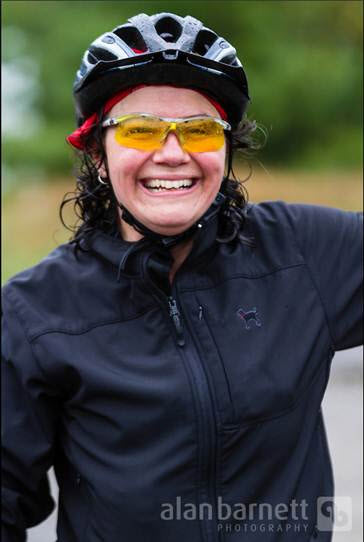
Me, on Saturday, September 28, 2013, celebrating near the end of Day 2, over 200 miles into the 300-mile ride, somewhere along the Connecticut coastline. Photo by Alan Barnett.

Because I am both a wordsmith and something of a data geek, I have taken the liberty of doing some analysis, including some arithmetic number-crunching, in order to break down and illuminate what that $250,000 fundraising number means beyond the monetary one-quarter of $1 million total:

  • “As of September 29, 2013” refers to the fact that donations and matching gifts can continue to come in for Braking AIDS Ride 2013 until close to the end of October. That means 1) if you haven’t donated but would still like to, you can at http://bit.ly/ZGvJZl and 2) the final amount raised for Braking AIDS Ride 2013 will be calculated sometime in November and obviously will be higher than $250K.
  • To put that large $250,000 net figure into greater perspective: The 2013 ride consisted of 106 riders and roughly 60 volunteer crew members. Riders need to meet a fundraising minimum for the event, but crew members do not. That said, many of our amazing crew members raise money anyway.
  • Last year, the ride pulled in over $221,000, so this year’s Braking AIDS Ride 2013 total represents a 13% increase ($29,000 more) over 2012.
  • My contribution toward that $250,000 total, as of this writing, comes to $13,185. And that figure also may go up to $15,240 if the matching gifts from my own company go through. (We have a new owner and a new set of HR policies, including a matching-gift program. Technically, according to the program’s guidelines, Housing Works should qualify for matching gifts, but despite repeated attempts, I have been unable to get confirmation on that. With the help of many of my colleagues, I have been diligently sending in completed matching-gift forms anyway, and I made another phone call to the powers-that-be this morning. Stay tuned and fingers crossed.)
  • The $13,185 I raised was made possible by over 150 generous donors, all of whom are listed below. They inspire me and have all my gratitude.
  • Through the help and generosity of those 150+ donors, I achieved just shy of 132% of my original fundraising goal, which was already an ambitious $10,000. My typical beginning goal in past years has been $5,000.
  • This $13,185 represents the most I’ve ever been able to raise for a single Braking AIDS Ride, even exceeding the $12,500 I was able to raise back in 2008, when I was a first-time rider and the sheer fact of me attempting such a Herculean physical undertaking was an astonishing novelty to everyone who knew me.
  • Contributions to my ride efforts this year ranged in size from $20 to one mind-blowingly generous $1,000 donation. The average donation totaled at about $100. No doubt about it: Every dollar counts, and each and every donor helps make it happen.
  • The majority of the amount I raised this year came from individual donations—just over $12,000—with an additional $1,150 coming from corporate matching gifts. (That latter figure will increase to $3,205 if my company’s matches come through.) If you donated this year and forgot to see whether your company has a matching-gift program, please check with your HR department today, as if there’s still time to process these gifts and doing so can double your already generous contribution to Housing Works. My hope is that for future rides, I’ll be able to find more donors who are able to maximize their contributions through a corporate gift program. The paperwork is a minor nuisance and most HR departments don’t make it easy to even discover whether the company has a gifts program, what kinds of donations qualify, and what you need to do to process a gift for a company match, but as this year’s stats show, it is worth being persistent in finding out. Those matches add up.
  • Over $2,000 in donations came from my McGraw-Hill Education friends—colleagues, authors past and present, and work-based outside vendors and freelancers. That impressive sum does not include the possible matching gifts from MHE’s parent company. In addition to being stellar people to work with, these individuals are kind and magnanimous. Those who work with me in my Midtown office are also mostly nice enough not to make too much fun of me when I commute from Brooklyn by bike and show up to work in cycling gear.
  • Most of my donors are individuals, but I was also surprised and grateful to receive generous support this year from several local businesses in my Brooklyn neighborhood. I believe in using my own consumer dollars to support high-quality businesses that give back to the community—and it goes without saying that, in addition to being good samaritans, all of these organizations are fantastic in terms of the primary goods and services they offer—so I want to give a particular shout-out of gratitude to the following spots in and around South Brooklyn (Cobble Hill; Carroll Gardens; Columbia Street Waterfront; Red Hook):
    • Woofs ‘n Whiskers, a dog-walking business and “urban cat and dog retreat,” run by the big-hearted folks who have been caring for our dog Sadie for over a decade.
    • Elite Fitness Studio, my excellent neighborhood gym, where locals at all different stages of athleticism and fitness can feel supported and stay motivated.
    • The JakeWalk, a warm, welcoming Carroll Gardens restaurant and bar owned by the same folks who have brought us Stinky Bklyn cheese shop and the Smith & Vine and Brookyn Wine Exchange wine shops. Now that I am done with the ride and no longer in hard-core training mode, I plan to frequent all these establishments again with relish.
    • Papél Brooklyn, which, for those of you who have ever received a written missive, or gift-wrapped from me and exclaimed “what great packaging” or “what a perfect card/postcard/stationery design, is on my list of favorite paperies (and that’s a very short list, too).
  • Surprise donors, old and new, come through every year. The lesson this year, which I seem to keep re-learning, is that one can never be 100% certain who will be able to give or when, just as one doesn’t always know how many people’s lives are affected by HIV or AIDS. Parts of my donor base change every year and not always in predictable ways. For example, some people who gave in 2008 and then didn’t for my 2009, 2010, and 2012 rides returned as donors this year. Likewise, people I’ve solicited for all five years I’ve done the ride and who never donated before now gave for the first time this year. But these two statistics from this year especially blow me away: Nearly one-third of my donors this year were brand-new, a particularly moving figure when one takes into account the fact that I did not experience any of the life changes that often result in a significant expansion of my social network and a broader potential new donor pool—a new job or a move to a new city, for example. The flip side of that fraction leaves me dumb-founded with gratitude: Over two-thirds of my donors—that’s over 100 kind souls—are previous donors of at least one of my five Braking AIDS Rides, and many of them are people who have donated all five years I have done the ride.
  • Three donors, two of whom I am lucky enough to call family, made me cry when they wrote me to say they were each contributing a second donation this year.
  • The $13,185 my 150+ heroes helped me raise puts me in the #5 spot for individual fundraising for Braking AIDS Ride 2013. You guys rock.
  • This 2013 $13K+ total also means that since 2008, I’ve raised over $50,000 in the fight to end AIDS, averaging at $10K per ride event coming from between 80 and 150 donors each year.

EOAIDS

In spite of this post’s focus on money and financial results, I also want to emphasize to all my donors that your dollars are doing far more than paying for critical services and programs, though they are most certainly doing that. You are saving and improving lives in an immeasurable, spiritual way, not just a physical one. The emotional and spiritual toll that HIV, AIDS, and homelessness all take on a human being cannot be diagnosed using any medical test or shaped into concrete statistics to use for a jaw-dropping graph or fancy infographic. But it’s there nevertheless. No one describes that toll better than Housing Works President, CEO, and co-founder and fellow Braking AIDS rider Charles King, who spoke during our opening ride ceremonies and shared with us some remarks he made last month at a roundtable meeting on the end of AIDS convened by UNAIDS, the Joint United Nations Program on HIV/AIDS. He also included these same remarks again as part of a longer presentation called “Ending the AIDS Epidemic in New York State and Around the Globe” that he made in Montreal at North American Housing and HIV/AIDS Research Summit VII on September 26, the day before the ride began (and the full text of that presentation can be found here):

For too many years, we have insisted on treating HIV as a biomedical event, when in fact it is a biosocial phenomenon.  That is to say, that while HIV is indeed a virus, it is a virus that is driven, as we all know, by social violence, which is why it largely has spread through the most socially and economically marginalized members of our communities and wrecks even more poverty and marginalization in its wake, at a very great cost. 

We pay lip service to this phenomenon through our talk of key populations.  But we persist in largely biomedical and individualistic behavioral responses.  In order to end the epidemic, with or without a vaccine, we need structural interventions that address the social drivers of this disease.  To date, with the exception of vulnerable children and orphans, and pieties about human rights, we have resisted this approach both because of the attenuated nature of the causal links and because of the supposed financial or political cost of the required interventions.

In fact, we have to recognize that these key populations represent the nexus between the goals of ending poverty and ending AIDS.  It is not so much new money we need.  It is targeting our development dollars at the right people, both to eliminate poverty and to stop transmission of the virus, and taking seriously the commitment to human rights.  Structural interventions, properly applied, can serve not only to keep millions of HIV+ people in care and ultimately virally suppressed, but they are also an effective prevention strategy.

I believe I am on solid scientific and economic ground for my case, being neither a scientist nor an economist.  But the Baptist preacher requires me to speak not just of science and economics, but also to the human condition.  You see, when I speak of the cost of social violence, I am not just speaking of the economic cost or the disease burden.

Think about what it means to be subjected to social violence.  Homelessness not only deprives you of the means to organize your existence, it deprives you of your very dignity.

Not being able to feed your children not only deprives them of essential nutrition, it signals that you are not fit to be a mother.

Being unable to get a job because you are an obviously gay man or a transgender woman not only deprives you of a livelihood, it says you have no value to offer society.

Hiding from punitive laws because you are addicted to drugs or survive by selling sex not only forces you underground, it destroys your sense of self-worth.

We talk about living well as both a measure of disease control and of economic development.  But social violence not only spreads HIV and poverty, it destroys one’s soul.  We will not end the devastation of AIDS until we allow those who have been impacted to reclaim their most sacred part, their very souls.

That is what ending AIDS is most about.  Not just stopping a virus, but allowing people who have been cast to the margins to reclaim their place in our communities and in the world.

[emphasis mine]

With that, I have one final, simple message for my many benevolent donors: Please don’t ever doubt the impact and the ripple effect of your contributions to this cause. In being part of this fight to end AIDS and homelessness, you are doing more than helping people in need survive. You are helping them to live. Thank you again, all of you, for all you do.

My Braking AIDS Ride 2013 Heroes

Jessica Abel & Matt Madden*
Chris Anderson & Mel Stupka*
James Anderson & Suzy Turner*
Jennifer Anderson*
Renée Anderson*
Anonymous* (4 donors)
David Anthony*
Tansal Arnas*
Kate Asson
Janis & Dave Auster*
Jennifer Baker*
Paul Banks
Leah Bassoff*
Charles Baxter*
Jon Bierman*
Deirdre Birmingham
William Bish*
Claire Brantley
Aviva Briefel
Kelly Burdick*
Steph & Bill Carpenter*
Jess Carroll & Sharon Glick*
Stephanie Carroll
Lynne Carstarphen*
Carnegie Corporation of New York†
Clare Cashen*
Betty Chen*
David Chodoff*
Danielle Christensen*
Laura Coaty*
Susan Conceicao*
Barbara Conrey*
Janet Corcoran
Nancy Crochiere*
Anneliese & David Daskal
Joe DeIorio & Thos Shipley
Nicole Dewey & Bill Seely*
Carol Diuguid*
John Dunn
Christie Duray
Mariamne Eliopoulos*
Elite Fitness Studio*
Julie Englander*
Rachel Falk*
Michael Fisher
Terence Fitzgerald*
Timothy Fitzpatrick*
Jimmy & Chris Flavion
Ray Flavion*
Kory Floyd*
Kerri Fox*
The Well-Placed Word
David Gifford & Svenja Leggewie*
Michael & Nicola Gillespie*
Rebecca Gilpin*
Goldman Sachs†
Google†
Susan Gouijnstook*
Penina Greenfield*
Dawn Groundwater*
Amanda Guinzburg*
Scott Harris*
Karen Henry*
Chris Herrmann & Joseph Lorino
Frank Hopp*
Tom Hyry*
The JakeWalk
Andrew Janke
Andrea Vaughn Johnson & Eric Johnson*
Kristopher Kelly
Laura Kennedy
Elizabeth King
Judith Kromm
Debra Kubiak
Jon Lowy
Sylvia Mallory
Matt Martin
Derek McNally*
Dave Meier*
George Meyer*
Michelle Misner & Jason Baluyut*
Richard Monreal
Lorraina & Ben Morrison*
Susan Muller-Hershon
James Murdock
Elizabeth Murphy*
Liz O’Brien*
Eva & Tom Okada*
Jacob Okada*
Stephen Okada
Michael O’Loughlin
Papél New York
Gregg Passin*
Anne Paterson
Nancy Perry*
Lisa Pinto*
Eileen Pollack*
Mary E. Powers
Kirstan Price*
Catherine Groves Ramsdell
Josie Raney*
Jessica Bodie Richards
Rhona Robbin*
Greg Romer*
Stacy Ruel*
Mike Ryan*
Carla Samodulski*
Danielle Scaturro*
Terri Schiesl*
Duane Schrader
Roger Schwartz*
Brian Seastone*
Samantha Shaber*
Jane Smith*
Janet Byrne Smith*
Fred Speers & Chase Skipper*
Lynn Stanley*
Katie Stevens*
Carylanna Taylor
Jeannine, Bil, Kade & Jack Thibodeau
Matt Trokenheim & Jen Simon*
Woof ‘n Whiskers*
Kelly Villella*
Sherry Wolfe*
Yu Wong*

† matching gift

Things I Think of Before a 300-Mile Ride in the Fight to End HIV/AIDS

We’re down to hours here before Braking AIDS Ride begins. I had such hopes of writing about all sorts of important things before leaving for Boston on Thursday for orientation day—what living with HIV and HIV meds can look like and some thoughts about the stigma of HIV and AIDS (which, yes, still is alive and well), to name just two. I cannot possibly do those subjects justice before the ride—I’ll be lucky if I can do them justice at all—but I did want to share some of the thoughts, serious and silly, that run through my head in the 48 hours before the ride:

  • I can’t believe I’m doing this. Again.
  • Do I have enough butt butter?
  • Does anyone, truly, look good in spandex cycling clothing? (Except my friend Colby. He doesn’t count. He looks good in everything. Even after riding 103 miles in a downpour, his hair looks perfect, exactly as it did at the beginning of the day. So clearly he either has a hairdresser running alongside his bike as he races along at 20mph, or he has some sort of deal with the cosmic powers that be.)

    I've posted this photo before. This pic of me and Colby was taken right before closing ceremonies last year. In other words, after Colby had ridden 85 miles in the rain wearing a cycling helmet. It may be even better that I'm in the photo as a source of hair comparison. I mean, really, look at the coiff on that man!  Photo courtesy of Colby Smith.

    I’ve posted this photo before. This pic of me and Colby was taken right before closing ceremonies last year. In other words, after Colby had ridden 85 miles in the rain wearing a cycling helmet. It may be even better that I’m in the photo as a source of hair comparison. I mean, really, look at the coif on that man! Photo courtesy of Colby Smith.

  • How can I not do this? Why can’t I just do this all the time?
  • DO NOT FORGET TO DROP THE BLUE STREAK OFF AT BIKE SHIPPING ON WEDNESDAY MORNING.

  • Did I train enough? Probably not. Sigh…
  • Oh, man. I meant to email so-and-so to ask him/her to donate.
  • ?!?!?!??!?!? That is a vague approximation of my amazement and astonishment at the ongoing compassion, generosity, and bravery I witness and the encouragement I receive as a result of my involvement with this ride, all season long—from people I know well, from people I know but not that well, and even from people I don’t know who have somehow connected with me about this ride and this cause. No one who knows me would ever say I’m a la vie en rose Pollyanna type when it comes to my overall assessment of humanity. I am a skeptic and a believer in most things. I see humanity as a mixed bag, with strengths and weaknesses in equal doses, and often with strengths and weaknesses being the very same qualities, depending on the situation and how those characteristics are being utilized. And yet year after year this event brings out incredible, moving aspects of people that I hadn’t known were there, myself included.

  • I’m so lucky. To all my unbelievable fantabulous donors out there—the long, full list of you is forthcoming after all this riding madness is over—THANK YOU AGAIN AND AGAIN! You inspire me so much, I am willing to temporarily forgo my hatred of styling a phrase in all caps. for emphasis and my dislike of the overused exclamation point. You fill me with so much wide-eyed glee, I make up dumb non-words like “fantabulous.”

  • What we are all participating in here, riders, crew members, and every person I’ve been in contact with because of this ride whether the person donates or not, is important. It matters and saves lives. Not that most of you need any convincing about how essential the funds raised by Braking AIDS Ride are to Housing Works and its services, but the following two bits of information crossed my path recently. I share them here because they are a stark reminder of why what my donors and supporters have done on behalf of Housing Works and its clients is heroic and absolutely needed and why we must continue to raise money and to raise awareness about AIDS/HIV as a serious health problem:

    • HIV status and testing are serious ongoing challenges. Most people are aware that the annual rate of new HIV infections, even here in the United States, in New York City, in 2013, remains pretty static. In addition, as I’ve written before, at any given time, about 20% of people living with HIV are unaware of their infection. Even more startling is how much that same percentage goes up when you look at teens and young adults. According to the CDC, in the United States, of people between the ages of 13 and 24 who are HIV+, 60% do not know it. I’ll be blunt: If you don’t know you have HIV, it’s likely that you are unknowingly giving it to others, and they may be doing the same, and so on. Housing Works is doing its part to try to face these challenges and numerous others head-on. HIV testing is one of Housing Works’ many medical services, and the organization is also a strong advocate for over-the-counter HIV testing.

      Think HIV isn't a problem? Think again. This terrifying statistic makes me want to run out and try to raise another $10-15K in the next 48 hours.

      Think HIV isn’t a problem? Think again. This terrifying statistic makes me want to run out and try to raise another $10-15K in the next 48 hours.

    • Funding for HIV and homeless-related services were both included in the mandatory budget sequestration.The need for continued financial support at organizations like Housing Works from the general public—whether it comes from individuals or via corporate donations—is urgent and all too real.  An estimated 8,000 households that include people living with HIV/AIDS will lose housing assistance from a government program called Housing Opportunities for Persons with HIV/AIDS (HOPWA), putting them at risk for a return to homelessness. If we wait for our government to get its act together, people in dire need will be homeless and out on the street again.
  • I wonder what weather.com…. On a less serious note, in these last days before the ride, I sometimes let myself imagine what the ride weather might be like, what it could be like, and before I let the wish in my heart fully form in my head, I shush myself, because it would not do to Tempt the Weather Gods by counting those chickens before they… well, that’s a mess of images and aphorisms, but you know what I mean.
  • Speaking of chickens: Many people who do this ride, myself included, take their inspiration from the wisdom of erudite people like these:

“You must be the change you wish to see in the world.”—Mahatma Gandhi

“Never doubt that a small group of thoughtful, committed citizens can change the world; indeed, it’s the only thing that ever has.”—Margaret Mead

“If you ask me what I came into this world to do, I will tell you: I came to live out loud.”—Emile Zola  

“Let us give publicity to HIV/AIDS and not hide it because [that is] the only way to make it appear like a normal illness… One of the things destroying people with AIDS is the stigma we attach to it.[emphasis mine] —Nelson Mandela

The list could go on and on. Samuel Beckett. Eleanor Roosevelt. Martin Luther King, Jr. Etc., etc., etc. I draw energy, strength, and, I hope, greater compassion from historical figures and luminaries like those above, too, of course. But if I’m being honest, when I’m in the van on the way to Boston, or topping off the air in my tires at 5:30am on Ride Day 1, or if I’m on Mile 69 of Ride Day 2 and my ass hurts and I’m cold and wet from the rain and man, I can’t contemplate brilliant leaders and visionaries or AIDS or HIV or homelessness and who’s living and who’s dying and who’s dead already, I can’t think about any of that Deep, Important Stuff for a little while at least—in those moments, I also take tremendous comfort in these words from the 2000 stop-motion animation film Chicken Runspoken by Fowler, the stodgy former RAF rooster:

Keep pedaling! We’re not there yet! You can’t see paradise if you don’t pedal!Fowler, from Chicken Run

"You can't see paradise if you don't pedal!"-from Chicken Run

Rocky, the American rooster from Chicken Run who learns that helping others is as rewarding as helping oneself, learning to “fly” via bicycle. Indeed. You can’t see paradise if you don’t pedal.

Thank you again to everyone who has been so supportive throughout this journey!

And to you slackers who haven’t caught up on your email: YES YES YOU CAN STILL CLICK HERE AND DONATE!

Women on Bikes! Getting My August Training-Ride Bearings

The summer has zipped by in rather frightening fashion. It’s only two months until Braking AIDS Ride 2013 begins, which means I need to put in some back-to-back long training rides this weekend.

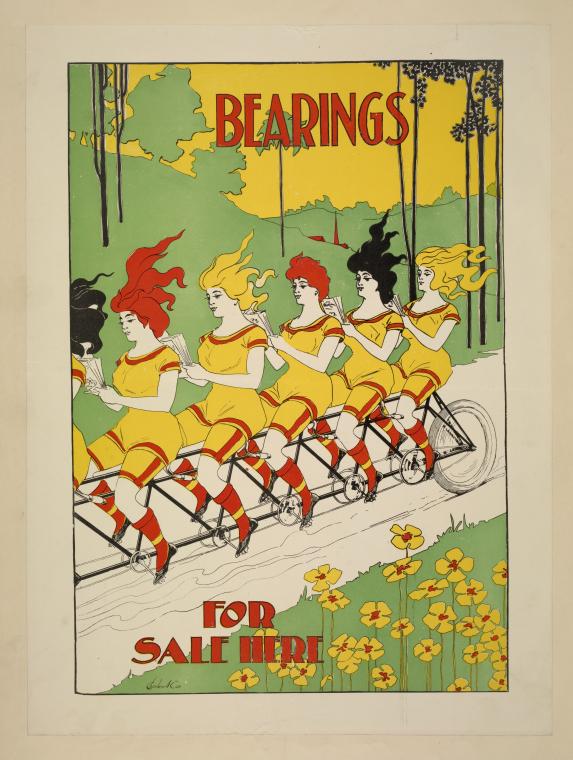
Bearings, for sale here, Charles A. Cox, c. 1890.  Courtesty of Posters: Artists Posters Collection, Library of Congress Prints and Photographs Division.

Bearings, for sale here, Charles A. Cox, c. 1890. Courtesy of Posters: Artist Posters Collection, Library of Congress Prints and Photographs Division.

In my fantasy version of doing back-to-back training rides, a fantasy that tends to dominate my foggy, exhausted thinking at 6:00am on Saturday morning when I’d rather remain in bed, the weather will be as beautiful and mild as it’s been most of this week, the wind will be at my back, the hills will feel like flats, the flats will feel like downhills, and the downhill cruises will feel like heaven on earth. In that imaginative rewrite of my training days, it feels as though the leg power of five other women are powering me and my bike, and the riding is such a piece of cake to us, we’re all reading fashion magazines as we cycle. (For anyone who’s asking, in the illustrated rendition of this fantasy above, I’m the raven-haired woman in front of the blonde caboose rider.)

In reality, it’ll be me, by myself, pedaling on my own steam, trying as best I can to push myself but also live into whatever my body can do that day and whatever the road brings me. What’s nicer about the reality version: Nothing feels better than the moments when I work hard and it pays off. Sure, it would be easier if the roads all felt flat, but then, so would my mood. The highs are that much sweeter when they are hard-won. So, whatever comes these next weeks, bring it on.

On the other hand, while I can forgo the other five women helping me pedal, but if anyone knows where I can get those amazing, red knee-high cycling socks, please contact me ASAP.

To support me and my invisible tandem-bike harem to support Housing Works and fight AIDS, you can still donate here!  I’m at 54% of my $10,000 goal, a sum that’s been achieved, to my amazement, in only a month. So, I’m more than halfway there, and the rest, I hear, is, well, at least partially downhill. Donate early and often!

HIV/AIDS: Good News, Bad News, Red Fish, Blue Fish, Loveship, Courtship, Pos-Ship, AIDS-ship, Sickship, Oldship, Deadship

It’s hard to believe that it is late July already. My last post on here was in March. It has been that sort of season. Busy but erratic. Insane weather that went from unseasonably cold to sweltering almost overnight.

Me, wet and cold, but happy, on Day 1 of last year's Braking AIDS Ride, Friday, Sept. 29, 2012. Photo by Alan Barnett.

Me, wet and cold, but happy, on Day 1 of last year’s Braking AIDS Ride, Friday, Sept. 29, 2012. Photo by Alan Barnett.

In truth, though, I think I have postponed writing on this blog this season because I was struggling to figure out what I wanted to say. How my thinking about doing this 3-day, 285-mile bike-ride fundraiser and continuing to support this cause—the fight to end HIV/AIDS—in this way has evolved. This is going to be my sixth AIDS Ride, my fifth since 2008 with the Braking AIDS Ride group. I’ve ridden over 10,000 miles on a bicycle and raised almost $45,000, all in the name of supporting beneficiaries that offer crucial HIV/AIDS services. Isn’t that enough? Why am I still at it? What is the big deal about HIV? What’s changed since 1999? What’s different about the way I think about this in 2013? Why do I continue to fight this particular fight?

These questions are easy to ask, but authentic answers are elusive. I find that now that me asking for help to support this cause is no longer a novelty—just as the disease and the fight to end it are no longer new—I don’t always know what to lead with when I reach out to people about it. I am tired of HIV/AIDS, and even I am tired of doing what journalist Randy Shilts called “Talking AIDS to Death” in a 1989 Esquire article with that same title.

It's official. According to the popular wisdom, AIDS has been old news for a decade and a half. This Esquire cover hits the stands in March 1999, six months before I did my very first AIDS bike ride.

It’s official. According to the popular wisdom, AIDS has been old news for a decade and a half. This Esquire cover hit the stands in March 1999, six months before I did my very first AIDS bike ride.

What do I say to people today about AIDS, especially people I know who have heard so much of it, if not all of it, before? Where on earth do I begin? Do I lead with the good news? Everyone likes stories about progress. I, too, like stories that suggest we’re getting somewhere, that our efforts help. And we are making progress, no doubt about it. Or do I lead with the bad news? We are getting somewhere, but HIV/AIDS still affects countless people, and it remains a horrific, sometimes fatal disease, which is why we still need to keep up the work. Do I scare people to remind them that resting on our laurels and thinking the HIV/AIDS is now someone else’s problem—Africa’s problem, or Southeast Asia’s problem, or a Caribbean problem—is just about the worst thing we all can do?

Per usual, I decided to split the difference and do both. So, the good news and the bad news:

I fight this fight to end HIV/AIDS, and I ask for continued support for Housing Works from practically everyone I know year after year because HIV is old news. AIDS has now been around so long, it was considered old news even back in 1999, the year I did my very first AIDS ride, as beautifully illustrated by the March 1999 Esquire cover reproduced here.

In past years, I’ve usually set my fundraising goal at $5,000. Because AIDS is considered yesterday’s news, this year, I am doubling my efforts, and setting my fundraising goal at an ambitious $10,000.

Despite our progress, the battle against HIV/AIDS is far from over. My feeling is that one of the biggest growing challenges is reminding and in many cases, persuading people that HIV is still a big deal, a problem worthy of our time, our attention, and our financial support.

Yes, we have come a long way since the 1980s, when most people who contracted HIV died painful, ugly deaths that were both too long and too short. Too long in terms of the duration of suffering, for them and those who loved them. Too short in that the disease’s victims in those early days lasted a year or two, months, sometimes weeks. Today, in the nations where testing and treatment are affordable and readily available, the U.S. among them, HIV has become something you can live with for a very long time. That is the good news. And in contrast to 20 years ago, it is very good news.

The bad news, unfortunately, is exactly the same: that HIV has become something you can live with for a long time. The bad news is that people know that HIV is manageable, but what they have less knowledge about is what living with it entails.

Here are just a handful of reasons why complacency surrounding the fight against HIV/AIDS is so dangerous:  

The statistics that demonstrate that HIV and AIDS are still a real problem continue to go up every year, even in the United States. 34 million people worldwide live with HIV today, 1.2 million in the U.S. alone. The global death toll exceeds 25 million. There is still no cure and no vaccine.  

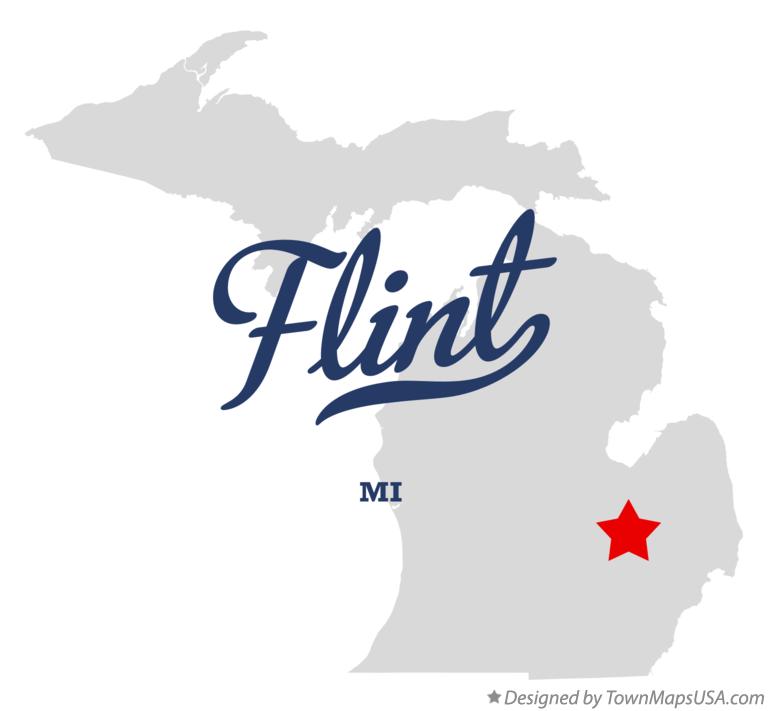
Since I rode my bike 285 miles last year for this same cause, some 50,000 Americans have become newly infected with HIV. That is likely to be the case next year as well. For a while now, the annual rate of new infections has become pretty stable in this country. Is this better than an infection rate that’s increasing, as it did for decades? Of course.  But it is a low bar we’re setting, too low, when we convince ourselves that an annual, new HIV infection rate equal to half the population of Flint, Michigan, is good enough.

It’s supposed to be good news, but the truth is that the annual rate of new HIV infections in the United States is equal to half the population of Flint, Michigan. That’s 50,000 new people with HIV every year, for anyone who is counting.

imageMore disturbingly, one out of five Americans does not know his or her HIV status. About 1.2 million Americans have HIV, so that’s nearly one-quarter of a million people in this country who are likely to be spreading the virus unknowingly to other people.

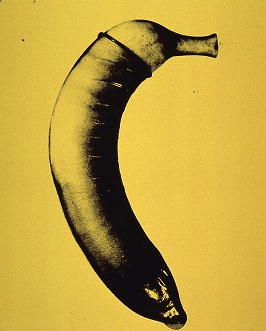
Many kids in the U.S. aren’t learning about HIV in school. A startling 28 states in the U.S. do not have education requirements that mandate both sex education and HIV education. Irrespective of one’s religious beliefs or politics, that lack of access to health education is simply criminal. I was in high school from 1987‒1990. I still laugh when I recall the video on safe sex that we were forced to endure; the film was called Condom Sense, it was made in 1982, and in one scene, the narrator characterized wearing a condom as being like standing in a shower fully clothed with a rain slicker and rain hat on. We joked around in class when a banana was used to demo how to put a condom on properly.

banana condom

This is how sex education was taught in the 1980s when I was in high school. Image courtesy of the National Institute of Health.

But whatever else I can say about sex education during that period of time, I can say without hesitation that an awareness of and accurate knowledge about HIV and other STDs, as well as about safe sex practices, was an inherent and probably the biggest and most important part of what we learned. Even as fearless teenagers who believed we were going to live forever, we knew it was crucial to pay attention to information about HIV—because if we didn’t learn it, and understand it, and take it to heart by practicing safe sex when we became sexually active, it might kill us.

New HIV infections are highly concentrated in people between the ages of 13 and 24, an age group that is less likely to get tested and treated, possibly because those young Americans are too young to remember the days when HIV was a death sentence or—see previous paragraph—because they don’t have accurate knowledge about how you get HIV, how you prevent it, how you get tested for it, how you treat it, and how serious it is. These Centers for Disease Control stats make alarm bells go off in my head: Only 33% of Americans between age 17 and 24 were tested for HIV in 2012, and a scant 13% of high school students were tested for HIV in 2011. As a result, half of the Americans under the age of 24 do not know their HIV status.

A lot of people think HIV isn’t a big deal anymore. They’re wrong. HIV can now be manageable. That doesn’t mean it’s no longer a major health threat. HIV is not easy to live with and treat. Even with early diagnosis and proper treatment, managing it doesn’t mean you won’t get sick or suffer, and it doesn’t mean you won’t die. Jay Varma, representative of the NYC Department of Health and Mental Hygiene, summed it up best in a recent article on Bloomberg.com: “Even when someone with HIV is controlling it through medications, his or her immune system will never be fully functional.”    

I hate having to type that last paragraph. I have more friends than I can count who have HIV. Many of them have lived with it for years. I’m glad to say many of them are healthy. They are stoic and optimistic about how they approach the disease. They are also brave. But they don’t just pop a pill that’s as benign as an Advil or a Vitamin C and call it a day. I plan to write another post that’s more about this aspect of the cause—because it’s worthy of that time and space.

Kyle Spidle, fellow rider and a PosPed (an HIV-positive rider), giving crew member Amy Hemphill a kiss for helping him fix a flat. Kyle was the first victim of the meningitis outbreak that began last year. He died a week before last year's Braking AIDS Ride. He was 32 years old.

Kyle Spidle, fellow rider and a PosPed (an HIV-positive rider), giving crew member Amy Hemphill a kiss for helping him fix a flat. Kyle was the first victim of the meningitis outbreak that began last year. He died a week before last year’s Braking AIDS Ride. He was 32 years old.

For now, I will leave you with this story: Last fall, a week before I traveled to Boston for the beginning of Braking AIDS Ride 2012, I got a message that my friend and fellow rider Kyle Spidle, who had been living with HIV since 2008, had passed away in his sleep. On Wednesday night, September 19, he went to bed early because he had felt slightly flu-ish. He never woke up. We didn’t know it at the time, but Kyle was the first victim to the current bacterial meningitis outbreak. That outbreak has since been widely reported. The part that tended to be under-reported is that the first victims of the meningitis outbreak were all HIV positive. HIV put them at greater risk across the board—of contracting meningitis, of having a more severe infection if they contracted it, and at greater risk of dying from a meningitis infection. Kyle was 32 years old.

Kyle, lugging for the camera, during the ride in September 2009. Don't let the smile and the hot bod fool you. He wasn't just a pretty face, and everyone who knew him misses him dearly.

Kyle Spidle, mugging for the camera, during the ride in September 2009. Don’t let the smile and the hot bod fool you. He wasn’t just a pretty face, and everyone who knew him misses him dearly.

As I said in my first, recent wave of solicitations to friends and family to donate to support me in the Braking AIDS Ride this September, I will ride this year in memory of Kyle and in memory of others like him. I will ride, as I do every year, in memory of Curtis and Daniel, two family friends whose deaths from AIDS in 2003 and 1987, respectively, I wrote about in previous posts on August 16, 2012, and August 29, 2012, and I will ride to support the many friends I have who are infected with HIV and for the countless others who are affected by this terrible disease.

The good news is that in the short time period since I sent out those calls for help, I’ve raised 32% of my fundraising goal of $10,000. If you’ve read this far, you already know what the bad news is.

WHERE YOU CAN DONATE TO SUPPORT ME IN BRAKING AIDS 2013:

Why, my fundraising page, of course! Donate early and donate often!

SOURCES:

Samuel Adams, “Meningitis Outbreak Spurs Effort Before Gay Pride Events,” Bloomberg.com, June 18, 2013.

Esquire AIDS Crisis issue, March 1999.

Tara Culp Ressler, “5 Things to Know in Honor of National HIV Testing Day,” June 27, 2013, Thinkprogress.org.

Randy Shilts, “Talking AIDS to Death,” Esquire, March 1989, p.123.

Braking the Cycle Ride Postscript 1: The Blue Streak Hits Mile 9,000 and Keeps On Going

It’s been almost three weeks since I completed Braking the Cycle 2012. Long enough for me to take my bike, The Blue Streak—her gears crunchy with grime and dirt, brake pads worn to the nubs after riding through rain for more than 100 miles, tires thinned and pocked with tears from flats—to the bike shop for a much-needed tune-up, new brakes, new tires. Long enough for a dozen more donations to come in. Long enough for the total mileage logged on The Blue Streak since I bought the bike to have exceeded 9,000 miles, a glorious bench mark I anticipated in my first blog post. But not long enough for me to write a postscript that will do my experience of the three days of the ride itself justice. This isn’t going to be that post.
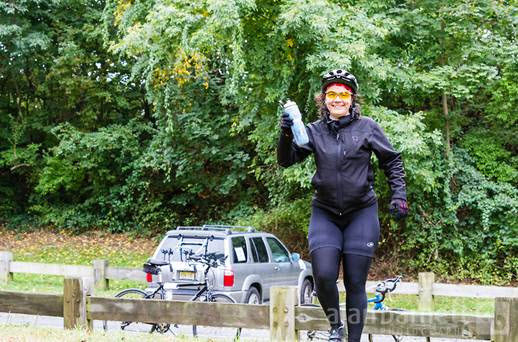
Lost in the backwoods of hilly Connecticut, near the end of Day 2, after nearly 200 miles of riding. The thought bubble above my head would read, “Thank God, an oasis.” (On Braking the Cycle, a rest stop is called an oasis.) You can’t tell from my smile here, but I hate Gatorade. Photo by Alan Barnett Photography.

What I will say now is that the three-day ride was a microcosm of my whole, erratic summer: I rode as hard and fast as I ever have. I crawled uphill. I felt fantastic. I felt half-dead with exhaustion and everything hurt. I wept while pedaling. I sometimes had no idea if I could go on. I rode at the front of the pack. I caught a brief glimpse of the caboose, the two riders designated to be the tail end of the ride, chugging along behind everyone else. I was freezing and wet. I got windburn and was overheated. I discovered again that I am stronger and more tenacious than I realized—and that continues to surprise me. I forgot why riding 300 miles on a bicycle felt like a good idea. I forgot why doing anything besides riding my bicycle seemed like a good idea. I thought of every person I know, living or dead, who is affected by HIV. I thought of the recent wave of people I know who are my age and who have either died unexpectedly during the past year or who are braving and battling awful, progressive illnesses of all kinds, none of them HIV-related. I contemplated my mortality. I sang dumb pop songs, admired the foliage, inhaled the smell of autumn, and thought of nothing deep or nothing at all. I rode alone. I met and reconnected with old friends on the road. I made new friends on the road. I drank too much Gatorade. I drank too little Gatorade. I ate bananas, bananas, bananas. I found laughter in unexpected places. I was moved to tears by strangers. I was met with affection and cheerleading and applause at least once an hour, for just existing and showing up. I trusted the training. I doubted myself. I believed in myself. If one element was constant, it was only this: I kept going.

The more detailed blog-post summary of our civil rights march on two wheels, spanning three days  across four states, will take me a little while longer to get around to writing, but in the interim I wanted to share some details about what happened when the ride was over because it deserves its own entry.
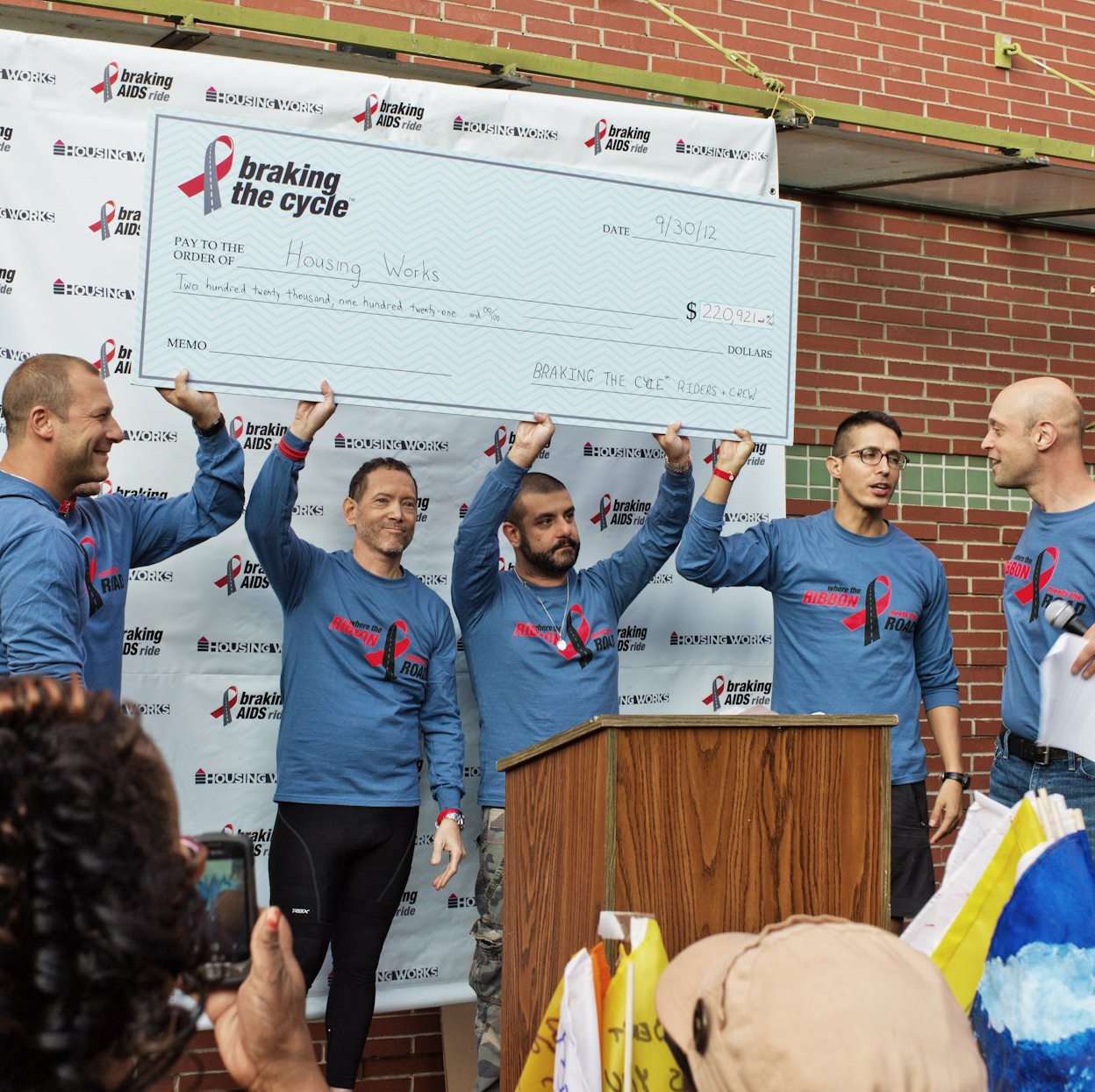
The check for nearly $221,000 that we presented to Housing Works at closing ceremonies, Sunday, September 30, 2012, 5:30pm. The actual final total will be higher, as riders and crew continue to fundraise until the end of October. Photo courtesy of Rich Biletta.

The first item of note is a series of numbers I’m joyful to share. By virtue of the subject matter of AIDS and HIV, most of the statistics I’ve referenced these past months have been unsettling, sad, infuriating. It’s therefore with a joyful heart that I can type this new figure for the books: As Sunday, September 30, 5:30pm, Braking the Cycle 2012 raised nearly $221,000 for Housing Works in the fight against HIV, AIDS, and homelessness. That amount has also been climbing rapidly in the weeks since, as post-ride donations continue to come in.

As of this writing, thanks to the financial support of the 134 generous souls who sponsored my personal ride efforts this year, and whose names are listed at the end of this post by way of acknowledgment and with all my gratitude, my portion of that handsome $221K+ sum totals $9,710. For those of you who work in sales or who like to see such totals framed against concrete, forecasting goals, $9,710 equals 129.5% of my final target goal of $7,500. I say “final target goal” because my original goal when I began fundraising in early July was $5,000. In mid-August, when the going was slow, I even had a panic-stricken week that I wouldn’t reach the $5K, no matter how many times I hit “refresh” on my First Giving website page every few hours. (O ye of little faith, Mika!) I was thrilled when I hit that $5,000 goal and was able to raise the target by 20%; I had no idea that I would end up raising it again twice more after that. So, needless to say, to have achieved a sum that is 194% of my original target goal has me astonished and approaching speechlessness.

The donations I received ranged in size from $20 to $725, and every bit counted and helped. These acts of kindness and support represent a diverse array of humanity residing in three different countries, including 18 states across the U.S. Contributions came from my closest friends and family, from colleagues, and even from people I’ve never laid eyes on. To each and every one of you who supported me throughout this challenge, and what proved to be a particularly difficult season, I could not have done it without you. Thank you again and again. You inspire me with your encouragement and with the expansiveness of your hearts. (And yes yes yes, if you’re reading this and thinking, “Damn, I meant to donate…” or “Wouldn’t $10,000 be a much nicer, rounder number as a total than $9,710…” or “To hell with that Fall Clearance sale, I think I’ll donate to Braking the Cycle and Housing Works a second time…”, the donation link is still up and running, and you can still kick in for another 7 days or so. For those of you who have had just about enough of my relentless BTC pitches and reminders, I know it may seem like the 15th Cher Farewell Tour—never quite over—but this really is last call for BTC 2012.) An additional thanks goes out to those who were unable to donate this year, but who have been continual cheerleaders and sources of love, inspiration, and encouragement, and who have expressed faith in me even when I didn’t have much in myself. You know who you are, and your generosity of spirit has kept me going all these months and all through the ride as well.

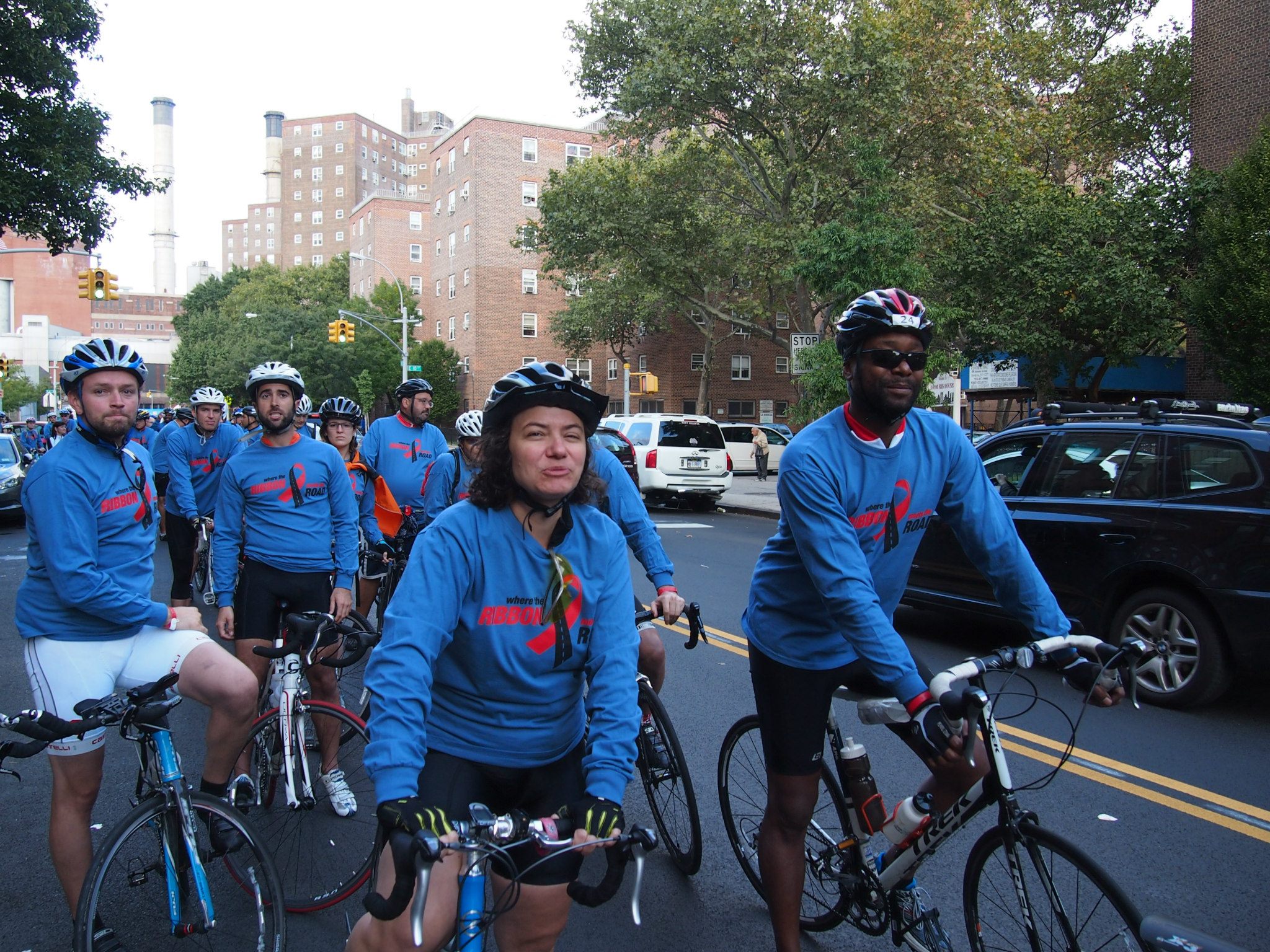
The second thing I’d like to share is a recap of the ride’s closing ceremonies, which took place at 5pm on Sunday, September 30, in front of Cylar House, a Housing Works facility on 9th Street near Avenue D, with the victory party following right afterward inside the building. Over the course of that afternoon, all the riders finished the last miles cycling through the Bronx and down the east side of Manhattan, to a holding area three blocks from Cylar House where we were gathered so all 90 or so of us we could ride to the ceremonies together and arrive as one big group, followed by the amazing volunteer crew.
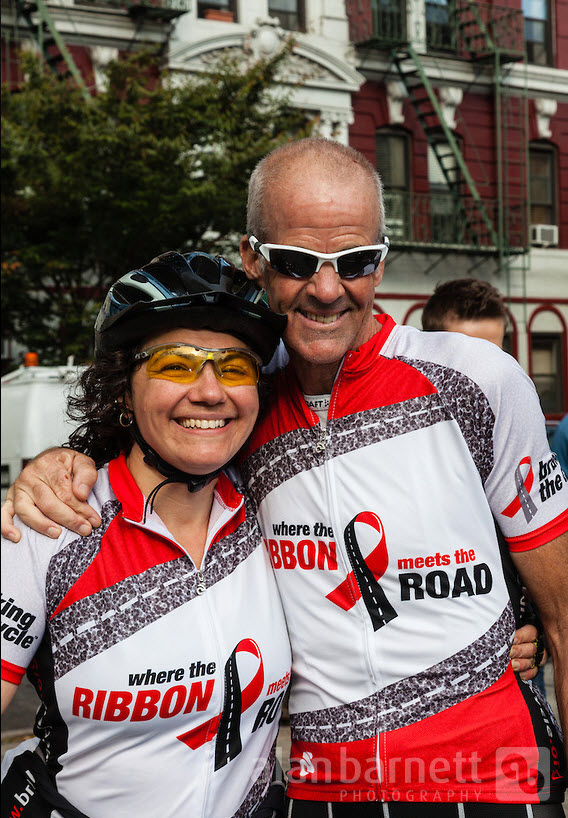
Me, with speedy BTC rider Glenn Hammerson, gleeful after finishing the main ride route and arriving in the holding area three blocks from closing ceremonies, Sunday, September 30, around 4PM. Photo by Alan Barnett Photography.
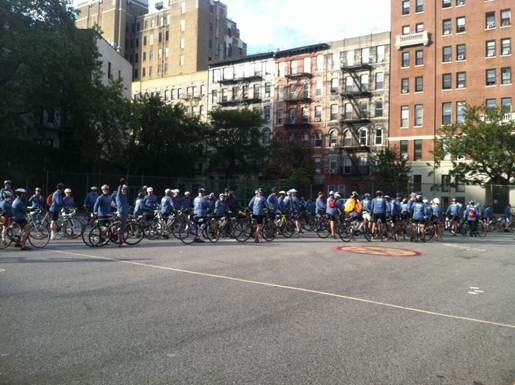
Braking the Cycle riders gathering together in the holding area on East 12th Street, three blocks from Housing Works’ Cylar House, where closing ceremonies took place. This way, we get to ride in all together. Photo courtesy of Joseph Miceli-Magnone.

When I rolled in to Holding, I was relieved, thrilled, and excited on the one hand, but I also was nervous. About a week and a half earlier, rider coach Blake Strasser had emailed me to ask me if I would be one of the speakers during the ceremony. (The other speakers were Charles King, Housing Works President and CEO and BTC Rider #2;  Eric Epstein, President of Global Impact, which has produced the Braking the Cycle ride since its inception a decade ago, and fellow BTC rider CB Kirby. Amazing jazz vocalist Thos Shipley also sang.) My first reaction to Blake’s request was to blush because I was flattered. My second reaction was, “You couldn’t get a gorgeous, articulate gay man who looks fresh as a daisy after cycling 300 miles to do it?” My third reaction was, “What? Margaret Cho wasn’t available?” My fourth reaction was abject terror and “?!*&#@.” My fifth reaction was to remember that at the closing ceremonies of my three previous Braking the Cycle rides, I was so exhausted, I could barely recall my own name. Those reactions took less than 30 seconds collectively, and then I wrote a reply email to Blake saying I’d do whatever she wanted, happily, and if speaking at closing was it, I’d be honored and privileged to do it.
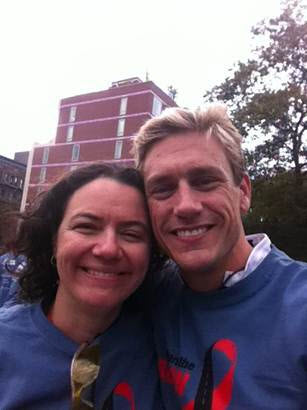
Me with gorgeous Colby Smith, an incredible athlete (he did his first Ironman last month), in the holding area, post-ride, right before closing ceremonies. Yes, he always looks this good after riding 300 miles, and this was the kind of BTC runway model I was picturing as I contemplated who would make for a better closing ceremonies speaker than I. Colby is also a funny, smart, kind human being. Who *is* this guy? Photo courtesy of Colby Smith.

Over the next week, during which I did my last training ride and massive amounts of laundry to prep for the ride, I had just enough time for the reality of what I’d committed to doing to sink in. I had done presentations, lectures, discussions, speeches for groups of all sizes in all sorts of contexts before, but this one had me nervous. I’m never at my best when I’m sleep-deprived, and I also knew the moment would be too emotional for me to be able to wing it. I also wanted to try to say something that would resonate with all the audiences who might be there—the riders and crew, also exhausted and elated; all their families and friends, including many people who had donated to the ride; Housing Works staff; and Housing Works clients, past and present—something that wasn’t canned. I spent a week thinking about it, and the week of the ride, I drafted it on Tuesday night, I had Jen read it and edit it on Wednesday, I sent the mostly final version to Blake on Thursday, the day we drove up to Boston for ride orientation, and I practiced it a few times during the lulls that day. Thursday night, I gave a spare copy to Jen to hang onto as a back-up, and I folded my copy into a Ziplock bag to protect it. That plastic bag stayed with my baggage for my first two days (and 200 miles) of riding, and then went into my cycling jersey pocket at 4am on Sunday morning before I peeled out of Bridgeport, Connecticut, with my fellow riders at 6:30. And with me it stayed for 85+ miles until we arrived at Housing Works in the East Village.

The 85 or so miles of riding that day were challenging enough to keep my mind off the speech. But my anxiety came back in a rush during that extended period of hanging around in the holding area, hugging other riders as they arrived, drinking coffee to wake and warm myself up, taking bad candid pictures with ultra-photogenic, attractive people, texting friends who had left messages. I would momentarily forget about it while congratulating another rider, and then some part of me would seize up with the memory that I was going to have to Pay Attention and make sense. Dear God, I had to talk? In front of other people? About something that mattered? What had I been thinking?

Woot woot! Me on Day 3 in New York City, finishing the official ride route as I pulled into the holding area on East 12th Street. My nerves about having to talk at closing ceremonies kicked in about 15 minutes after this was taken. Photo by Alan Barnett Photography.

I must have been jacked up enough with nerves that what followed after I gave the speech is even more of an adrenaline blur than the ceremonies of previous BTC rides. And possibly because this was my fourth Braking the Cycle ride and no longer the novelty that it once was to those who know me, I was amazed by all the people I knew who showed up to greet us and me, how warm they were, how touched I was to see their smiling faces, to get a hug from each of them. The people who are the biggest, most personal reasons I do this ride were standing right up front. One close friend and training buddy brought me an entire box of cupcakes. Another had driven up to East Lyme, Connecticut, to cheer me, and all of us, up the dreaded Mount Archer on Day 2 of the ride, and he was there again at closing ceremonies, cheering and helping with bike check-in and storage. Dear friends who were previous BTC riders and crew were there, too, whooping and hooting. My parents came and surprised me by bringing my brother, who lives out of town. A number of friends surprised me, too. One who I wish I saw more often came, and when I said, “I had no idea you’d come,” he smiled sweetly and said, “Of course I came.” My oldest childhood friend didn’t tell me she was coming at all, and then surprised me by showing up. Two of my closest friends from work came; they are each far more than what we usually deem as work friends—to me they are simply friends in the truest sense, and the work link is secondary and largely incidental—and yet because office-based connections come with their own peculiar social oddities, formalities, and awkwardness, I was especially surprised and moved to see them.
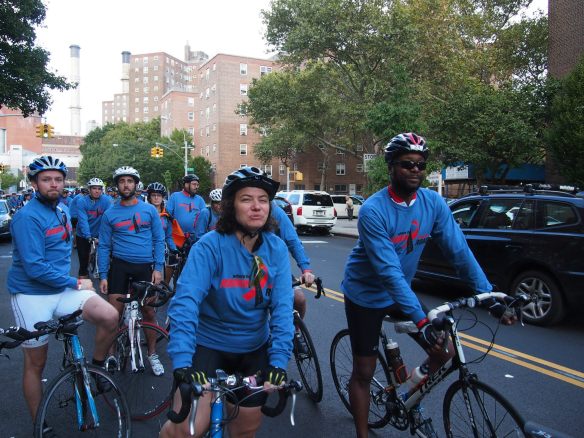
With fellow riders (Chad Woodard and  Matt Martin to my left, Rodney Newby to my right) on Avenue D, about to turn the corner onto East 9th Street where a big crowd of applauding friends, family, and other supporters awaited us. It is a mystery what I might have swallowed to produce the beautiful expression on my face. Photo courtesy of Roger Lovejoy.

But when we first rode down East 9th Street, I didn’t see anyone I knew well. All I saw  was a massive crowd of people, which in that initial moment, moved me instead of scaring me. It had been threatening to rain all afternoon—we had been doused by a brief shower when we cycled through Harlem earlier—it was chilly, and yet these loyal, tender-hearted people were standing, waiting, cheering, for us. I had been told to position myself near the stage, and when I got there, I had barely dismounted when I noticed several middle-aged African-American women approaching me and the riders immediately around me. We didn’t know them. They were strangers, and yet the second they saw us, their faces lit up and brimmed with emotion, and they moved toward us with outstretched arms. Without even consciously thinking it, I understood they were Housing Works clients. The one nearest me hugged my shoulder, kissed my cheek, and over the din of the crowd’s applause and cheering, she murmured in my ear what I am certain the other women were saying to the riders they were embracing: “Thank you. Thank you so much.” They didn’t have to explain further. It was in their voices. It was evident in the way a stranger wrapped herself around me without hesitation.
One of the women who first greeted all the Braking the Cycle riders as we arrived at closing ceremonies. I believe this was taken at some point during my brief speech a few minutes later. Photo by Alan Barnett Photography.

With that gratitude ringing in my ear, my heart swelled. As for my anxieties, they didn’t disappear; they just ceased to matter. The energy from everyone there was what was thrumming around me and in me when Eric made his introductions and I heard him call my name to prompt me to come up to the stage. I took in that none of the stage set-up was great. The sound system was iffy. The mic didn’t have a mic stand, so I had to hold the mic with one hand while I propped the pages of my speech up against the podium with the other. My hair, ever frizzy in rainy weather, kept whipping about and getting caught on the mic. The wind picked up and flapped at the pages of my speech. None of it mattered. I took a deep breath, I talked for a few minutes, and the crowd of people in front of me listened, and clapped, and listened some more. People clapped afterward and said nice things. We went to the victory party, where I hugged and chatted with some friends more; I ate a cupcake and drank the best beer I drink all year; and Jen and I cabbed it home with my bike in tow. Since then, some folks have expressed curiosity about the speech, so I have pasted the written manuscript below. Minus, of course, the spontaneous ad-libbing I did onstage, this is what I said:
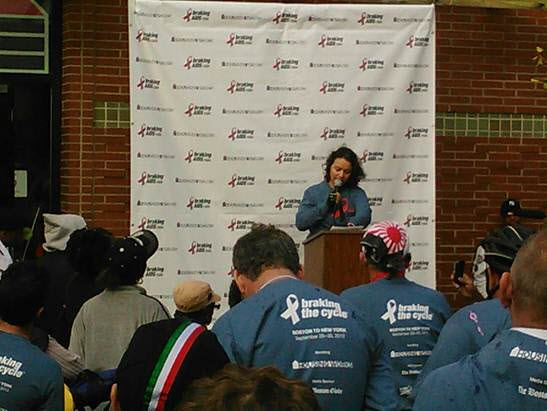
Me, talking at Braking the Cycle’s closing ceremonies, Sunday, September 30, around 5:30 PM, with rain looming but thankfully not materializing. In front of Housing Works’ Cylar House facility, 9th Street and Avenue D, New York City. If I sort of give off the air that I’ve just gotten off my bike after riding 300 miles, it’s because I have. Photo courtesy of Kate Asson.

Braking the Cycle Closing Ceremonies Speech
Cylar House, Housing Works, New York City, September 30, 2012

There’s a homeless woman who has frequented my Brooklyn neighborhood for all 12 of the years I’ve lived there. My partner Jennifer and I call her The Quarter Lady because when she asks for help, she always asks for a quarter. She tends to make people uncomfortable—because while it’s not clear what’s wrong with her, it’s clear she isn’t all there. The only things she says that are easy to make out are “Miss, you gotta quarter?” and “thank you.” She can be a little scary, possibly unstable, suffering from withdrawal, physically ill, mentally ill—maybe all those things.

For years, I gave her money when I saw her. When months went by and I didn’t see her, I’d worry a little, and hope nothing terrible had happened to her. When I saw her again, I’d be relieved and vaguely deflated—glad to see her, but sad that she was in the same place. Time seemed to stand still with the Quarter Lady. Everything always the same.

Then one day, something changed. Instead of being on her usual corner, she was on a side street, sitting on the stoop of a brownstone. She may have asked me for a quarter. I said something to her about the weather. And in the very next moment, the Quarter Lady suddenly became grounded. Her lucidity, which I’d never seen before, was visible. The first thing she said, I’d heard from her many times—which was “thank you.” Then she gave me a penetrating, compassionate stare that felt like she had peered in at the very core of my self and seen the entirety of my soul, my strengths, my flaws, all of it. And she said, “Someday I hope I’ll be able to help you too.”

I’m not sure what I said. Possibly thank you, and that I’d like that. I was on the verge of tears and I didn’t know why. We waved goodbye, and the next time we were back to our usual exchange about quarters.

I had so many obvious advantages, necessities, and privileges—a home, a job with a salary, my health, health insurance, a loving partner, family and friends. But inside, I was having a hard time that year. I was depressed about various aspects of my life, and I felt lost a lot of the time. And that morning, a virtual stranger who wasn’t even all there most of the time had seen me for exactly who and where I was in that moment, recognized I was in pain, and said something kind.

I was 9 years old when the first cases of AIDS were reported.

I was 10 or 11 when they finally figured out that sex was the major mode of HIV transmission.  

I was 15 when the first person I knew who was HIV+ got sick and then quickly died of AIDS, a close friend of my mom’s. He wasn’t out as a gay man, he wasn’t out with his HIV status. When he died, his obit said he died of cancer. That was in 1987.

I was 31 when my brother’s friend Curtis died of AIDS. Curtis was out and outspoken about everything—about his love for art, about being gay, about being HIV+ and battling AIDS. Eventually his body lost the battle, and he died in 2003.

I’ll be 40 this year. Like so many people here, probably everyone here, AIDS has been a shadow part of my life for over 30 years. I know more people who have died from it. I know people who found out they were HIV positive last year. I also know more people who are living with HIV than I can possibly name here. The good news about that last category is that they are the lucky ones: They know that they have it, they treat it, and they manage it. They’re lucky to have survived what so many of us call the years without hope before 1995 when antiretrovirals got better and became more available, and that they had access to the right services and resources.

Without movement and change, healing isn’t possible. I don’t know whether The Quarter Lady has HIV or any other illness. I know that she moved me because for a few brief minutes, she reminded me that so long as we’re alive, we all have the capacity to change and in turn, heal ourselves and one another—no matter how difficult our circumstances, no matter how unlikely it may seem, no matter how hard the journey to make that shift. It doesn’t matter whether the Quarter Lady ever helps me in some material, visible way. She helped me by imagining a different future in which she was helping me because I was in need rather than the other way around.

Since its founding, Housing Works has advocated for people at the margins who have been given up for lost, who have been considered to be beyond help, beyond change, beyond healing, long before they die a physical death from AIDS. Housing Works has gone where other groups wouldn’t go—they acknowledge the connection between poverty, homelessness, AIDS, HIV testing, treatment, addiction, IV drug use; they recognize them as interrelated; and they create a space without judgment where second chances are authentic. They imagine other ways things might work, and they make change. In making change, they facilitate healing. It’s no accident that the people who start off as clients come back as activists and advocates and staff members when they’re back on their own two feet.

People ask me all the time why I keep doing this ride. I do it because I have friends who live with HIV and because I’m all too aware of the fact that it could easily have been me. For me this ride has functioned a lot like Housing Works has for many people. Being part of this ride has helped me challenge myself and go far beyond what I thought I could do in the world; it helps me find change within myself. I ride because the people I’ve met along the way inspire me. They show up even when it looks like there isn’t any more progress that can be made. I didn’t know until pretty recently how much healing the experience of being part of this would offer me.

By being here today, whether you’re a rider, a crew member, a Housing Works client or staffer, or one of the many, many kind people here who support this cause and this community—with time, with money, with compassion—you’re a part of that healing process, too. I know for a fact that your engagement with this community, with this issue, has been source of healing for someone else, probably someone else who’s here today. And until the final end to this terrible pandemic: I hope that being part of this fight helps you find a measure of healing as well. Thank you.

Mika’s Braking the Cycle 2012 Rock Stars

*= donor to previous Braking the Cycle AIDS ride(s)

  • Anonymous (1, 2*, 3, 4*, 5, 6, 7*, 8*, 9*, 10*, 11*, 12*, 13, 14*, 15, 16*)
  • Beth Ammerman*
  • James Anderson & Suzy Turner*
  • Jennifer Anderson*
  • Renee Anderson*
  • Chris & Mel*
  • Catherine Angiel & Team
  • Janis & Dave*
  • Leah Bassoff*
  • Charlie Baxter*
  • Jon Bierman*
  • William Bish*
  • Penina
  • Buddha Tara*
  • Meghan Campbell
  • Steph & Bill Carpenter*
  • Lynne Carstarphen
  • Danielle Christensen
  • Jane & Tony*
  • Clare Cashen
  • David Chodoff
  • Terry Christopher
  • Marcia Cohen*
  • Barbara Conrey*
  • Katie Crouch
  • Kevin Colleary
  • Susan Conceicao*
  • Barbara Conrey*
  • Rich D’Amico & Mike Meyerowitz
  • Carol Diuguid
  • Annie & Jon*
  • Carey
  • Timothy “San Diego Cupcake” Fitzpatrick
  • Ray Flavion*
  • Suzie & Bernadette
  • Kory Floyd
  • The Food Healer*
  • Kerri Fox
  • Svenja & David*
  • Michael Gillespie*
  • Christina Gimlin
  • Dawn Groundwater*
  • Amanda Guinzberg *
  • Myles
  • Scott H.
  • Karen Henry*
  • Jess Holmes
  • Nancy Huebner
  • Tom Hyry*
  • Andrea Vaughn Johnson & Eric Johnson*
  • Angela Kao*
  • Katie K.
  • Cara Labell
  • Elena Mackawgy
  • Matt & Jessica*
  • Carolyn Plum Marshall
  • Paul & Luke McDonough
  • Derek McNally
  • Dave Meier*
  • Lorraina & Ben Morrison*
  • Lai & Greg*
  • Elizabeth Murphy
  • Liz O.
  • Jacob Okada*
  • Eva & Tom Okada*
  • Gregg Passin
  • David
  • Nancy Perry*
  • Lisa Pinto*
  • Eileen*
  • Briana Porco
  • Gabriel Presler
  • Josie Raney*
  • Cory
  • Sarah R.
  • Rhona Robbin*
  • Greg Romer
  • Mike Ryan
  • Carla Samodulski*
  • Terri Schiesl
  • Sigrid Schmalzer*
  • Roger Schwartz*
  • Brian Seastone
  • Brigid*
  • Jane Smith*
  • Janet Byrne Smith
  • Fred Speers & Chase Skipper*
  • Lynn Stanley*
  • Matt & Jen*
  • Danielle & Arturo*
  • Kelly Villella*
  • Jasna & Paul
  • Clay & David
  • Sherry Wolfe*
  • Yu Wong*