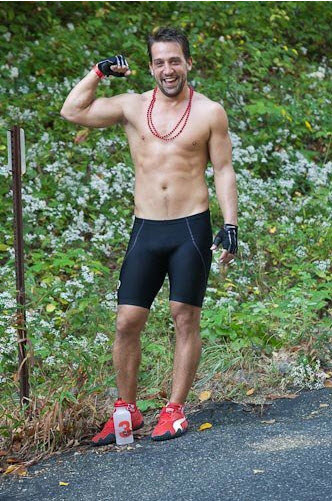
Outer Cape Century Bike Ride: A Photo Essay

As part of my training for Braking AIDS Ride every year, it’s critical, psychologically as well as physically, for me to put in at least one century ride (a ride equaling 100 miles) prior to the ride event. In past years, I’ve tried to do at least two century rides, the first in late Jule or early August, but some years, between weather, time, travel, and the usual life-juggling factors, I’m only able to do one, and some years, the best way to get it done is to do my century when I’m on vacation. We go to Cape Cod for a week every year in early September, and I’ve taken to using one of those days to complete my century ride. I could rent a bicycle easily enough, but the more one rides, the more one is attached, emotionally and physically, to one’s own bike. So each year, we pack our two bikes into our car and drive them up to Cape Cod so we can ride them while we’re there.

1233209_10201973725964985_1549125216_o

The New Yorker approach to transporting two bikes up to Cape Cod: Two bike frames in the trunk, along with miscellaneous beach mats, helmets, and bike pump, and all luggage and kitchen supplies packed into the backseat. As you can see, The Blue Streak has been disassembled and stacked on top of Jen’s hybrid bicycle in the trunk of our rental car. Given the odd angles of the handlebars and the bicycle forks, it’s more of a challenge than you would imagine. Two wheels fit atop the two bikes in the trunk; the others went tightly wedged behind our seats in the car. Re-assembly is my first task upon arrival at our Drummer Cove, Wellfleet, destination.
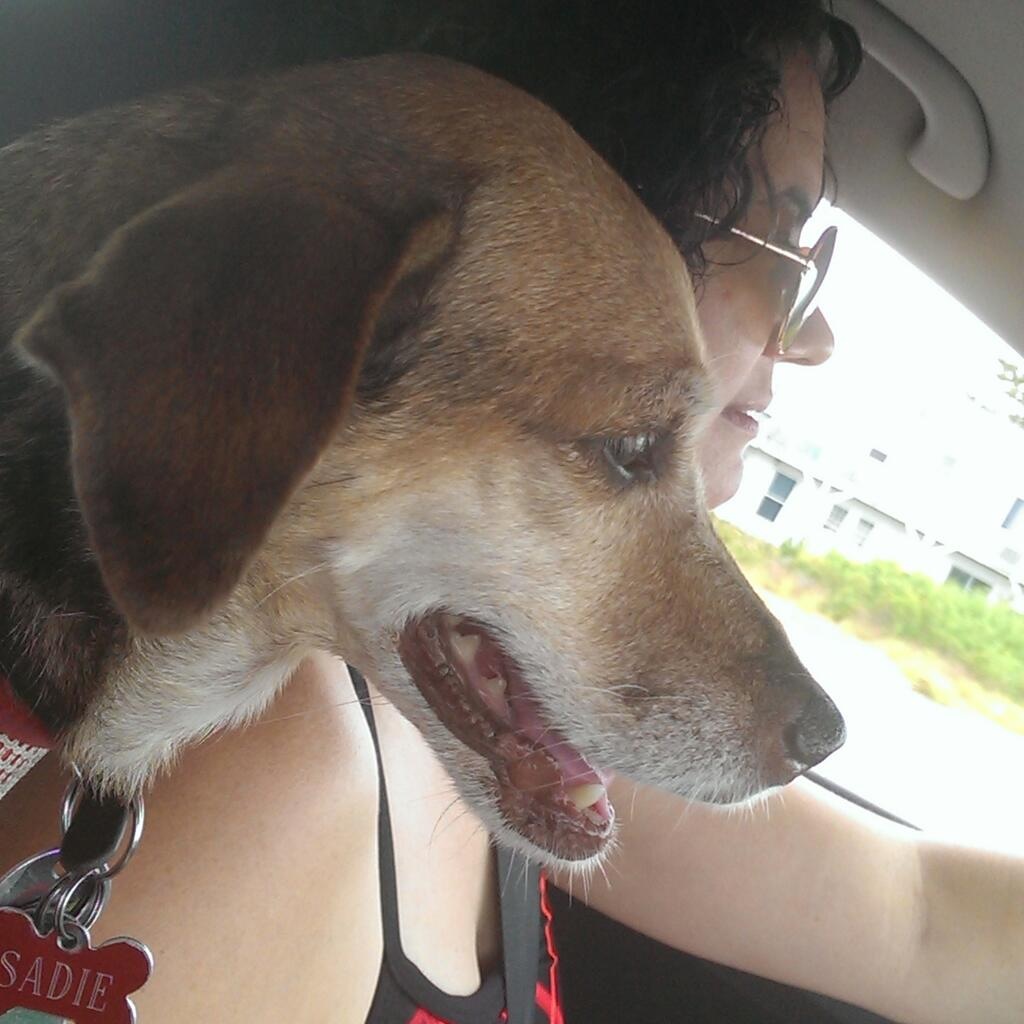
Sadie navigating

Sadie, helping me navigate on our first morning on Cape Cod, driving from Drummer Cove, Wellfleet, to the Flying Fish Cafe in the center of town, where the world’s best scones and muffins are made. (It is a well-known fact that the Cape Cod muffin, which contains a mix of blueberries and cranberries, is the only muffin in the world I will praise openly and seek out actively.)

This year, I completed my 104-miler training ride on Tuesday, September 4. The maps below offer a visual view of my route, which began in South Wellfleet at Drummer Cove.

view of Drummer Cove

My starting point for my 104-mile bike ride: Drummer Cove, Wellfleet. The cottage we’ve rented for the past decade is one of about 6 to 8 small houses right next to the marsh and Drummer Cove. Tucked between Route 6 and the cove, the cottages are shaded by a copse of tall pines, so it’s surprisingly quiet and beautiful, despite the close proximity to the highway.

Map of Cape Cod. The detail of this map offers a clearer view of my 104-mile ride route, but this map gives a better sense of the overall scale and distances covered.

Map of Cape Cod. The detail of this map below offers a clearer view of my 104-mile ride route, but this map gives a better sense of the overall scale and distances covered.

Detail view of my 104-mile ride route, Outer Cape, September 4, 2013. My route began in South Wellfleet at Drummer Cove, proceeded to Provincetown and back to Drummer Cove for lunch, then down to South Dennis and back. The purple line shows my the first half of my ride, from Wellfleet through Truro to the West End beaches and dune bike trails of Provincetown and back to Wellfleet. The yellow line represents the post-lunch second half, from Wellfleet through Eastham, Orleans, Brewster, and Harwich to South Dennis and back again.

Detail view of my 104-mile ride route, Outer Cape, September 4, 2013. My route began in South Wellfleet at Drummer Cove, proceeded to Provincetown and back to Drummer Cove for lunch, then down to South Dennis and back. The purple line shows my the first half of my ride, from Wellfleet through Truro to the West End beaches and dune bike trails of Provincetown and back to Wellfleet. The yellow line represents the post-lunch second half, from Wellfleet through Eastham, Orleans, Brewster, and Harwich to South Dennis and back again.

In the morning, when I left Drummer Cove, I began riding east on Route 6, the sole highway on the Outer Cape (with just one lane of traffic going in each direction for most of it), and made a quick left onto Lecounts Hollow Road to make my way to Ocean View Drive, which runs along the eastern coast and offers a cliff-/dune-side view of the ocean shoreline and the beaches of Wellfleet. It’s also a road that’s less trafficked by cars than the highway and is not only more scenic, but hillier and windier, and therefore more challenging riding terrain. At the end of Ocean View Drive, the road splits one last time, and you can either take a left onto Gross Hill Road and Gull Pond Road, heading westward back toward Route 6 and Wellfleet Center, or you can take Ocean View down a sloping hill to its end at Newcomb Hollow Beach. I did both, coasting down Ocean View, stopping briefly at Newcomb Hollow Beach to take the photos below, then turning around to climb back up the hill to the intersection with Gross Hill Road. I then headed along the gentle rolling hills of Gross Hill and Gull Pond Roads, cool and shaded by scrubs pines and red cedar trees, passed Gull Pond and back toward the highway. Where Gull Pond Road meets Route 6, I took a right onto the highway, passing the best source of fried clams and other deep-fried seafood delights in the area: Moby Dick’s Restaurant.

Newcomb Hollow 3

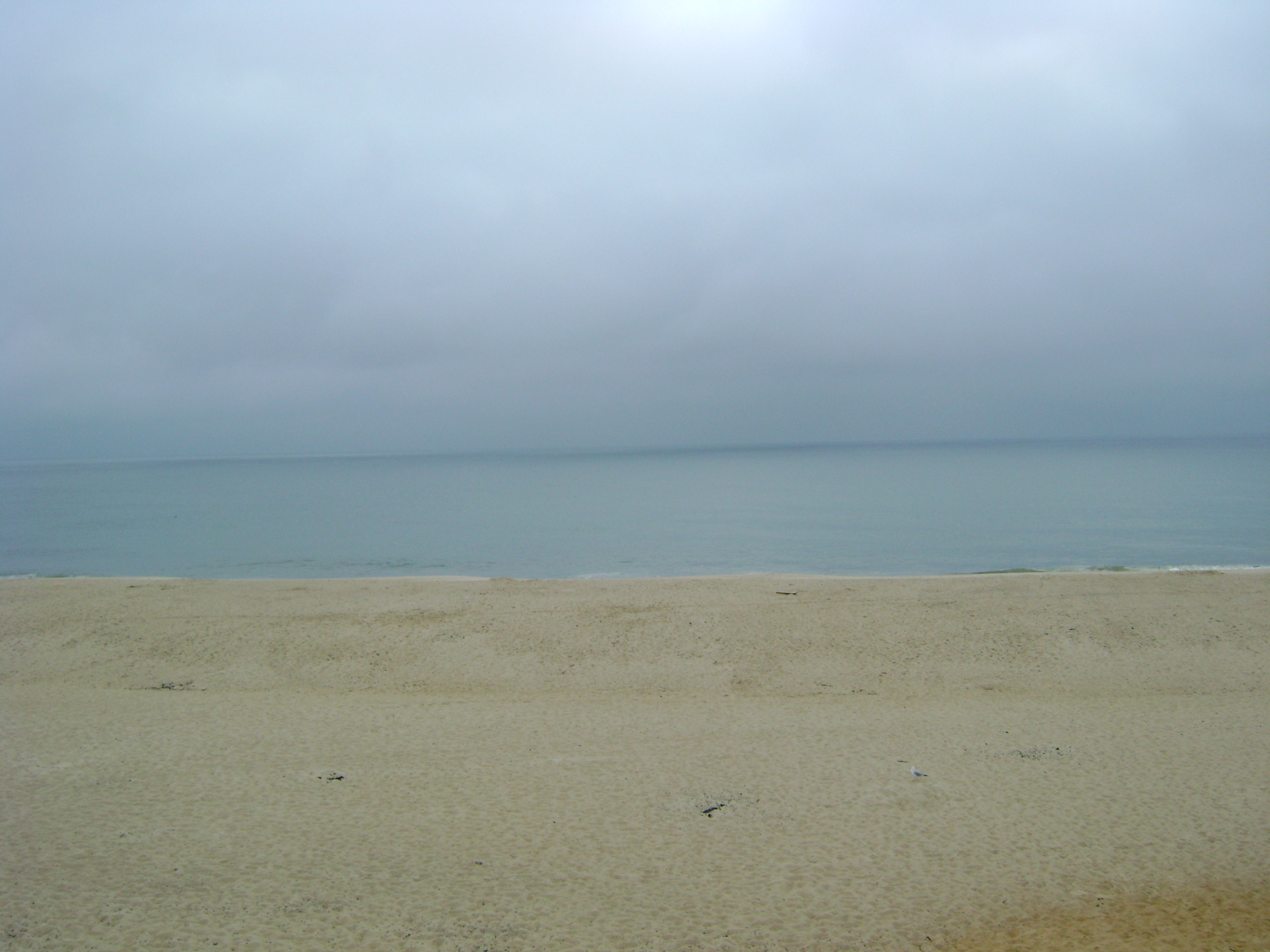
A foggy, chilly, overcast morning at Newcomb Hollow Beach, Wellfleet. It was just cold and windy enough that I wore my arm warmers for the first 10 miles of my ride.
Newcomb Hollow

Newcomb Hollow Beach, Wellfleet, morning of September 4, 2013, about 8 miles into my century ride.

The sky was overcast and gray as I rode along Ocean View Drive. It was chilly and no one was on the beach. I wasn’t sure it would clear up at all and was prepared to ride the bulk of my century ride in the rain. But the weather on the Cape can change in a heartbeat, and that Tuesday morning was no exception. The clouds burned off and by the time I made my way past Gull Pond and back to Route 6 heading east to Truro, less than 15 miles into my ride, the sun was out and the arm warmers came off. I rode on Route 6 for another 6 miles, until it meets Route 6A, also called Shore Road, which runs right next to the bay side of the western Outer Cape Cod coastline, and then I took Shore Road the rest of the way to Provincetown. It was still early morning, so town was quiet as I rode down Commercial Street from the East End to the West End of Provincetown. Once I got to the West End of town, I turned right on Province Lands Road, and headed first to Herring Cove, where I took off my biking shoes, waded into the water, and leaned over to wet my head and cool off. From there I traversed the Province Lands biking trails that wind up and down through the stretch of dunes and marsh grasses between Herring Cove and Race Point, where I stopped again to eat a power bar and rest.
Picture 11

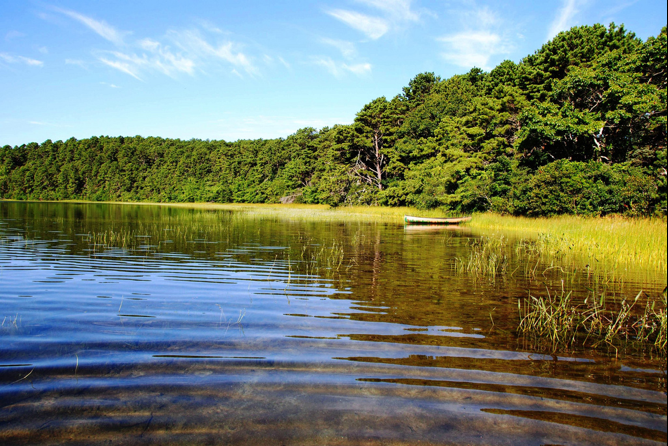
Gull Pond, Wellfleet.

moby-dicks-wellfleet-ma

Moby Dick’s Restaurant, Wellfleet, from the intersection of Gull Pond Road and Route 6. Yes, the sign really says, “For a Whale of a Meal.” Don’t let that deter you if you’re ever in the vicinity. The seafood is excellent, and one entrée is great for two people to split.

BTKkrDGIcAAAqTf

The decor inside Moby Dick’s Restaurant, Wellfleet. Lots of nautical-themed curios and knick-knacks: fish, fishing nets and traps, buoys, anchors, all lit by holiday lights strung along the rafters. During my century ride, it was too early to stop for a snack, sadly—Moby’s doesn’t open until 11:30am for the early-bird lunch crowd—but we did eat there one evening during our stay. Mmmmm…. clam strips. Fried good good is good good!

Truro hills

Hilly terrain in Truro, from Shore Road/Route 6A.
Truro from Rte

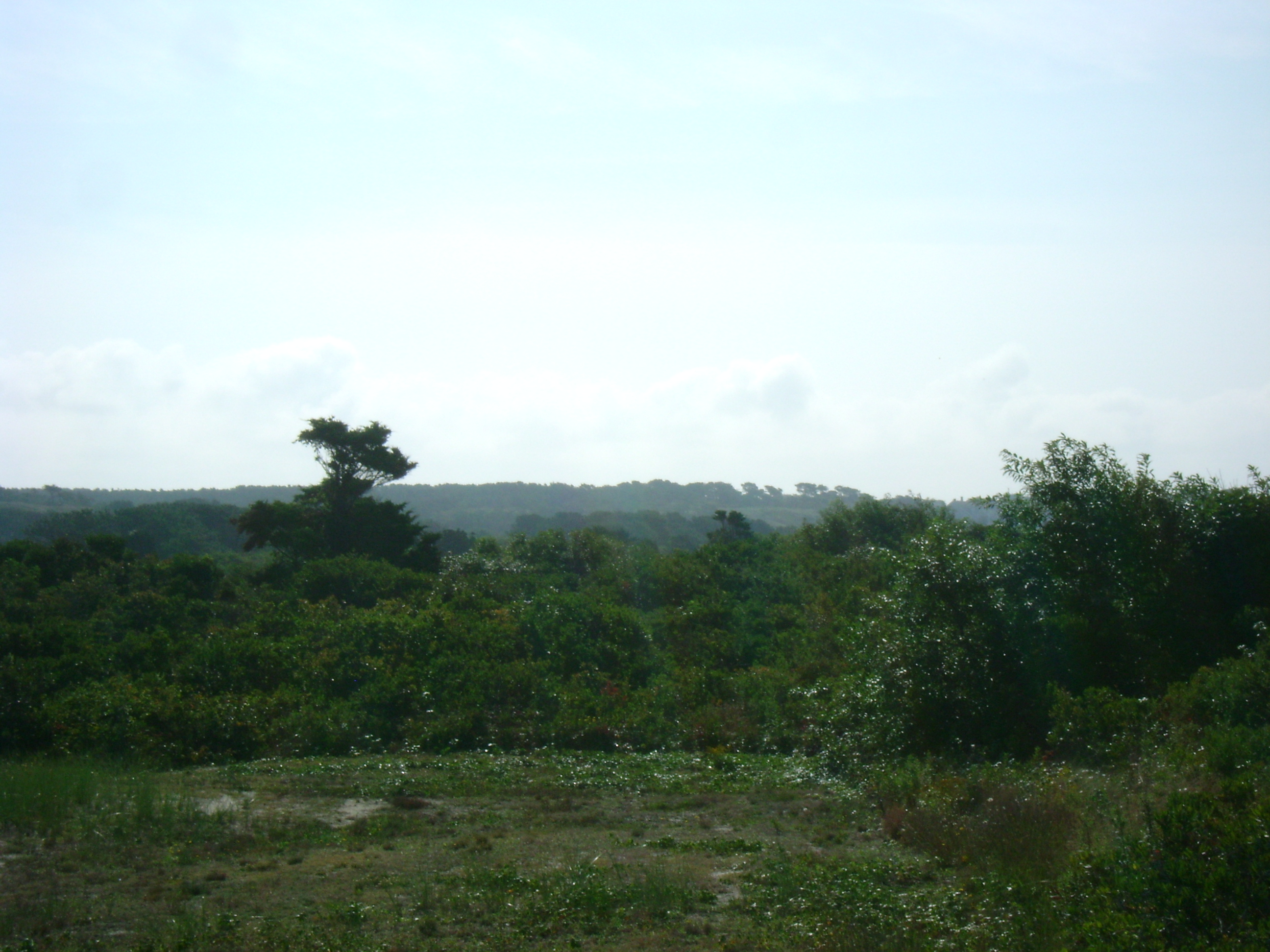
Scrub pines and woods in Truro, about Mile 20 of my ride for the day.
Beach cottages truro

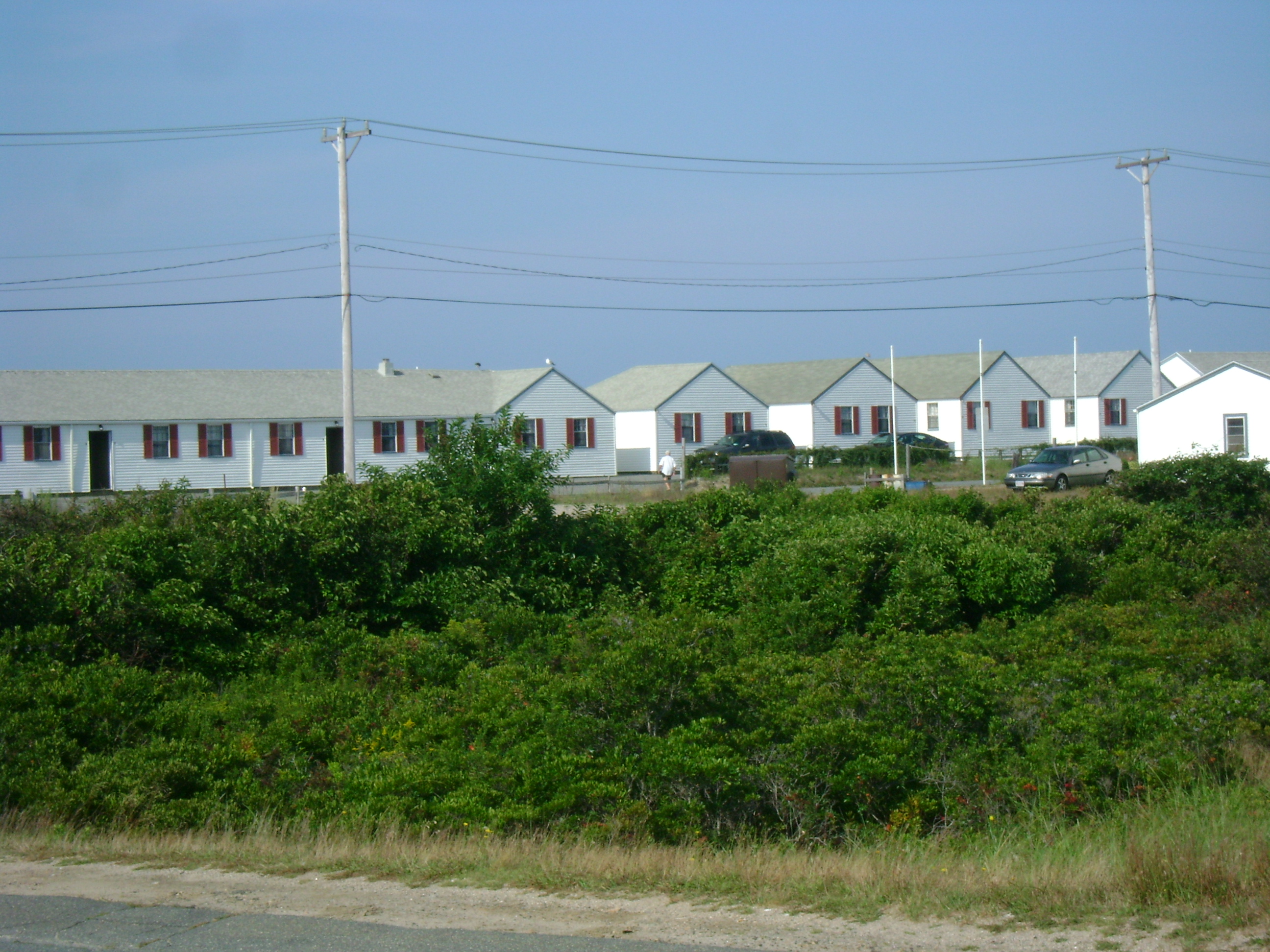
Beach cottages overlooking the bay along Shore Road/Route 6A, Truro.

truro rte6  2

Truro, facing east and Route 6, from Stotts Crossing, a tiny little strip of connector road linking Route 6A, the shore road, with Route 6, the only highway on the Outer Cape.
truro rte 2

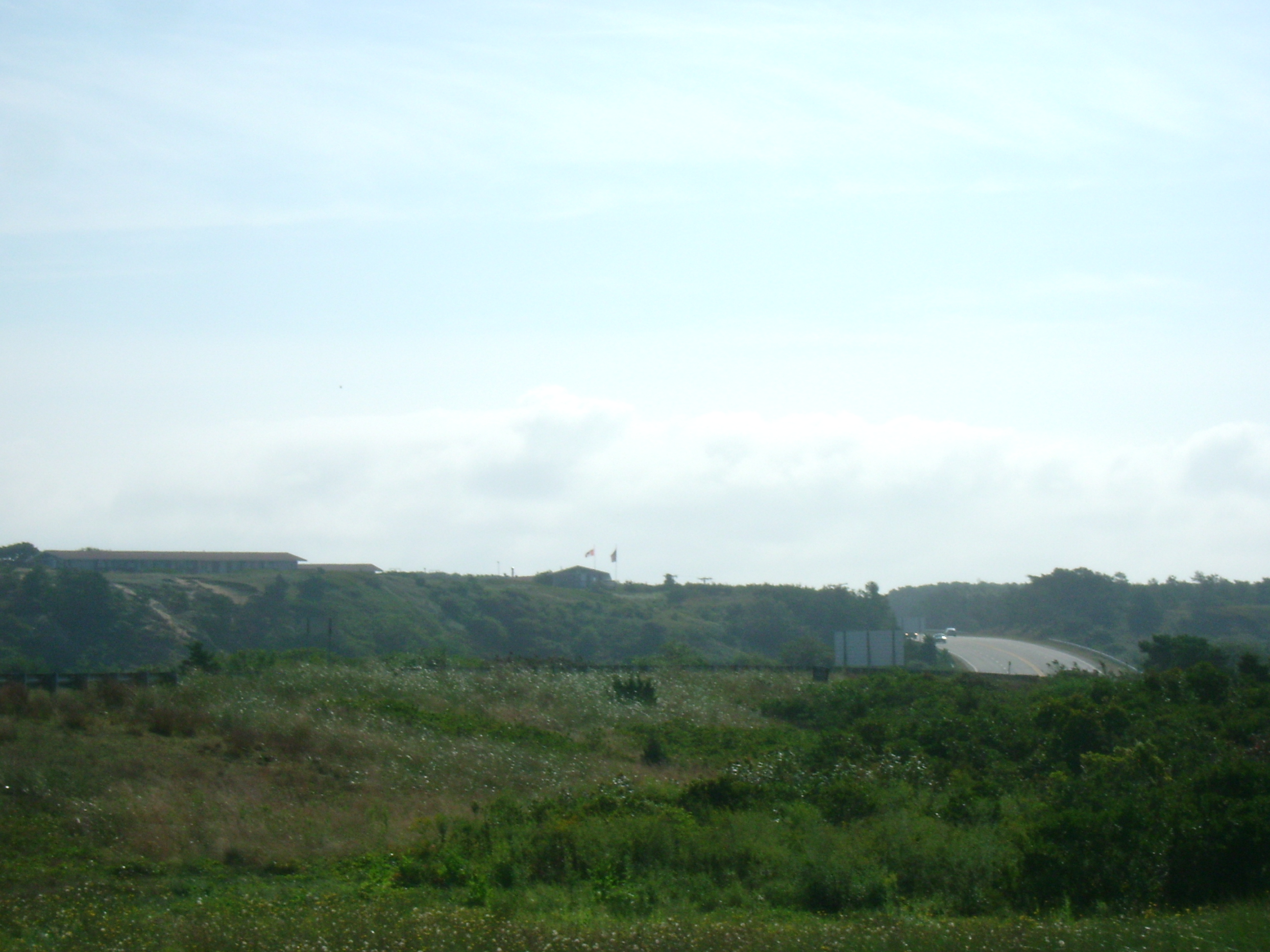
View from Shore Road/Route 6A in Truro, facing west, back toward Wellfleet, with Route 6 in the distance.

rowboats

View of rowboats on the water, along Shore Road, Truro.

Pilgrim lake 2

Pilgrim Lake and dunes, Truro, facing east from Shore Road.

Ptown from 6a

Hazy view of Provincetown in the distance, from Shore Road/Route 6A, Truro.
Ptown from 6a

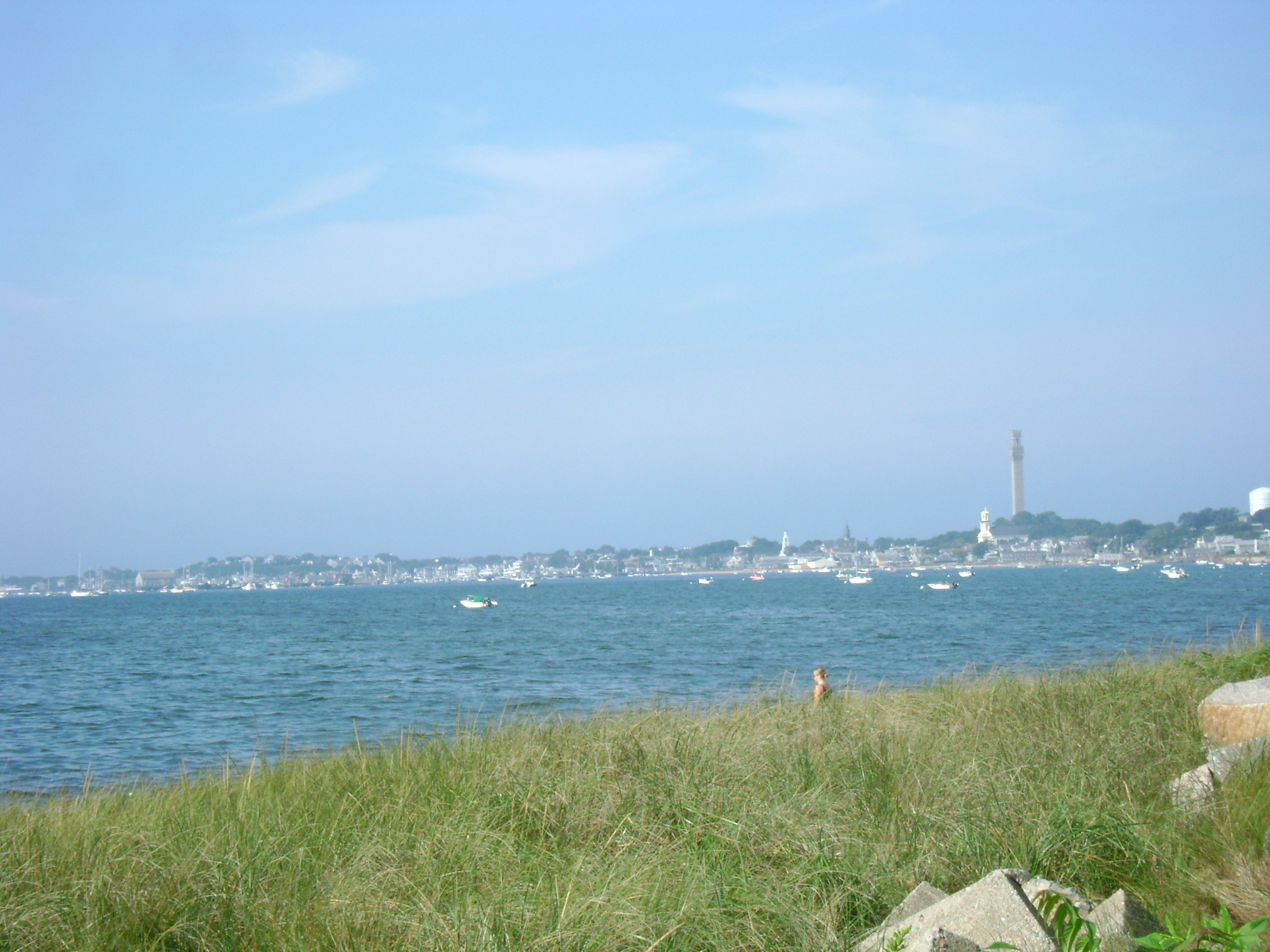
Another view of Provincetown, farther along Shore Road/Route 6A, Truro. The haze had burned off, and the day was starting to heat up.

breakwater horizontal

The West End Breakwater, Provincetown. In the distance, to the right of the breakwater’s vanishing point, the tiny bump in the horizon line is Woods End Lighthouse.
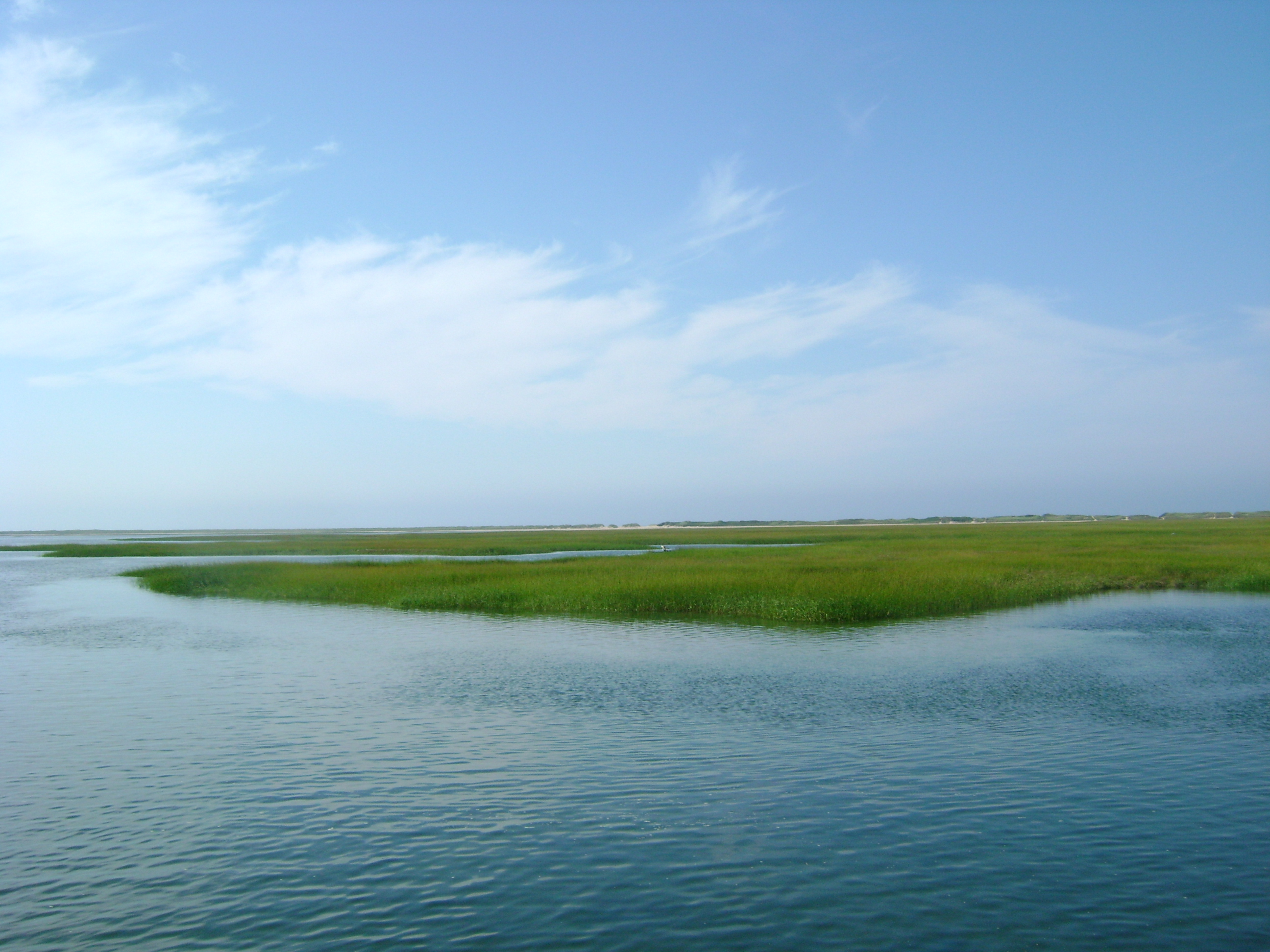
west end marshes

The marshes in the West End of Provincetown.
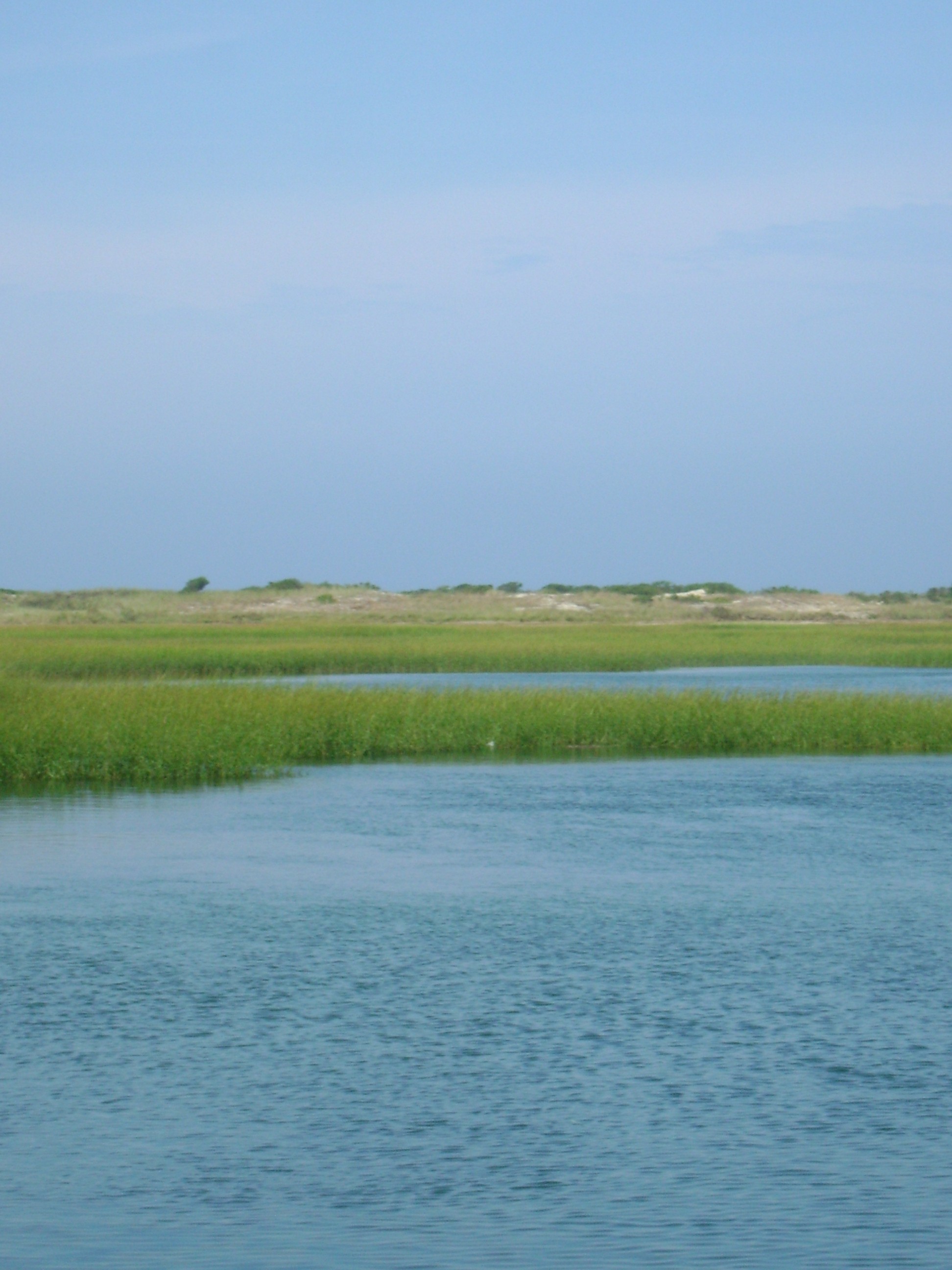
marsh

Another view of the marshes in the West End of Provincetown.

marsh w reeds

March grasses, reeds, and dunes in the West End of Provincetown.

herring cove

Herring Cove Beach, Provincetown.

herring cove 2

Herring Cove Beach, Provincetown, moments before I waded into the water to cool off.
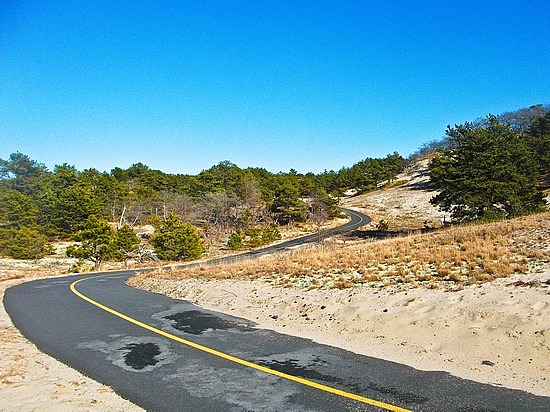
One of the Provincelands bike trails between Herring Cove and Race Point, Provincetown.
One of the Provincelands bike trails between Herring Cove and Race Point, Provincetown.

rp

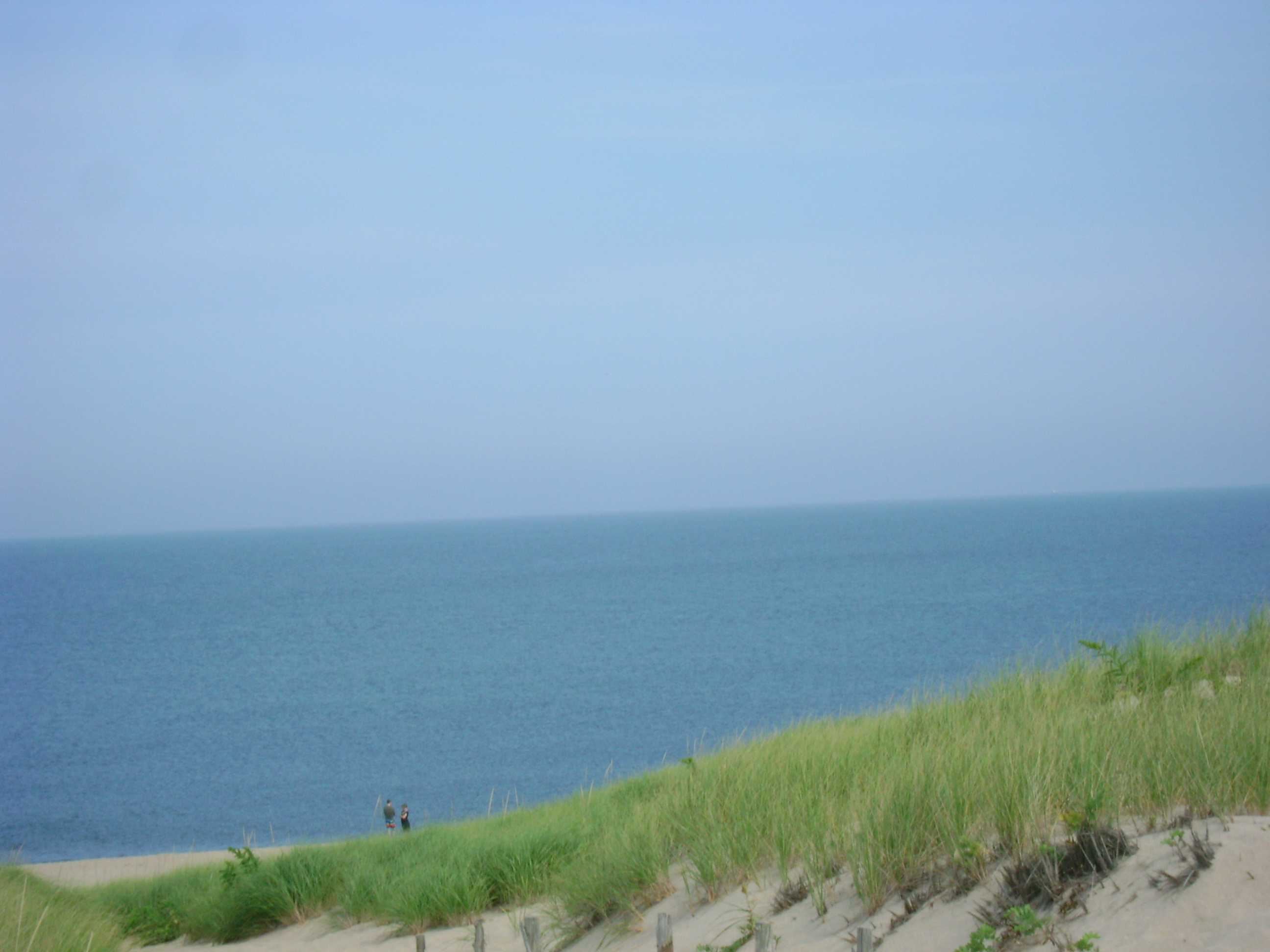
Overlooking Race Point Beach, Provincetown.
race point

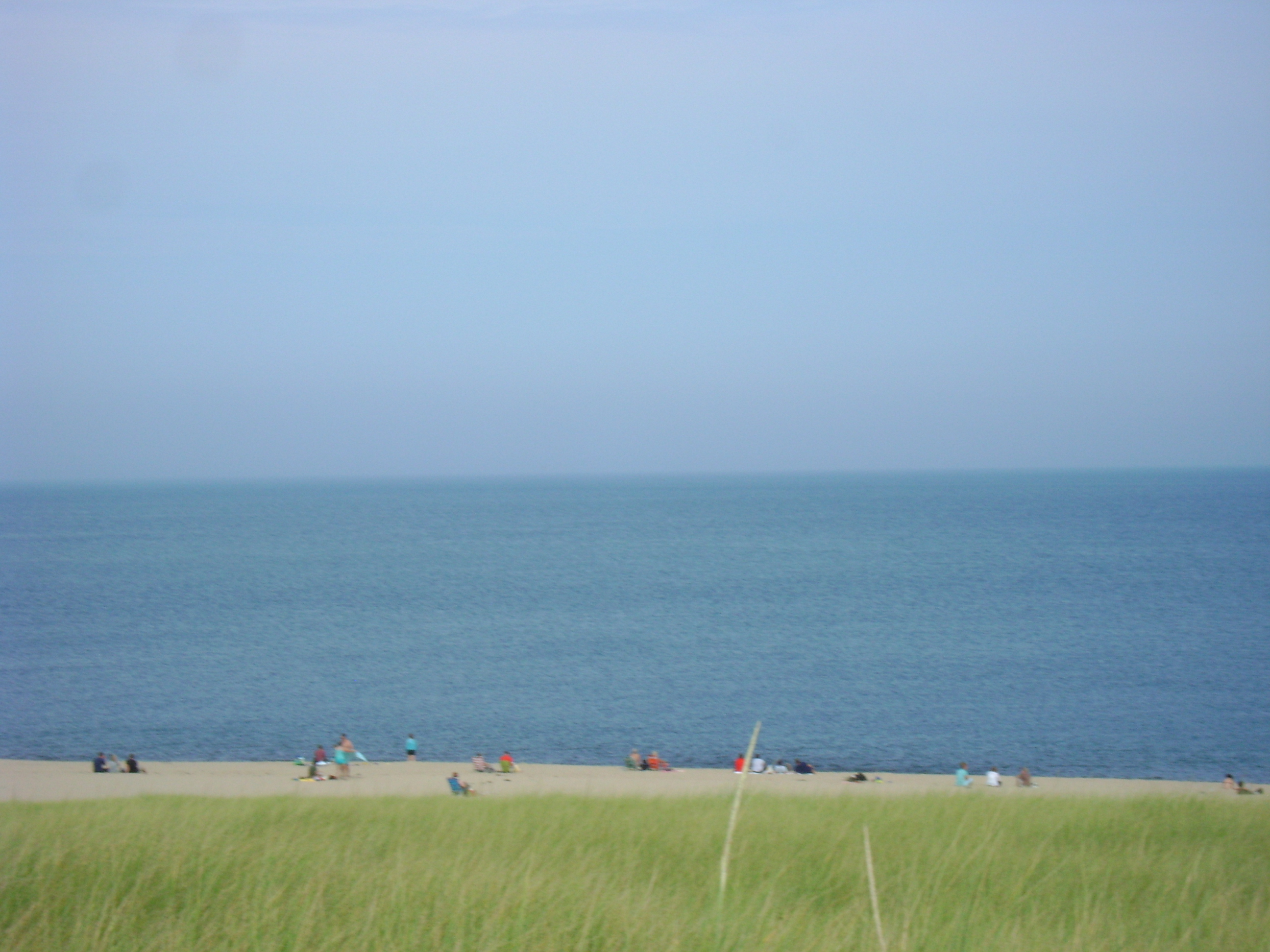
Sun bathers on Race Point Beach, Provincetown.

Before leaving Provincetown, I stopped at the gas station on Shankpainter Road to replenish my water and Gatorade bottles, and then I headed back to Wellfleet, riding Route 6 out of town, then picking up the Shore Road again going home, though I did take a couple of detours to do some additional hill riding along the way. One of the nice things about doing this century ride route is that after my first 50 miles, I get to stop back at home for lunch before doing the second half of it. That meant that in addition to having a delicious sandwich waiting for me, I got to snuggle with my partner and our dog for a few minutes and I had the luxury of being able to trade my sweaty, soaked-through jersey for a clean, dry one.

The remaining 50 miles were easy riding in terms of the terrain. The Cape Cod Rail Trail from Wellfleet to Dennis is relatively flat and it’s also 44 miles total, 22 each way. Because that would leave me 6 miles short of a full century and because I knew I need to put in some more hills before the day was over, I backtracked and re-did my route along Ocean View Drive again before heading to the Wellfleet entrance of the rail trail on Lecounts Hollow Road.

Unlike the rest of my route, much of the trail is overgrown with trees and offers more shading from the elements than most of the roads on Cape Cod. This turned out to be fortuitous because the weather took another 180 turn. Ocean View took me less than half an hour, but by the time I began on the rail trail, the sky was turning gray again, with heavier cloud clusters than those of early that morning. The first downpour hit when I was in Eastham, the next town over from Wellfleet. That lasted about 15 minutes and then stopped before I reached the town line between Orleans and Brewster, at about Mile 10 of the first 22 to Dennis, but the light stayed green-ish and dark, and it was clear from the strange glow cast on the pavement and on the wet trees that more rain was coming. I got to the Dennis end of the trail with no further rain beyond a few spittles here and there, but I literally didn’t have time to do more than eat a power bar and send a text message to Jen telling her I was heading back and doing my last 22 miles before the sky darkened and rumbled and a flash of lightning struck along the horizon. The sky opened up almost as soon as I got back on the Blue Streak, so I didn’t dawdle, and I pedaled like hell the 22 miles back home, tearing through the near-knee-deep puddles flooding the trail, with the rain coming down in sheets the whole time.
storm clouds

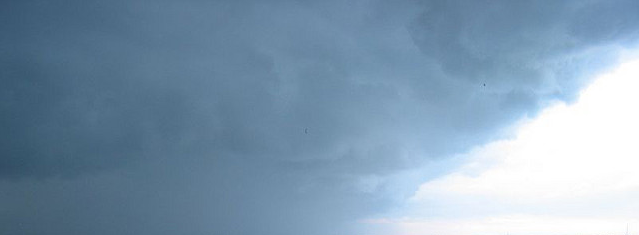
Cape Cod storm clouds gathering, before a deluge. The thunderstorm that drenched me all 22 miles back from Dennis to Wellfleet swooped in so fast, I didn’t stop to take out my camera, which would have gotten soaked and ruined. But the storm clouds depicted here, of another Cape Cod rainstorm, give a pretty accurate idea of what the sky looked like just before it started to pour during the last 22 miles of my century ride on September 4, 2013.
Railtrail, Brewster

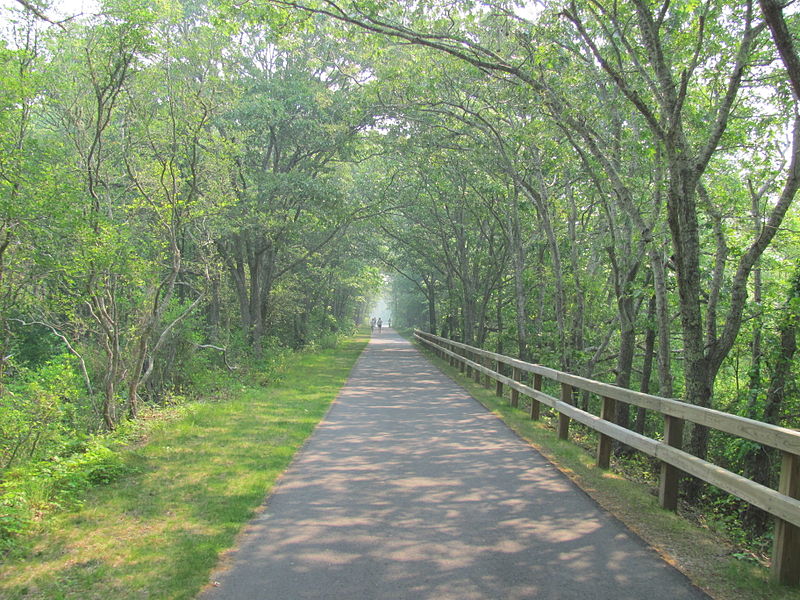
The Cape Cod Rail Trail, Brewster, on a different, sunnier day.

rail trail tunnel

The Cape Cod Rail Trail, again on a different, sunnier day. Several small metal tunnels appear along the 22-mile rail trail between Wellfleet and Dennis. I include the image of this one because the storm I rode through became so severe, that when I was about to pedal through one of them, not only was it flooded, it was also occupied by more than a dozen wet people and several bicycles. One by one, cyclists, walkers, and runners had ducked into one of these metal tubes during the storm because, except for a campground area somewhere in Brewster with a hut that houses a public bathroom, these tunnels offer the only shelter on the rail trail itself. The tunnel was packed with people and I was already soaked and intent on getting home, so I didn’t stop with them, but they clearly intended to either wait the storm out or wait until the rain lightened. I rode at least another 12 miles after I encountered these folks and it poured the whole time, so they must have given up and braved the elements or stayed there, cold and wet, for a good, long time.

I was never happier than when I opened the door to our little Drummer Cove cabin. The Blue Streak and I were drenched, so I stripped out of my cycling clothes in the doorway in order not to trek water and mud and sand into the house, and then I wiped the bike down and emptied the saddle bag and hung it from a rack in the bathroom, so rainwater wouldn’t drip and pool on the floor as everything dried.

I got back home to Drummer Cove in the nick of time, it seems. The storm worsened, and pounded down on our cottage for the next five and a half hours, all through the evening. My rewards for making it through 25 miles of cycling under torrential showers were numerous and simple and full of tactile pleasures, a hot shower, dry clothes, an evening relaxing on the couch with my wife and my dog, a massage, cold beverages of all kinds (hydrating water and seltzer and juice, followed by a glass of crisp white wine), a delicious dinner of fresh seafood and grilled vegetables, and the sight of this distance on my bike odometer:

century odometer

What joy: A 104-mile bike ride, completed.
Braking AIDS Ride in 150 Seconds

One of the questions I get most frequently about the Braking AIDS Ride is about why I keep going back for more. I mean, let’s face it. Biking nearly 300 miles in three days, rain or shine, sound like… well, it sounds like lunacy.

That three-day lunacy every September also means that beginning every March and April, most of my weekends are all about training. Not brunch. Not going out. Not staying in bed with my devoted wife, who loves me and this cause enough to let me make her a bike widow for four to six months every year. Not snuggling with my dog. Not seeing friends. Not reading. Not writing. 

Have I mentioned no brunch?

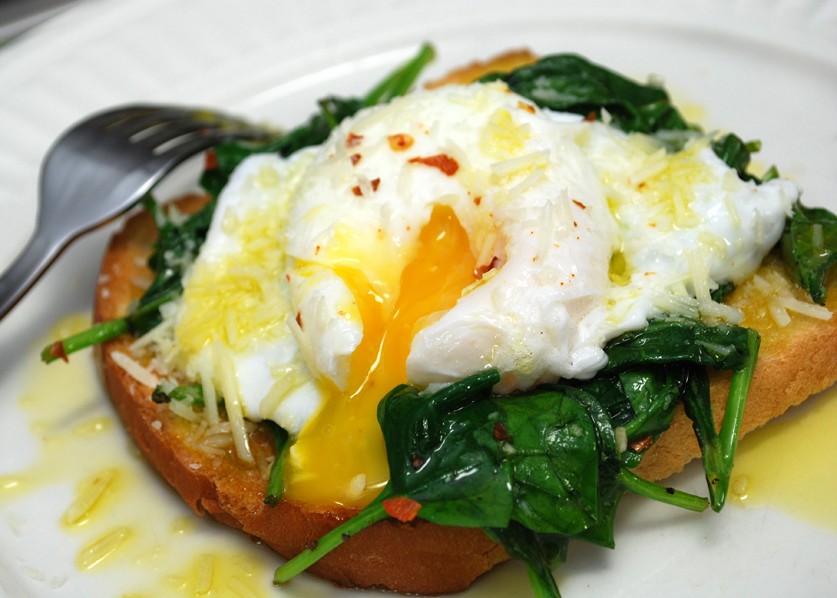
Every weekend, each time I cycle up the long Alpine hill at the northern end of Palisades Park, I keep hoping that a brunch feast like this will be waiting for me when I get to the crest and  then roll into at the rangers' station. I've been riding that hill for years now. Where are my damn poached eggs?

Every weekend, each time I cycle up the long Alpine hill at the northern end of Palisades Park, I keep hoping that a brunch feast like this will be waiting for me when I reach the crest and then roll into at the rangers’ station. I’ve been riding that hill for years now. Where are my damn poached eggs?

I’ve written many a wordy post articulating the numerous reasons I am thrilled to participate in this cause and on behalf of Housing Works and this ride, despite the lack of poached eggs available on River Road in Palisades Park. Words are my strongest medium, but I have a great appreciation for the visual as well. The fine folks at Black Watch Productions, who have been participating in and documenting the ride on film every year since its inception, have managed to capture the spirit of the ride in 150 seconds. This is why I keep going back:

For those of you looking for my Hollywood close-up, I don’t appear in the fine bit of footage above, but I do make a few cameos in a slightly longer segment that appears on my Braking Aids Ride donation page. My heroic partner’s amazing efforts as a ride crew member are well-documented in that video as well, beginning around Minute 5; fashionable as ever in her adorable stripey hat, she’s one of the angels literally pushing and running alongside bikers who are trying to claw their way up Mount Archer, the toughest hill on the route. As for me, at 5:40, I prove, in case anyone doubted it, that I’m incapable of climbing Mount Archer without an expletive or two, and The Blue Streak and I, back by popular demand, show up again to wave at the Black Watch folks, on decidedly flatter ground, at 7:26. For those of you dying to see me in spandex, this is your chance.

[INSERT SHAMELESS SELF-SERVING PLUG: Yes, there’s still time to donate! After you’ve enjoyed the donation page video antics, while you’re there, why not make a ride donation to support Housing Works and its amazing work to fight AIDS/HIV? As of this writing, I’ve raised $6,400, 64% of my $10,000 goal, and I need your help to make the remaining 36%. Donate, donate again, and please share the link to this blog and to my donation page (http://bit.ly/ZGvJZl) with your friends, your family, your colleagues!]

And to those of you who’ve donated already, I can’t ever thank you enough. I think of your support, your kindness, and your encouragement with every single pedal stroke on the road.

Women on Bikes! Getting My August Training-Ride Bearings

The summer has zipped by in rather frightening fashion. It’s only two months until Braking AIDS Ride 2013 begins, which means I need to put in some back-to-back long training rides this weekend.

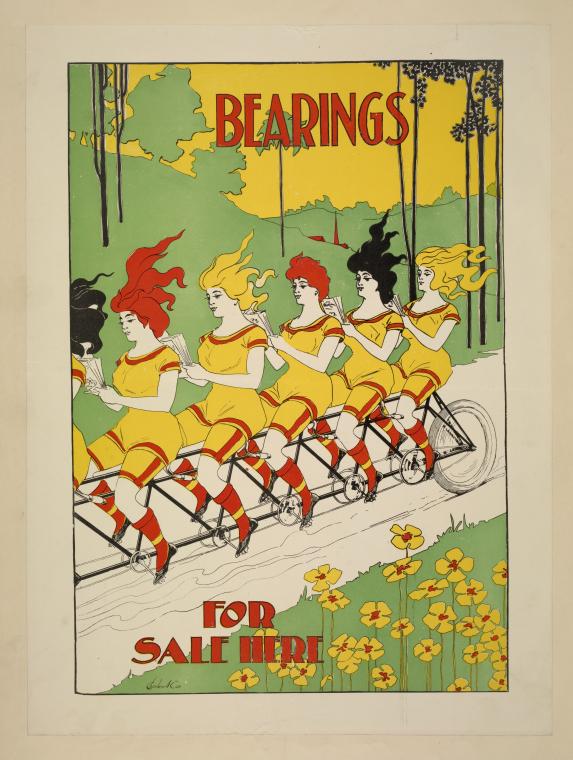
Bearings, for sale here, Charles A. Cox, c. 1890.  Courtesty of Posters: Artists Posters Collection, Library of Congress Prints and Photographs Division.

Bearings, for sale here, Charles A. Cox, c. 1890. Courtesy of Posters: Artist Posters Collection, Library of Congress Prints and Photographs Division.

In my fantasy version of doing back-to-back training rides, a fantasy that tends to dominate my foggy, exhausted thinking at 6:00am on Saturday morning when I’d rather remain in bed, the weather will be as beautiful and mild as it’s been most of this week, the wind will be at my back, the hills will feel like flats, the flats will feel like downhills, and the downhill cruises will feel like heaven on earth. In that imaginative rewrite of my training days, it feels as though the leg power of five other women are powering me and my bike, and the riding is such a piece of cake to us, we’re all reading fashion magazines as we cycle. (For anyone who’s asking, in the illustrated rendition of this fantasy above, I’m the raven-haired woman in front of the blonde caboose rider.)

In reality, it’ll be me, by myself, pedaling on my own steam, trying as best I can to push myself but also live into whatever my body can do that day and whatever the road brings me. What’s nicer about the reality version: Nothing feels better than the moments when I work hard and it pays off. Sure, it would be easier if the roads all felt flat, but then, so would my mood. The highs are that much sweeter when they are hard-won. So, whatever comes these next weeks, bring it on.

On the other hand, while I can forgo the other five women helping me pedal, but if anyone knows where I can get those amazing, red knee-high cycling socks, please contact me ASAP.

To support me and my invisible tandem-bike harem to support Housing Works and fight AIDS, you can still donate here!  I’m at 54% of my $10,000 goal, a sum that’s been achieved, to my amazement, in only a month. So, I’m more than halfway there, and the rest, I hear, is, well, at least partially downhill. Donate early and often!

Cyclist Dreams: Imagining the Finish Line

Braking AIDS Ride is not a race. It’s a three-day, nearly 300-mile endurance ride, as well as what Housing Works’ President and CEO Charles King aptly calls “a civil rights march on wheels” because in addition to the crucial funding the ride raises for Housing Works and its many HIV/AIDS services, it also raises awareness of the disease and the remaining challenges associated with it. (Just this morning, when I rode in to work, I was wearing my brand-spanking-new Braking AIDS Ride jersey, and when I entered the lobby of my work building wearing it, a security guy who has known me for years as the chick who comes in wearing her bike gear stopped me and asked whether I had done the Boston-New York AIDS Ride, and we chatted about it for a few minutes.)

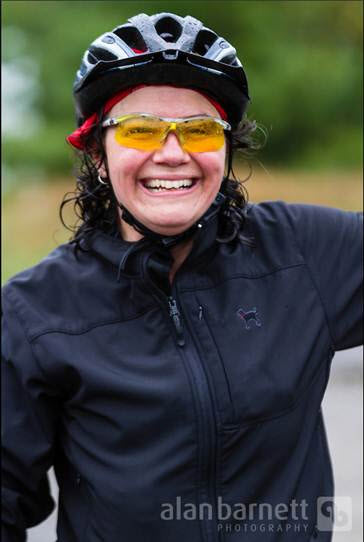
Me riding in the pouring rain early Friday morning, Sept. 28, 2012, in Massachusetts, Day 1 of last year's ride. This is what I look like when I ride and I am taking myself a little too seriously. Which, thankfully, is not 100% of the time...

Me, riding in the pouring rain early Friday morning, Sept. 28, 2012, in Massachusetts, Day 1 of last year’s Braking AIDS Ride. This is what I look like when I ride and I am taking myself a little too seriously. Which, thankfully, is not 100% of the time… Photo courtesy of Alan Barnett.

The ride itself brings together cyclists of all shapes, sizes, and levels of fitness and biking experience, which is one of the things I love about it. Some people aren’t big cyclists at all, and they participate largely because they believe in the cause; they raise money and awareness, they train as much as they can, and on the ride, they show up to have a good time and put in whatever miles they’re able to put in. Some people are unbelievable athletes—racers, marathoners, multi-time triathletes and Ironmen/women, cyclists who can average 18 miles an hour all day long for 100 miles—and they do the ride even though it’s not a race and there’s no award for finishing each day first because they’re connected to the cause as well, and because whether we’re officially timing it or not, the ride itself is a physical challenge for everyone. Most riders, myself included, fall somewhere in between these two opposing ends of the Braking AIDS Ride cyclist spectrum.

Still, in the course of training all summer for this long ride, I sometimes tend to forget I’m not competing with anyone except myself and whatever personal physical goals I might have. I think it’s good to set the bar higher each time one reaches a goal, but I also tend to forget that means it gets harder the longer one works at something rather than easier. Now that I’m doing my fifth Braking AIDS Ride since 2008, I find I have to spend more time contemplating and recalibrating my goals and my expectations as to what “progress” is for myself. I tend to focus so much on what’s next, what the next target is, I forget to turn around once in a while and look back at how far I’ve come since I started all this. When I began training in 2008 for my first Braking AIDS Ride, I had never done a century ride (100 miles in a day), much less three back-to-back centuries. At the beginning of my training that season, I pedaled along at a humbling 12-13 miles per hour on flat road. By the time I did my second ride in September 2009, I had logged something like 4,500 miles on my bike, The Blue Streak, since purchasing it in June 2008, I had raised $20K for the cause over the previous two years, and I was a solid intermediate rider.

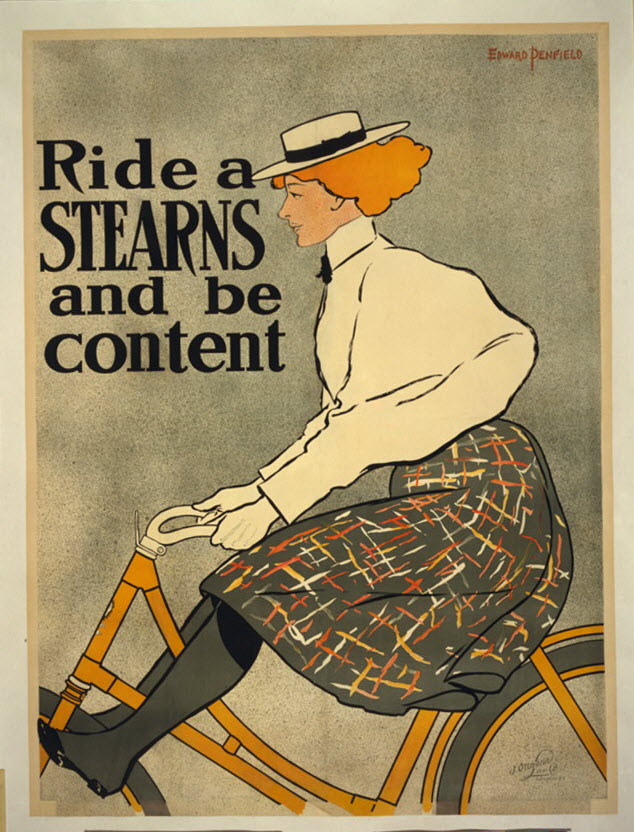
In my mind's eye, I looked something like this when I first started training in 2008 as a novice cyclist. Every hill was a slog, every mile was an accomplishment. Image info: Ride a Stearns and be content, Edward Penfield, 1896. Courtesy of Artist Posters Collection, Library of Congress Prints and Photographs Division.

In my mind’s eye, I looked something like this when I first started training in 2008 as a novice cyclist. Every hill was a slog, every mile was an accomplishment. Image info: Ride a Stearns and Be Content, Edward Penfield, 1896. Courtesy of Artist Posters Collection, Library of Congress Prints and Photographs Division.

I’ve more or less stayed within that same rider classification category since then, with some years yielding some minimal athletic progress and others with minor but demoralizing setbacks. Each year, I struggle with training time and balancing other commitments, as well as with my own ego and competitive streak and some mild physical challenges, mostly related to breathing problems, including intermittent, exercise-induced asthma, which I wrote about in a post last season. The other breathing issues are manageable but chronic. I’ve broken my nose four times, the first time at the age of five. It has never been an aesthetic issue to me, so until I became serious about cycling and then tried cross-training one season—specifically some jogging and swimming, both sports that require more upper body work and strength than cycling—I didn’t realize that living with a perpetually deviated septum and therefore, a persistently stuffed nose was holding me back athletically. I kept bumping up against the limits of my own respiratory system on the road for three years until I finally saw an ENT guy for the first time last December to assess things and get some tests done. I hate going to the doctor even for base-level check-ups, so this appointment was a big deal for me, more or less three years in the making. (I know. It’s absurd. I’m working on this avoidance tendency and am getting a little better about this sort of self-maintenance as I get older.) The upshot of the ENT visits is that for walking around, leaving my nose as is is fine (no kidding, as that crunchy schnozz is what I’ve been living with for 35 years), but for hard-core cycling, surgery is likely to be the only thing that will really fix the problem or at least give it a run for its money. The doc gave me a prescription for Nasonex nasal spray, and that helps some—I breathe better when I use it once a day than I do without it—but the longer I train, the more I push up against the fact that even when I’m in decent shape and my muscles are strong enough to do their thing, my breathing feels like more work than it ought to be. The doctor called the surgery optional, a quality-of-life lifestyle choice, and in the grand scheme of things, he’s right. I’d do it in a heartbeat, but surgery is expensive and there’s a lot of unreassuring murkiness surrounding what insurance will cover. I just don’t have five figures to shell out right now for optional surgery so I can ride my bike a little faster and with less respiratory effort. 

It’s unclear to me at this point whether I’ll ever get my nose fixed, about which I sometimes feel frustrated until I remind myself this is really a first-world inconvenience rather than a dire problem. Let’s keep it all in perspective, Mika: I am healthy, I am relatively young, I am gainfully employed. I have a fantastic spouse who is my best friend and who loves and support me in all I do. I can do most of what I want to do. Not everyone can say that.  Several friends of mine who’ve died the past few years—most from illnesses completely unlinked to HIV or AIDS—obviously can’t say that. An old friend who’s my age and who’s been battling cancer (also not HIV-related) for the better part of three years can’t say that. Another friend with an injury from an accident can’t say that, at least not for the next month or two.

I’m going to type it again, for my own benefit, because I suspect I need the repetition when it comes to learning certain lessons and not taking my blessings and the gifts of my life for granted: I can do most of what I want to do. That’s lucky. Really lucky. Even on a day when I feel like shit or my self-esteem is in the toilet (whispering at me that I suck at everything I attempt; amazing how persistent that little devil is even with evidence to the contrary), I can still do most of what I’d like to do and most of what I attempt. Lucky.

With that in mind, I’m going to say here and now that while my primary goals for this ride season are the same base-level ones I have every year—to train as best I can (and yes, that includes riding faster and longer and on more challenging terrain if and when I can manage it), to raise as much HIV and AIDS awareness as I can, to meet if not exceed my ambitious $10,000 fundraising goal (insert shameless plug: Please donate early and donate often! As of this writing, I’m at 52% of my goal and every donation helps!), and to ride every mile of Braking AIDS Ride from Boston to New York this September—my other new goals are to keep my ego in check, to be a little more gentle with the internal self than I usually am, and to maintain some perspective about where my life is abundant and where it is challenging or disappointing whenever I feel that my darkest angels are chasing after me. If I can keep my eye on those goals for longer periods of time, that’ll be huge emotional progress for me.

I have no doubt I’ll still have days when I’ll be finding myself irritable at every advanced racer cyclist who whizzes past me on horizontal, easy terrain or who takes hills at 15mph like they’re pancake flat while I pant up them at a pace that feels excruciating to me. I’ll surely get pissed at myself again for not being able to drag my ass out of bed early enough to put in the ride time I’d like. But I also want to be able to let myself feel those things when they bubble up and then pull back enough to also decide not to purchase the permanent real-estate rights to that low, self-judging emotional space and build a house there, where I can sulk quietly and habitually in the living room of my own disappointment. I want to get more skilled at reminding myself of what I forget too often while I’m training: that the ride part of Braking AIDS Ride is a blast every year no matter how fast or how slow I am, no matter what physical challenges I may encounter. Every day on the road, rain or shine, is a good day. I want to also let myself look forward to the incredible people who I meet on the road every year, individuals who inspire me to be what I hope is my best, most authentic self. I want to know somewhere in the core of me that whether or not I achieve any of my personal goals, on Sunday, September 29, 2012, when all the Braking AIDS riders bike in together to closing ceremonies in New York and there’s a crowd of people waiting on the street cheering us on, many of them clients of Housing Works, and we hand over a check for six figures to support Housing Works, hopefully bringing the world a little closer to the end of HIV/AIDS, I feel like we’re all, every single one of us, number one at the finish line, and inside it feels like this:

Déesse 16, rue Halévy, Paris, Jean de Paleoloque,   c. 1989. Courtesy of Library of Congress Prints and Photographs Division.

Déesse 16, rue Halévy, Paris, Jean de Paleoloque, c. 1989. Courtesy of Library of Congress Prints and Photographs Division.

HIV/AIDS: Good News, Bad News, Red Fish, Blue Fish, Loveship, Courtship, Pos-Ship, AIDS-ship, Sickship, Oldship, Deadship

It’s hard to believe that it is late July already. My last post on here was in March. It has been that sort of season. Busy but erratic. Insane weather that went from unseasonably cold to sweltering almost overnight.

Me, wet and cold, but happy, on Day 1 of last year's Braking AIDS Ride, Friday, Sept. 29, 2012. Photo by Alan Barnett.

Me, wet and cold, but happy, on Day 1 of last year’s Braking AIDS Ride, Friday, Sept. 29, 2012. Photo by Alan Barnett.

In truth, though, I think I have postponed writing on this blog this season because I was struggling to figure out what I wanted to say. How my thinking about doing this 3-day, 285-mile bike-ride fundraiser and continuing to support this cause—the fight to end HIV/AIDS—in this way has evolved. This is going to be my sixth AIDS Ride, my fifth since 2008 with the Braking AIDS Ride group. I’ve ridden over 10,000 miles on a bicycle and raised almost $45,000, all in the name of supporting beneficiaries that offer crucial HIV/AIDS services. Isn’t that enough? Why am I still at it? What is the big deal about HIV? What’s changed since 1999? What’s different about the way I think about this in 2013? Why do I continue to fight this particular fight?

These questions are easy to ask, but authentic answers are elusive. I find that now that me asking for help to support this cause is no longer a novelty—just as the disease and the fight to end it are no longer new—I don’t always know what to lead with when I reach out to people about it. I am tired of HIV/AIDS, and even I am tired of doing what journalist Randy Shilts called “Talking AIDS to Death” in a 1989 Esquire article with that same title.

It's official. According to the popular wisdom, AIDS has been old news for a decade and a half. This Esquire cover hits the stands in March 1999, six months before I did my very first AIDS bike ride.

It’s official. According to the popular wisdom, AIDS has been old news for a decade and a half. This Esquire cover hit the stands in March 1999, six months before I did my very first AIDS bike ride.

What do I say to people today about AIDS, especially people I know who have heard so much of it, if not all of it, before? Where on earth do I begin? Do I lead with the good news? Everyone likes stories about progress. I, too, like stories that suggest we’re getting somewhere, that our efforts help. And we are making progress, no doubt about it. Or do I lead with the bad news? We are getting somewhere, but HIV/AIDS still affects countless people, and it remains a horrific, sometimes fatal disease, which is why we still need to keep up the work. Do I scare people to remind them that resting on our laurels and thinking the HIV/AIDS is now someone else’s problem—Africa’s problem, or Southeast Asia’s problem, or a Caribbean problem—is just about the worst thing we all can do?

Per usual, I decided to split the difference and do both. So, the good news and the bad news:

I fight this fight to end HIV/AIDS, and I ask for continued support for Housing Works from practically everyone I know year after year because HIV is old news. AIDS has now been around so long, it was considered old news even back in 1999, the year I did my very first AIDS ride, as beautifully illustrated by the March 1999 Esquire cover reproduced here.

In past years, I’ve usually set my fundraising goal at $5,000. Because AIDS is considered yesterday’s news, this year, I am doubling my efforts, and setting my fundraising goal at an ambitious $10,000.

Despite our progress, the battle against HIV/AIDS is far from over. My feeling is that one of the biggest growing challenges is reminding and in many cases, persuading people that HIV is still a big deal, a problem worthy of our time, our attention, and our financial support.

Yes, we have come a long way since the 1980s, when most people who contracted HIV died painful, ugly deaths that were both too long and too short. Too long in terms of the duration of suffering, for them and those who loved them. Too short in that the disease’s victims in those early days lasted a year or two, months, sometimes weeks. Today, in the nations where testing and treatment are affordable and readily available, the U.S. among them, HIV has become something you can live with for a very long time. That is the good news. And in contrast to 20 years ago, it is very good news.

The bad news, unfortunately, is exactly the same: that HIV has become something you can live with for a long time. The bad news is that people know that HIV is manageable, but what they have less knowledge about is what living with it entails.

Here are just a handful of reasons why complacency surrounding the fight against HIV/AIDS is so dangerous:  

The statistics that demonstrate that HIV and AIDS are still a real problem continue to go up every year, even in the United States. 34 million people worldwide live with HIV today, 1.2 million in the U.S. alone. The global death toll exceeds 25 million. There is still no cure and no vaccine.  

Since I rode my bike 285 miles last year for this same cause, some 50,000 Americans have become newly infected with HIV. That is likely to be the case next year as well. For a while now, the annual rate of new infections has become pretty stable in this country. Is this better than an infection rate that’s increasing, as it did for decades? Of course.  But it is a low bar we’re setting, too low, when we convince ourselves that an annual, new HIV infection rate equal to half the population of Flint, Michigan, is good enough.

It’s supposed to be good news, but the truth is that the annual rate of new HIV infections in the United States is equal to half the population of Flint, Michigan. That’s 50,000 new people with HIV every year, for anyone who is counting.

imageMore disturbingly, one out of five Americans does not know his or her HIV status. About 1.2 million Americans have HIV, so that’s nearly one-quarter of a million people in this country who are likely to be spreading the virus unknowingly to other people.

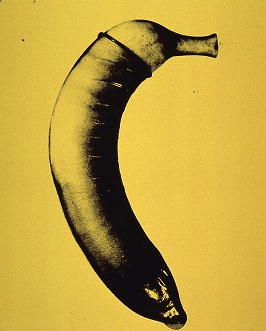
Many kids in the U.S. aren’t learning about HIV in school. A startling 28 states in the U.S. do not have education requirements that mandate both sex education and HIV education. Irrespective of one’s religious beliefs or politics, that lack of access to health education is simply criminal. I was in high school from 1987‒1990. I still laugh when I recall the video on safe sex that we were forced to endure; the film was called Condom Sense, it was made in 1982, and in one scene, the narrator characterized wearing a condom as being like standing in a shower fully clothed with a rain slicker and rain hat on. We joked around in class when a banana was used to demo how to put a condom on properly.

banana condom

This is how sex education was taught in the 1980s when I was in high school. Image courtesy of the National Institute of Health.

But whatever else I can say about sex education during that period of time, I can say without hesitation that an awareness of and accurate knowledge about HIV and other STDs, as well as about safe sex practices, was an inherent and probably the biggest and most important part of what we learned. Even as fearless teenagers who believed we were going to live forever, we knew it was crucial to pay attention to information about HIV—because if we didn’t learn it, and understand it, and take it to heart by practicing safe sex when we became sexually active, it might kill us.

New HIV infections are highly concentrated in people between the ages of 13 and 24, an age group that is less likely to get tested and treated, possibly because those young Americans are too young to remember the days when HIV was a death sentence or—see previous paragraph—because they don’t have accurate knowledge about how you get HIV, how you prevent it, how you get tested for it, how you treat it, and how serious it is. These Centers for Disease Control stats make alarm bells go off in my head: Only 33% of Americans between age 17 and 24 were tested for HIV in 2012, and a scant 13% of high school students were tested for HIV in 2011. As a result, half of the Americans under the age of 24 do not know their HIV status.

A lot of people think HIV isn’t a big deal anymore. They’re wrong. HIV can now be manageable. That doesn’t mean it’s no longer a major health threat. HIV is not easy to live with and treat. Even with early diagnosis and proper treatment, managing it doesn’t mean you won’t get sick or suffer, and it doesn’t mean you won’t die. Jay Varma, representative of the NYC Department of Health and Mental Hygiene, summed it up best in a recent article on Bloomberg.com: “Even when someone with HIV is controlling it through medications, his or her immune system will never be fully functional.”    

I hate having to type that last paragraph. I have more friends than I can count who have HIV. Many of them have lived with it for years. I’m glad to say many of them are healthy. They are stoic and optimistic about how they approach the disease. They are also brave. But they don’t just pop a pill that’s as benign as an Advil or a Vitamin C and call it a day. I plan to write another post that’s more about this aspect of the cause—because it’s worthy of that time and space.

Kyle Spidle, fellow rider and a PosPed (an HIV-positive rider), giving crew member Amy Hemphill a kiss for helping him fix a flat. Kyle was the first victim of the meningitis outbreak that began last year. He died a week before last year's Braking AIDS Ride. He was 32 years old.

Kyle Spidle, fellow rider and a PosPed (an HIV-positive rider), giving crew member Amy Hemphill a kiss for helping him fix a flat. Kyle was the first victim of the meningitis outbreak that began last year. He died a week before last year’s Braking AIDS Ride. He was 32 years old.

For now, I will leave you with this story: Last fall, a week before I traveled to Boston for the beginning of Braking AIDS Ride 2012, I got a message that my friend and fellow rider Kyle Spidle, who had been living with HIV since 2008, had passed away in his sleep. On Wednesday night, September 19, he went to bed early because he had felt slightly flu-ish. He never woke up. We didn’t know it at the time, but Kyle was the first victim to the current bacterial meningitis outbreak. That outbreak has since been widely reported. The part that tended to be under-reported is that the first victims of the meningitis outbreak were all HIV positive. HIV put them at greater risk across the board—of contracting meningitis, of having a more severe infection if they contracted it, and at greater risk of dying from a meningitis infection. Kyle was 32 years old.

Kyle, lugging for the camera, during the ride in September 2009. Don't let the smile and the hot bod fool you. He wasn't just a pretty face, and everyone who knew him misses him dearly.

Kyle Spidle, mugging for the camera, during the ride in September 2009. Don’t let the smile and the hot bod fool you. He wasn’t just a pretty face, and everyone who knew him misses him dearly.

As I said in my first, recent wave of solicitations to friends and family to donate to support me in the Braking AIDS Ride this September, I will ride this year in memory of Kyle and in memory of others like him. I will ride, as I do every year, in memory of Curtis and Daniel, two family friends whose deaths from AIDS in 2003 and 1987, respectively, I wrote about in previous posts on August 16, 2012, and August 29, 2012, and I will ride to support the many friends I have who are infected with HIV and for the countless others who are affected by this terrible disease.

The good news is that in the short time period since I sent out those calls for help, I’ve raised 32% of my fundraising goal of $10,000. If you’ve read this far, you already know what the bad news is.

WHERE YOU CAN DONATE TO SUPPORT ME IN BRAKING AIDS 2013:

Why, my fundraising page, of course! Donate early and donate often!

SOURCES:

Samuel Adams, “Meningitis Outbreak Spurs Effort Before Gay Pride Events,” Bloomberg.com, June 18, 2013.

Esquire AIDS Crisis issue, March 1999.

Tara Culp Ressler, “5 Things to Know in Honor of National HIV Testing Day,” June 27, 2013, Thinkprogress.org.

Randy Shilts, “Talking AIDS to Death,” Esquire, March 1989, p.123.