HIV/AIDS: Good News, Bad News, Red Fish, Blue Fish, Loveship, Courtship, Pos-Ship, AIDS-ship, Sickship, Oldship, Deadship

It’s hard to believe that it is late July already. My last post on here was in March. It has been that sort of season. Busy but erratic. Insane weather that went from unseasonably cold to sweltering almost overnight.

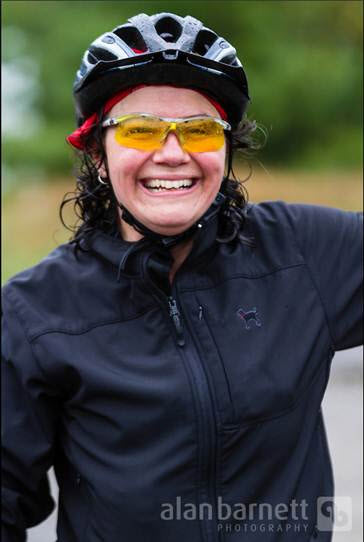
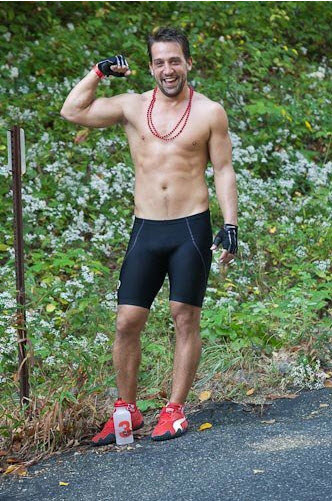
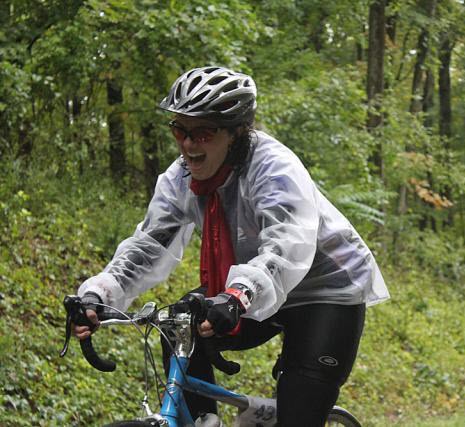
Me, wet and cold, but happy, on Day 1 of last year's Braking AIDS Ride, Friday, Sept. 29, 2012. Photo by Alan Barnett.

Me, wet and cold, but happy, on Day 1 of last year’s Braking AIDS Ride, Friday, Sept. 29, 2012. Photo by Alan Barnett.

In truth, though, I think I have postponed writing on this blog this season because I was struggling to figure out what I wanted to say. How my thinking about doing this 3-day, 285-mile bike-ride fundraiser and continuing to support this cause—the fight to end HIV/AIDS—in this way has evolved. This is going to be my sixth AIDS Ride, my fifth since 2008 with the Braking AIDS Ride group. I’ve ridden over 10,000 miles on a bicycle and raised almost $45,000, all in the name of supporting beneficiaries that offer crucial HIV/AIDS services. Isn’t that enough? Why am I still at it? What is the big deal about HIV? What’s changed since 1999? What’s different about the way I think about this in 2013? Why do I continue to fight this particular fight?

These questions are easy to ask, but authentic answers are elusive. I find that now that me asking for help to support this cause is no longer a novelty—just as the disease and the fight to end it are no longer new—I don’t always know what to lead with when I reach out to people about it. I am tired of HIV/AIDS, and even I am tired of doing what journalist Randy Shilts called “Talking AIDS to Death” in a 1989 Esquire article with that same title.

It's official. According to the popular wisdom, AIDS has been old news for a decade and a half. This Esquire cover hits the stands in March 1999, six months before I did my very first AIDS bike ride.

It’s official. According to the popular wisdom, AIDS has been old news for a decade and a half. This Esquire cover hit the stands in March 1999, six months before I did my very first AIDS bike ride.

What do I say to people today about AIDS, especially people I know who have heard so much of it, if not all of it, before? Where on earth do I begin? Do I lead with the good news? Everyone likes stories about progress. I, too, like stories that suggest we’re getting somewhere, that our efforts help. And we are making progress, no doubt about it. Or do I lead with the bad news? We are getting somewhere, but HIV/AIDS still affects countless people, and it remains a horrific, sometimes fatal disease, which is why we still need to keep up the work. Do I scare people to remind them that resting on our laurels and thinking the HIV/AIDS is now someone else’s problem—Africa’s problem, or Southeast Asia’s problem, or a Caribbean problem—is just about the worst thing we all can do?

Per usual, I decided to split the difference and do both. So, the good news and the bad news:

I fight this fight to end HIV/AIDS, and I ask for continued support for Housing Works from practically everyone I know year after year because HIV is old news. AIDS has now been around so long, it was considered old news even back in 1999, the year I did my very first AIDS ride, as beautifully illustrated by the March 1999 Esquire cover reproduced here.

In past years, I’ve usually set my fundraising goal at $5,000. Because AIDS is considered yesterday’s news, this year, I am doubling my efforts, and setting my fundraising goal at an ambitious $10,000.

Despite our progress, the battle against HIV/AIDS is far from over. My feeling is that one of the biggest growing challenges is reminding and in many cases, persuading people that HIV is still a big deal, a problem worthy of our time, our attention, and our financial support.

Yes, we have come a long way since the 1980s, when most people who contracted HIV died painful, ugly deaths that were both too long and too short. Too long in terms of the duration of suffering, for them and those who loved them. Too short in that the disease’s victims in those early days lasted a year or two, months, sometimes weeks. Today, in the nations where testing and treatment are affordable and readily available, the U.S. among them, HIV has become something you can live with for a very long time. That is the good news. And in contrast to 20 years ago, it is very good news.

The bad news, unfortunately, is exactly the same: that HIV has become something you can live with for a long time. The bad news is that people know that HIV is manageable, but what they have less knowledge about is what living with it entails.

Here are just a handful of reasons why complacency surrounding the fight against HIV/AIDS is so dangerous:  

The statistics that demonstrate that HIV and AIDS are still a real problem continue to go up every year, even in the United States. 34 million people worldwide live with HIV today, 1.2 million in the U.S. alone. The global death toll exceeds 25 million. There is still no cure and no vaccine.  

Since I rode my bike 285 miles last year for this same cause, some 50,000 Americans have become newly infected with HIV. That is likely to be the case next year as well. For a while now, the annual rate of new infections has become pretty stable in this country. Is this better than an infection rate that’s increasing, as it did for decades? Of course.  But it is a low bar we’re setting, too low, when we convince ourselves that an annual, new HIV infection rate equal to half the population of Flint, Michigan, is good enough.

It’s supposed to be good news, but the truth is that the annual rate of new HIV infections in the United States is equal to half the population of Flint, Michigan. That’s 50,000 new people with HIV every year, for anyone who is counting.

imageMore disturbingly, one out of five Americans does not know his or her HIV status. About 1.2 million Americans have HIV, so that’s nearly one-quarter of a million people in this country who are likely to be spreading the virus unknowingly to other people.

Many kids in the U.S. aren’t learning about HIV in school. A startling 28 states in the U.S. do not have education requirements that mandate both sex education and HIV education. Irrespective of one’s religious beliefs or politics, that lack of access to health education is simply criminal. I was in high school from 1987‒1990. I still laugh when I recall the video on safe sex that we were forced to endure; the film was called Condom Sense, it was made in 1982, and in one scene, the narrator characterized wearing a condom as being like standing in a shower fully clothed with a rain slicker and rain hat on. We joked around in class when a banana was used to demo how to put a condom on properly.

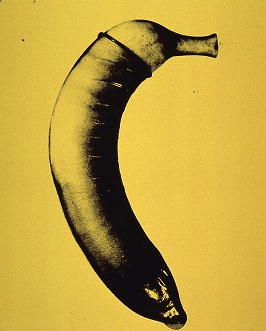
banana condom

This is how sex education was taught in the 1980s when I was in high school. Image courtesy of the National Institute of Health.

But whatever else I can say about sex education during that period of time, I can say without hesitation that an awareness of and accurate knowledge about HIV and other STDs, as well as about safe sex practices, was an inherent and probably the biggest and most important part of what we learned. Even as fearless teenagers who believed we were going to live forever, we knew it was crucial to pay attention to information about HIV—because if we didn’t learn it, and understand it, and take it to heart by practicing safe sex when we became sexually active, it might kill us.

New HIV infections are highly concentrated in people between the ages of 13 and 24, an age group that is less likely to get tested and treated, possibly because those young Americans are too young to remember the days when HIV was a death sentence or—see previous paragraph—because they don’t have accurate knowledge about how you get HIV, how you prevent it, how you get tested for it, how you treat it, and how serious it is. These Centers for Disease Control stats make alarm bells go off in my head: Only 33% of Americans between age 17 and 24 were tested for HIV in 2012, and a scant 13% of high school students were tested for HIV in 2011. As a result, half of the Americans under the age of 24 do not know their HIV status.

A lot of people think HIV isn’t a big deal anymore. They’re wrong. HIV can now be manageable. That doesn’t mean it’s no longer a major health threat. HIV is not easy to live with and treat. Even with early diagnosis and proper treatment, managing it doesn’t mean you won’t get sick or suffer, and it doesn’t mean you won’t die. Jay Varma, representative of the NYC Department of Health and Mental Hygiene, summed it up best in a recent article on Bloomberg.com: “Even when someone with HIV is controlling it through medications, his or her immune system will never be fully functional.”    

I hate having to type that last paragraph. I have more friends than I can count who have HIV. Many of them have lived with it for years. I’m glad to say many of them are healthy. They are stoic and optimistic about how they approach the disease. They are also brave. But they don’t just pop a pill that’s as benign as an Advil or a Vitamin C and call it a day. I plan to write another post that’s more about this aspect of the cause—because it’s worthy of that time and space.

Kyle Spidle, fellow rider and a PosPed (an HIV-positive rider), giving crew member Amy Hemphill a kiss for helping him fix a flat. Kyle was the first victim of the meningitis outbreak that began last year. He died a week before last year's Braking AIDS Ride. He was 32 years old.

Kyle Spidle, fellow rider and a PosPed (an HIV-positive rider), giving crew member Amy Hemphill a kiss for helping him fix a flat. Kyle was the first victim of the meningitis outbreak that began last year. He died a week before last year’s Braking AIDS Ride. He was 32 years old.

For now, I will leave you with this story: Last fall, a week before I traveled to Boston for the beginning of Braking AIDS Ride 2012, I got a message that my friend and fellow rider Kyle Spidle, who had been living with HIV since 2008, had passed away in his sleep. On Wednesday night, September 19, he went to bed early because he had felt slightly flu-ish. He never woke up. We didn’t know it at the time, but Kyle was the first victim to the current bacterial meningitis outbreak. That outbreak has since been widely reported. The part that tended to be under-reported is that the first victims of the meningitis outbreak were all HIV positive. HIV put them at greater risk across the board—of contracting meningitis, of having a more severe infection if they contracted it, and at greater risk of dying from a meningitis infection. Kyle was 32 years old.

Kyle, lugging for the camera, during the ride in September 2009. Don't let the smile and the hot bod fool you. He wasn't just a pretty face, and everyone who knew him misses him dearly.

Kyle Spidle, mugging for the camera, during the ride in September 2009. Don’t let the smile and the hot bod fool you. He wasn’t just a pretty face, and everyone who knew him misses him dearly.

As I said in my first, recent wave of solicitations to friends and family to donate to support me in the Braking AIDS Ride this September, I will ride this year in memory of Kyle and in memory of others like him. I will ride, as I do every year, in memory of Curtis and Daniel, two family friends whose deaths from AIDS in 2003 and 1987, respectively, I wrote about in previous posts on August 16, 2012, and August 29, 2012, and I will ride to support the many friends I have who are infected with HIV and for the countless others who are affected by this terrible disease.

The good news is that in the short time period since I sent out those calls for help, I’ve raised 32% of my fundraising goal of $10,000. If you’ve read this far, you already know what the bad news is.

WHERE YOU CAN DONATE TO SUPPORT ME IN BRAKING AIDS 2013:

Why, my fundraising page, of course! Donate early and donate often!

SOURCES:

Samuel Adams, “Meningitis Outbreak Spurs Effort Before Gay Pride Events,” Bloomberg.com, June 18, 2013.

Esquire AIDS Crisis issue, March 1999.

Tara Culp Ressler, “5 Things to Know in Honor of National HIV Testing Day,” June 27, 2013, Thinkprogress.org.

Randy Shilts, “Talking AIDS to Death,” Esquire, March 1989, p.123.

Signs of Spring

I can think of no better way to usher in the long-awaited vernal equinox than by posting about the following causes for celebration: the recent re-openings of Red Hook’s Fairway and the Red Hook Lobster Pound in Brooklyn several weeks back and my first training ride of the season on Saturday, March 9.

Post-hurricane Red Hook recovery update. Here’s today’s New York Times article about the ongoing Red Hook recovery. Now that the weather is improving and local Red Hook business are opening their newly renovated doors again, please come visit! I can personally vouch for the delicious lobster rolls at the Red Hook Lobster Pound. If a trip out to Brooklyn is too far-flung for you, check the Red Hook Lobster Pound Twitter feed to see if and when the NY Lobster truck will be restarting its Midtown rounds.

To everyone who offered support of any kind to Red Hook and other neighborhoods devastated by Hurricane Sandy during the past five difficult months, thank you again! Little by little, signs of renewal are appearing.

The new bakery at the reopened Fairway in Red Hook. Image courtesy of February 28 Zagat blog post.

A fresh lobster roll from Red Hook Lobster Pound. Image courtesy of March 4 Zagat blog post.

Bike Training 2013. My March 9 training ride took place the day after the Freaky Friday snowstorm that hit us on March 8. My Braking AIDS ride compadrés had scheduled the event as a way to welcome newbie riders and to open the season with a gentle if chilly ride. No one was expecting the snow we got, and on Friday afternoon, a flurry of emails went back and forth.

Me: “Are we still riding tomorrow? It’s really coming down.”

Rider coach Blake Strasser: “Yes! It’s supposed to go up to 50 tomorrow, so it will all be melted by morning.”

The photo below was taken when I left my apartment the following morning to ride to the group meeting point at the Columbus Circle end of Central Park.

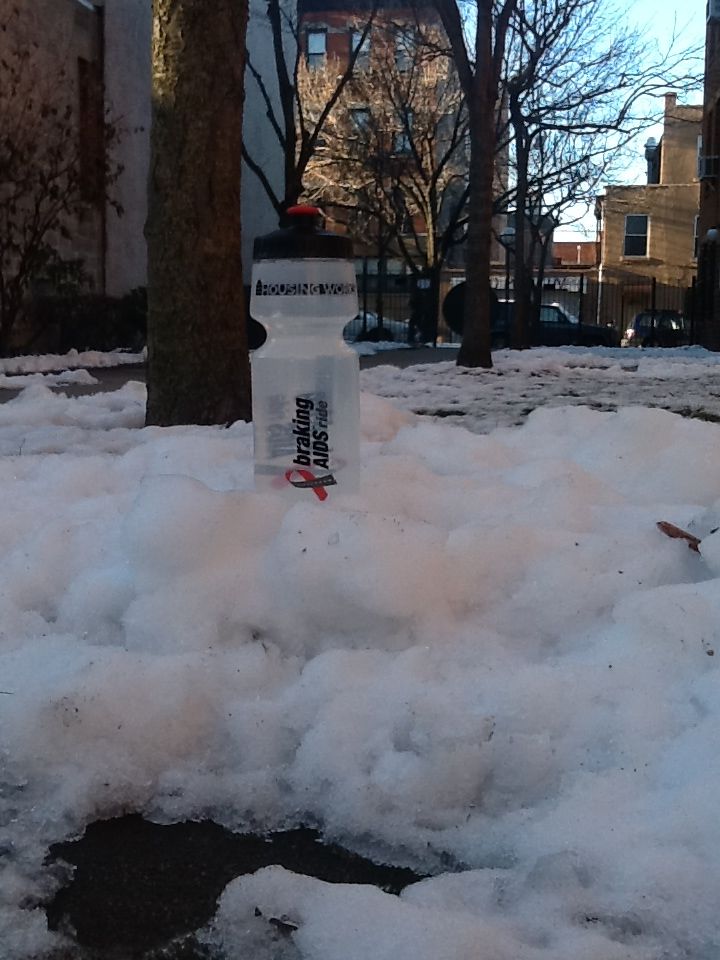
My Braking AIDS water bottle, outside my apartment before my first training ride of the season ride, Saturday, March 9, 7:45am.

My Braking AIDS water bottle, outside my apartment, before my first training ride of the season, Saturday, March 9, 7:45am.

Blake’s forecast was…somewhat optimistic, but she wasn’t wrong either. The snow stuck it out for several hours and the air was crisp, but the roads were clear and the sun was out. So I pumped up The Blue Streak’s tires, had a smoothie and some coffee, filled a water bottle, layered up, and hit the road, careful to avoid ice patches along the West Side bike path. I arrived at 59th and 8th Avenue under the golden USS Maine National Monument at 8:15am and was surprised and thrilled to see so many Braking AIDS riders had come out. A special shout-out of gratitude goes out to Kristofer Velasquez and Joseph Rivera for leading and caboosing the group ride that morning. The new riders who showed up get extra props; Friday’s snowstorm made plenty of veterans decide to roll over and sleep in Saturday morning. Most folks did a loop and a half around the park. I wanted to push myself and did two full loops. We then made our way down to the Chelsea offices of Global Impact, which produces and runs the Braking AIDS ride every year. Eric Epstein and Blake Strasser, two of the Global Impact staff quartet (the fourth being Sasha, Eric’s Vizsla, who also serves as the office manager), greeted us with coffee, hot chocolate, and three kinds of breakfast pastry. Sasha greeted us with kisses and snuggles and body rubs. Who can argue with that? We ate, we drank, we rested, and most of us stayed for the ride preview before heading home.

Training Ride #1: 28 miles total. It felt great to be on The Blue Streak again. Not bad for a snowy day in March.

Braking AIDS 2013, which will again benefit Housing Works, takes place this coming September and will be my sixth AIDS ride, my fifth with the Braking AIDS organization and community. Let the training and fundraising begin! Happy spring, everyone.

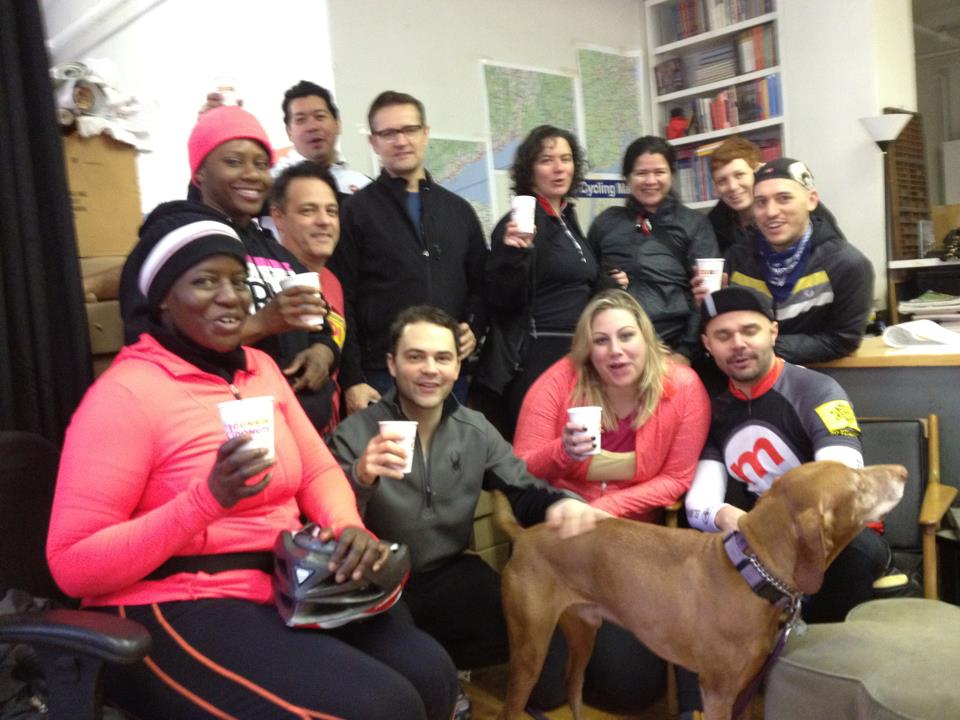
Riders from the first Braking AIDS Second Saturday training ride of the season, warming up with coffee and hot chocolate, post-ride, Saturday, March 9.

Riders from the first Braking AIDS Second Saturday training ride of the season, warming up with coffee and hot chocolate, post-ride, Saturday, March 9. That’s me in the back row, center, holding up my cup of hot mocha.

Braking the Cycle Postscript 2: Lifecycle of a Donation to Housing Works

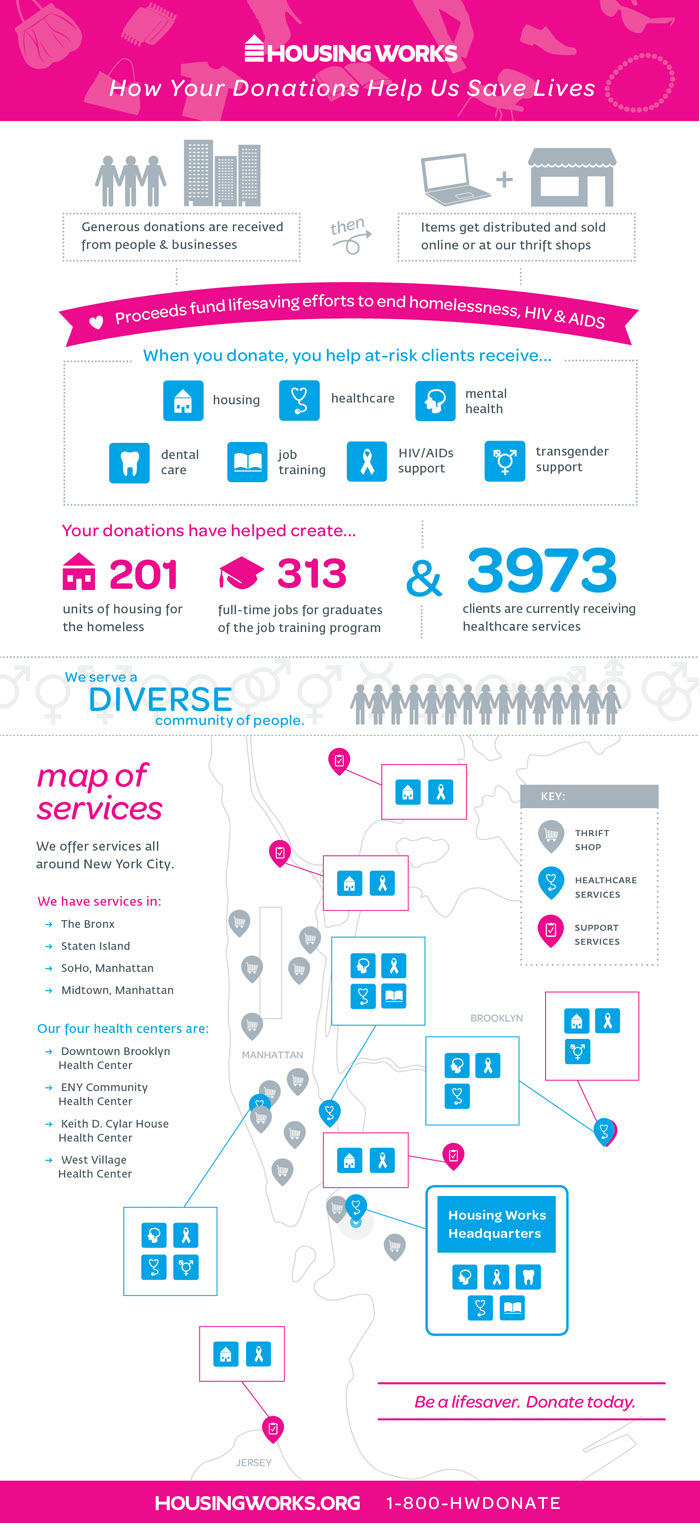
Housing Works recently posted this infographic on their site. It’s a cool visual of how the generous donations made, via Braking the Cycle or in general, support the work and services being done there.

Braking the Cycle Ride Postscript 1: The Blue Streak Hits Mile 9,000 and Keeps On Going

It’s been almost three weeks since I completed Braking the Cycle 2012. Long enough for me to take my bike, The Blue Streak—her gears crunchy with grime and dirt, brake pads worn to the nubs after riding through rain for more than 100 miles, tires thinned and pocked with tears from flats—to the bike shop for a much-needed tune-up, new brakes, new tires. Long enough for a dozen more donations to come in. Long enough for the total mileage logged on The Blue Streak since I bought the bike to have exceeded 9,000 miles, a glorious bench mark I anticipated in my first blog post. But not long enough for me to write a postscript that will do my experience of the three days of the ride itself justice. This isn’t going to be that post.
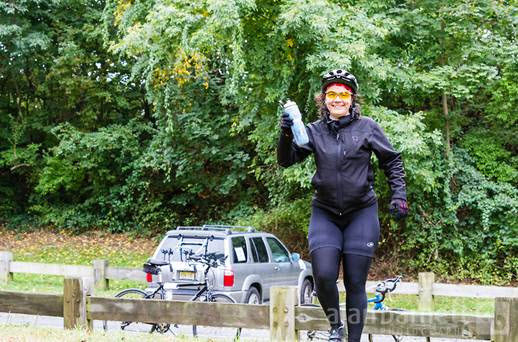
Lost in the backwoods of hilly Connecticut, near the end of Day 2, after nearly 200 miles of riding. The thought bubble above my head would read, “Thank God, an oasis.” (On Braking the Cycle, a rest stop is called an oasis.) You can’t tell from my smile here, but I hate Gatorade. Photo by Alan Barnett Photography.

What I will say now is that the three-day ride was a microcosm of my whole, erratic summer: I rode as hard and fast as I ever have. I crawled uphill. I felt fantastic. I felt half-dead with exhaustion and everything hurt. I wept while pedaling. I sometimes had no idea if I could go on. I rode at the front of the pack. I caught a brief glimpse of the caboose, the two riders designated to be the tail end of the ride, chugging along behind everyone else. I was freezing and wet. I got windburn and was overheated. I discovered again that I am stronger and more tenacious than I realized—and that continues to surprise me. I forgot why riding 300 miles on a bicycle felt like a good idea. I forgot why doing anything besides riding my bicycle seemed like a good idea. I thought of every person I know, living or dead, who is affected by HIV. I thought of the recent wave of people I know who are my age and who have either died unexpectedly during the past year or who are braving and battling awful, progressive illnesses of all kinds, none of them HIV-related. I contemplated my mortality. I sang dumb pop songs, admired the foliage, inhaled the smell of autumn, and thought of nothing deep or nothing at all. I rode alone. I met and reconnected with old friends on the road. I made new friends on the road. I drank too much Gatorade. I drank too little Gatorade. I ate bananas, bananas, bananas. I found laughter in unexpected places. I was moved to tears by strangers. I was met with affection and cheerleading and applause at least once an hour, for just existing and showing up. I trusted the training. I doubted myself. I believed in myself. If one element was constant, it was only this: I kept going.

The more detailed blog-post summary of our civil rights march on two wheels, spanning three days  across four states, will take me a little while longer to get around to writing, but in the interim I wanted to share some details about what happened when the ride was over because it deserves its own entry.
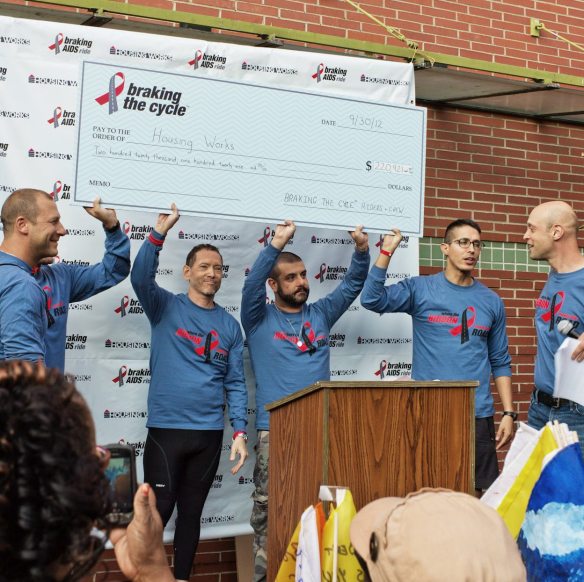
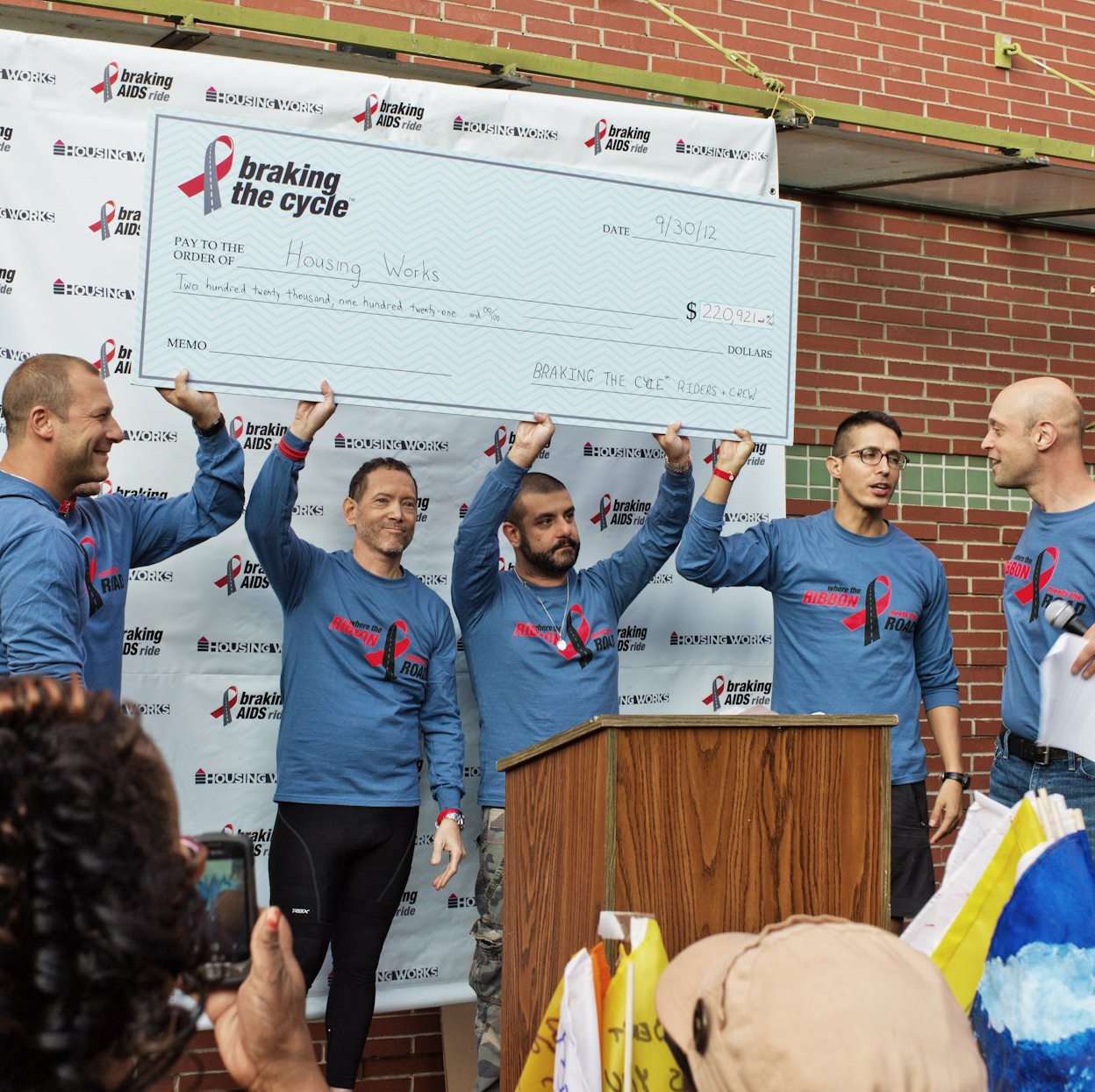
The check for nearly $221,000 that we presented to Housing Works at closing ceremonies, Sunday, September 30, 2012, 5:30pm. The actual final total will be higher, as riders and crew continue to fundraise until the end of October. Photo courtesy of Rich Biletta.

The first item of note is a series of numbers I’m joyful to share. By virtue of the subject matter of AIDS and HIV, most of the statistics I’ve referenced these past months have been unsettling, sad, infuriating. It’s therefore with a joyful heart that I can type this new figure for the books: As Sunday, September 30, 5:30pm, Braking the Cycle 2012 raised nearly $221,000 for Housing Works in the fight against HIV, AIDS, and homelessness. That amount has also been climbing rapidly in the weeks since, as post-ride donations continue to come in.

As of this writing, thanks to the financial support of the 134 generous souls who sponsored my personal ride efforts this year, and whose names are listed at the end of this post by way of acknowledgment and with all my gratitude, my portion of that handsome $221K+ sum totals $9,710. For those of you who work in sales or who like to see such totals framed against concrete, forecasting goals, $9,710 equals 129.5% of my final target goal of $7,500. I say “final target goal” because my original goal when I began fundraising in early July was $5,000. In mid-August, when the going was slow, I even had a panic-stricken week that I wouldn’t reach the $5K, no matter how many times I hit “refresh” on my First Giving website page every few hours. (O ye of little faith, Mika!) I was thrilled when I hit that $5,000 goal and was able to raise the target by 20%; I had no idea that I would end up raising it again twice more after that. So, needless to say, to have achieved a sum that is 194% of my original target goal has me astonished and approaching speechlessness.

The donations I received ranged in size from $20 to $725, and every bit counted and helped. These acts of kindness and support represent a diverse array of humanity residing in three different countries, including 18 states across the U.S. Contributions came from my closest friends and family, from colleagues, and even from people I’ve never laid eyes on. To each and every one of you who supported me throughout this challenge, and what proved to be a particularly difficult season, I could not have done it without you. Thank you again and again. You inspire me with your encouragement and with the expansiveness of your hearts. (And yes yes yes, if you’re reading this and thinking, “Damn, I meant to donate…” or “Wouldn’t $10,000 be a much nicer, rounder number as a total than $9,710…” or “To hell with that Fall Clearance sale, I think I’ll donate to Braking the Cycle and Housing Works a second time…”, the donation link is still up and running, and you can still kick in for another 7 days or so. For those of you who have had just about enough of my relentless BTC pitches and reminders, I know it may seem like the 15th Cher Farewell Tour—never quite over—but this really is last call for BTC 2012.) An additional thanks goes out to those who were unable to donate this year, but who have been continual cheerleaders and sources of love, inspiration, and encouragement, and who have expressed faith in me even when I didn’t have much in myself. You know who you are, and your generosity of spirit has kept me going all these months and all through the ride as well.

The second thing I’d like to share is a recap of the ride’s closing ceremonies, which took place at 5pm on Sunday, September 30, in front of Cylar House, a Housing Works facility on 9th Street near Avenue D, with the victory party following right afterward inside the building. Over the course of that afternoon, all the riders finished the last miles cycling through the Bronx and down the east side of Manhattan, to a holding area three blocks from Cylar House where we were gathered so all 90 or so of us we could ride to the ceremonies together and arrive as one big group, followed by the amazing volunteer crew.
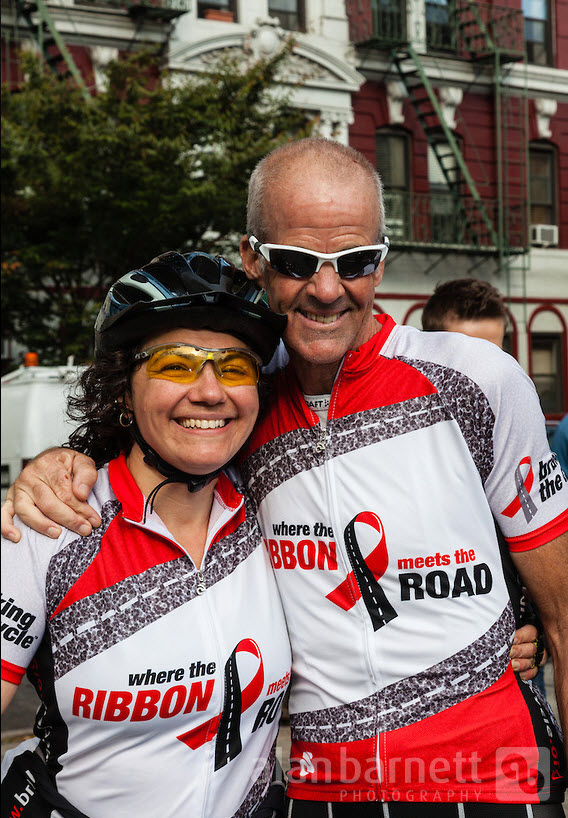
Me, with speedy BTC rider Glenn Hammerson, gleeful after finishing the main ride route and arriving in the holding area three blocks from closing ceremonies, Sunday, September 30, around 4PM. Photo by Alan Barnett Photography.
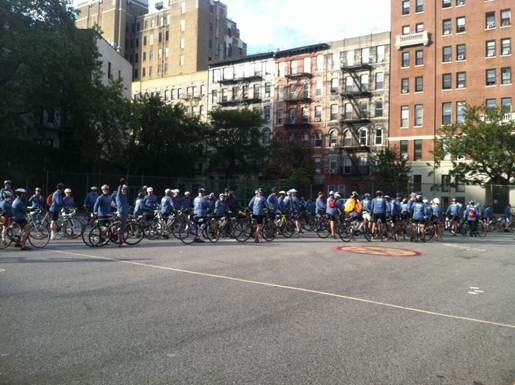
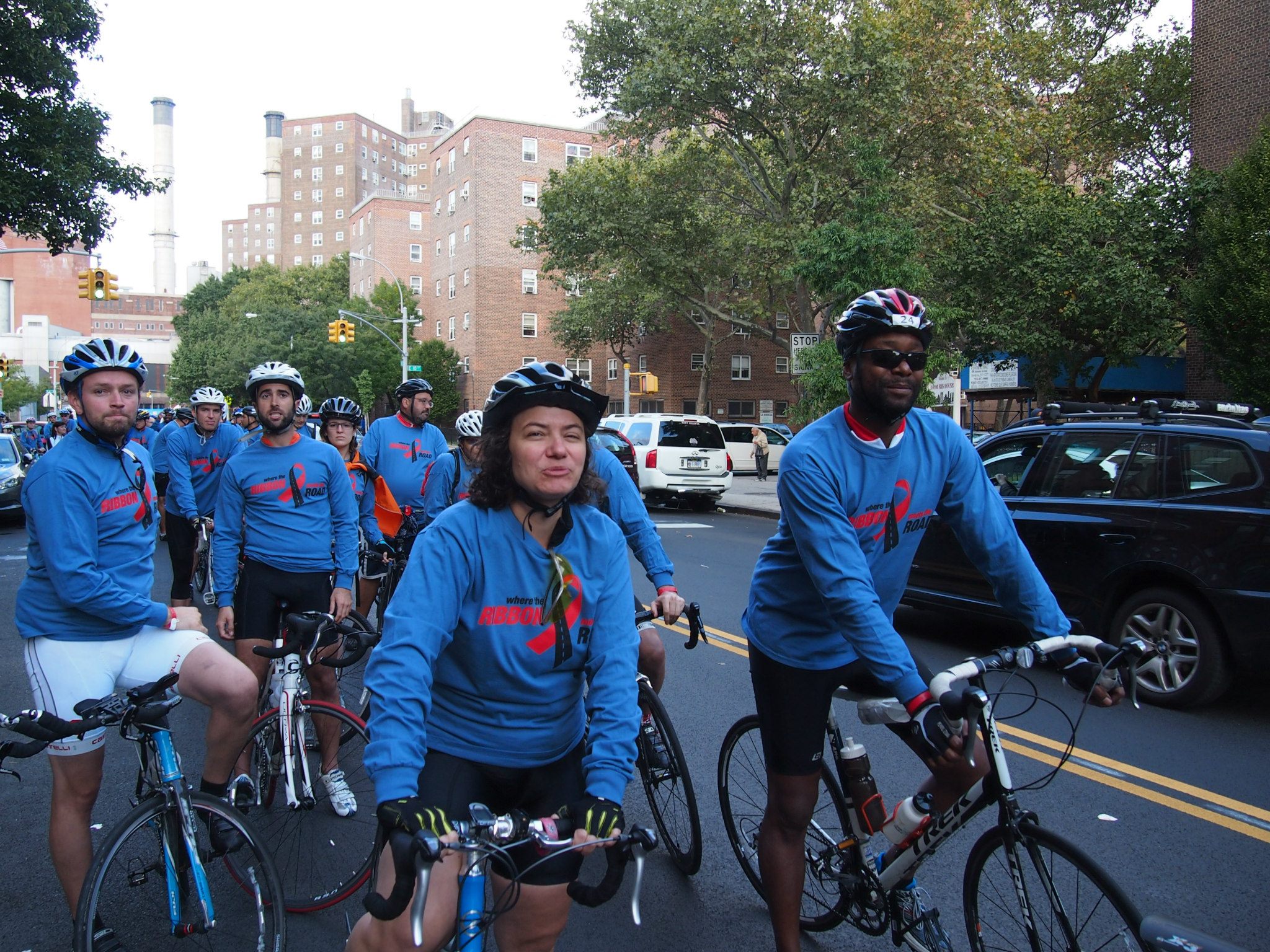
Braking the Cycle riders gathering together in the holding area on East 12th Street, three blocks from Housing Works’ Cylar House, where closing ceremonies took place. This way, we get to ride in all together. Photo courtesy of Joseph Miceli-Magnone.

When I rolled in to Holding, I was relieved, thrilled, and excited on the one hand, but I also was nervous. About a week and a half earlier, rider coach Blake Strasser had emailed me to ask me if I would be one of the speakers during the ceremony. (The other speakers were Charles King, Housing Works President and CEO and BTC Rider #2;  Eric Epstein, President of Global Impact, which has produced the Braking the Cycle ride since its inception a decade ago, and fellow BTC rider CB Kirby. Amazing jazz vocalist Thos Shipley also sang.) My first reaction to Blake’s request was to blush because I was flattered. My second reaction was, “You couldn’t get a gorgeous, articulate gay man who looks fresh as a daisy after cycling 300 miles to do it?” My third reaction was, “What? Margaret Cho wasn’t available?” My fourth reaction was abject terror and “?!*&#@.” My fifth reaction was to remember that at the closing ceremonies of my three previous Braking the Cycle rides, I was so exhausted, I could barely recall my own name. Those reactions took less than 30 seconds collectively, and then I wrote a reply email to Blake saying I’d do whatever she wanted, happily, and if speaking at closing was it, I’d be honored and privileged to do it.
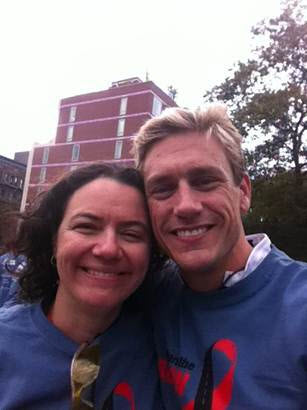
Me with gorgeous Colby Smith, an incredible athlete (he did his first Ironman last month), in the holding area, post-ride, right before closing ceremonies. Yes, he always looks this good after riding 300 miles, and this was the kind of BTC runway model I was picturing as I contemplated who would make for a better closing ceremonies speaker than I. Colby is also a funny, smart, kind human being. Who *is* this guy? Photo courtesy of Colby Smith.

Over the next week, during which I did my last training ride and massive amounts of laundry to prep for the ride, I had just enough time for the reality of what I’d committed to doing to sink in. I had done presentations, lectures, discussions, speeches for groups of all sizes in all sorts of contexts before, but this one had me nervous. I’m never at my best when I’m sleep-deprived, and I also knew the moment would be too emotional for me to be able to wing it. I also wanted to try to say something that would resonate with all the audiences who might be there—the riders and crew, also exhausted and elated; all their families and friends, including many people who had donated to the ride; Housing Works staff; and Housing Works clients, past and present—something that wasn’t canned. I spent a week thinking about it, and the week of the ride, I drafted it on Tuesday night, I had Jen read it and edit it on Wednesday, I sent the mostly final version to Blake on Thursday, the day we drove up to Boston for ride orientation, and I practiced it a few times during the lulls that day. Thursday night, I gave a spare copy to Jen to hang onto as a back-up, and I folded my copy into a Ziplock bag to protect it. That plastic bag stayed with my baggage for my first two days (and 200 miles) of riding, and then went into my cycling jersey pocket at 4am on Sunday morning before I peeled out of Bridgeport, Connecticut, with my fellow riders at 6:30. And with me it stayed for 85+ miles until we arrived at Housing Works in the East Village.

The 85 or so miles of riding that day were challenging enough to keep my mind off the speech. But my anxiety came back in a rush during that extended period of hanging around in the holding area, hugging other riders as they arrived, drinking coffee to wake and warm myself up, taking bad candid pictures with ultra-photogenic, attractive people, texting friends who had left messages. I would momentarily forget about it while congratulating another rider, and then some part of me would seize up with the memory that I was going to have to Pay Attention and make sense. Dear God, I had to talk? In front of other people? About something that mattered? What had I been thinking?

Woot woot! Me on Day 3 in New York City, finishing the official ride route as I pulled into the holding area on East 12th Street. My nerves about having to talk at closing ceremonies kicked in about 15 minutes after this was taken. Photo by Alan Barnett Photography.

I must have been jacked up enough with nerves that what followed after I gave the speech is even more of an adrenaline blur than the ceremonies of previous BTC rides. And possibly because this was my fourth Braking the Cycle ride and no longer the novelty that it once was to those who know me, I was amazed by all the people I knew who showed up to greet us and me, how warm they were, how touched I was to see their smiling faces, to get a hug from each of them. The people who are the biggest, most personal reasons I do this ride were standing right up front. One close friend and training buddy brought me an entire box of cupcakes. Another had driven up to East Lyme, Connecticut, to cheer me, and all of us, up the dreaded Mount Archer on Day 2 of the ride, and he was there again at closing ceremonies, cheering and helping with bike check-in and storage. Dear friends who were previous BTC riders and crew were there, too, whooping and hooting. My parents came and surprised me by bringing my brother, who lives out of town. A number of friends surprised me, too. One who I wish I saw more often came, and when I said, “I had no idea you’d come,” he smiled sweetly and said, “Of course I came.” My oldest childhood friend didn’t tell me she was coming at all, and then surprised me by showing up. Two of my closest friends from work came; they are each far more than what we usually deem as work friends—to me they are simply friends in the truest sense, and the work link is secondary and largely incidental—and yet because office-based connections come with their own peculiar social oddities, formalities, and awkwardness, I was especially surprised and moved to see them.
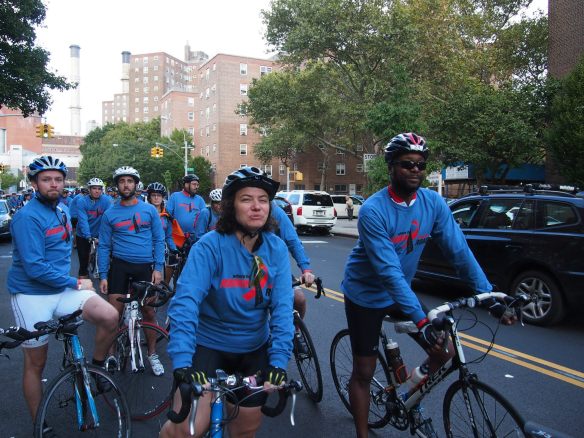
With fellow riders (Chad Woodard and  Matt Martin to my left, Rodney Newby to my right) on Avenue D, about to turn the corner onto East 9th Street where a big crowd of applauding friends, family, and other supporters awaited us. It is a mystery what I might have swallowed to produce the beautiful expression on my face. Photo courtesy of Roger Lovejoy.

But when we first rode down East 9th Street, I didn’t see anyone I knew well. All I saw  was a massive crowd of people, which in that initial moment, moved me instead of scaring me. It had been threatening to rain all afternoon—we had been doused by a brief shower when we cycled through Harlem earlier—it was chilly, and yet these loyal, tender-hearted people were standing, waiting, cheering, for us. I had been told to position myself near the stage, and when I got there, I had barely dismounted when I noticed several middle-aged African-American women approaching me and the riders immediately around me. We didn’t know them. They were strangers, and yet the second they saw us, their faces lit up and brimmed with emotion, and they moved toward us with outstretched arms. Without even consciously thinking it, I understood they were Housing Works clients. The one nearest me hugged my shoulder, kissed my cheek, and over the din of the crowd’s applause and cheering, she murmured in my ear what I am certain the other women were saying to the riders they were embracing: “Thank you. Thank you so much.” They didn’t have to explain further. It was in their voices. It was evident in the way a stranger wrapped herself around me without hesitation.
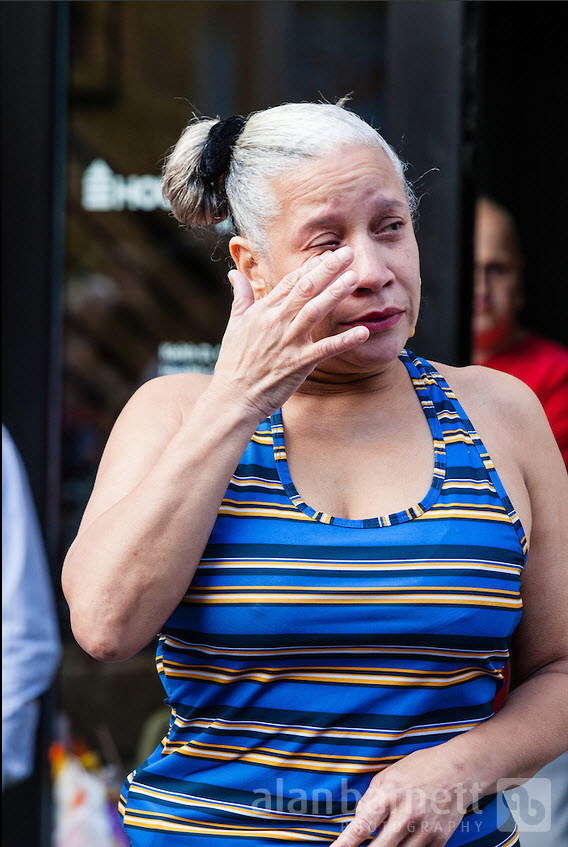
One of the women who first greeted all the Braking the Cycle riders as we arrived at closing ceremonies. I believe this was taken at some point during my brief speech a few minutes later. Photo by Alan Barnett Photography.

With that gratitude ringing in my ear, my heart swelled. As for my anxieties, they didn’t disappear; they just ceased to matter. The energy from everyone there was what was thrumming around me and in me when Eric made his introductions and I heard him call my name to prompt me to come up to the stage. I took in that none of the stage set-up was great. The sound system was iffy. The mic didn’t have a mic stand, so I had to hold the mic with one hand while I propped the pages of my speech up against the podium with the other. My hair, ever frizzy in rainy weather, kept whipping about and getting caught on the mic. The wind picked up and flapped at the pages of my speech. None of it mattered. I took a deep breath, I talked for a few minutes, and the crowd of people in front of me listened, and clapped, and listened some more. People clapped afterward and said nice things. We went to the victory party, where I hugged and chatted with some friends more; I ate a cupcake and drank the best beer I drink all year; and Jen and I cabbed it home with my bike in tow. Since then, some folks have expressed curiosity about the speech, so I have pasted the written manuscript below. Minus, of course, the spontaneous ad-libbing I did onstage, this is what I said:
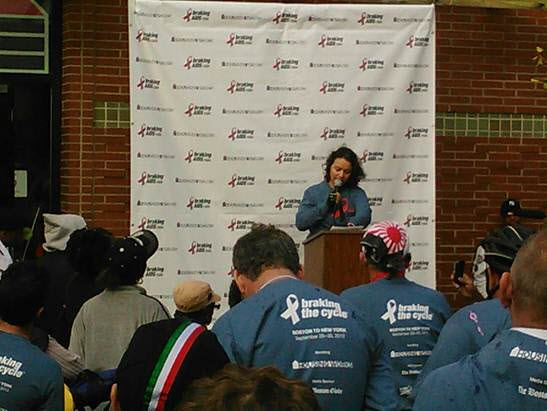
Me, talking at Braking the Cycle’s closing ceremonies, Sunday, September 30, around 5:30 PM, with rain looming but thankfully not materializing. In front of Housing Works’ Cylar House facility, 9th Street and Avenue D, New York City. If I sort of give off the air that I’ve just gotten off my bike after riding 300 miles, it’s because I have. Photo courtesy of Kate Asson.

Braking the Cycle Closing Ceremonies Speech
Cylar House, Housing Works, New York City, September 30, 2012

There’s a homeless woman who has frequented my Brooklyn neighborhood for all 12 of the years I’ve lived there. My partner Jennifer and I call her The Quarter Lady because when she asks for help, she always asks for a quarter. She tends to make people uncomfortable—because while it’s not clear what’s wrong with her, it’s clear she isn’t all there. The only things she says that are easy to make out are “Miss, you gotta quarter?” and “thank you.” She can be a little scary, possibly unstable, suffering from withdrawal, physically ill, mentally ill—maybe all those things.

For years, I gave her money when I saw her. When months went by and I didn’t see her, I’d worry a little, and hope nothing terrible had happened to her. When I saw her again, I’d be relieved and vaguely deflated—glad to see her, but sad that she was in the same place. Time seemed to stand still with the Quarter Lady. Everything always the same.

Then one day, something changed. Instead of being on her usual corner, she was on a side street, sitting on the stoop of a brownstone. She may have asked me for a quarter. I said something to her about the weather. And in the very next moment, the Quarter Lady suddenly became grounded. Her lucidity, which I’d never seen before, was visible. The first thing she said, I’d heard from her many times—which was “thank you.” Then she gave me a penetrating, compassionate stare that felt like she had peered in at the very core of my self and seen the entirety of my soul, my strengths, my flaws, all of it. And she said, “Someday I hope I’ll be able to help you too.”

I’m not sure what I said. Possibly thank you, and that I’d like that. I was on the verge of tears and I didn’t know why. We waved goodbye, and the next time we were back to our usual exchange about quarters.

I had so many obvious advantages, necessities, and privileges—a home, a job with a salary, my health, health insurance, a loving partner, family and friends. But inside, I was having a hard time that year. I was depressed about various aspects of my life, and I felt lost a lot of the time. And that morning, a virtual stranger who wasn’t even all there most of the time had seen me for exactly who and where I was in that moment, recognized I was in pain, and said something kind.

I was 9 years old when the first cases of AIDS were reported.

I was 10 or 11 when they finally figured out that sex was the major mode of HIV transmission.  

I was 15 when the first person I knew who was HIV+ got sick and then quickly died of AIDS, a close friend of my mom’s. He wasn’t out as a gay man, he wasn’t out with his HIV status. When he died, his obit said he died of cancer. That was in 1987.

I was 31 when my brother’s friend Curtis died of AIDS. Curtis was out and outspoken about everything—about his love for art, about being gay, about being HIV+ and battling AIDS. Eventually his body lost the battle, and he died in 2003.

I’ll be 40 this year. Like so many people here, probably everyone here, AIDS has been a shadow part of my life for over 30 years. I know more people who have died from it. I know people who found out they were HIV positive last year. I also know more people who are living with HIV than I can possibly name here. The good news about that last category is that they are the lucky ones: They know that they have it, they treat it, and they manage it. They’re lucky to have survived what so many of us call the years without hope before 1995 when antiretrovirals got better and became more available, and that they had access to the right services and resources.

Without movement and change, healing isn’t possible. I don’t know whether The Quarter Lady has HIV or any other illness. I know that she moved me because for a few brief minutes, she reminded me that so long as we’re alive, we all have the capacity to change and in turn, heal ourselves and one another—no matter how difficult our circumstances, no matter how unlikely it may seem, no matter how hard the journey to make that shift. It doesn’t matter whether the Quarter Lady ever helps me in some material, visible way. She helped me by imagining a different future in which she was helping me because I was in need rather than the other way around.

Since its founding, Housing Works has advocated for people at the margins who have been given up for lost, who have been considered to be beyond help, beyond change, beyond healing, long before they die a physical death from AIDS. Housing Works has gone where other groups wouldn’t go—they acknowledge the connection between poverty, homelessness, AIDS, HIV testing, treatment, addiction, IV drug use; they recognize them as interrelated; and they create a space without judgment where second chances are authentic. They imagine other ways things might work, and they make change. In making change, they facilitate healing. It’s no accident that the people who start off as clients come back as activists and advocates and staff members when they’re back on their own two feet.

People ask me all the time why I keep doing this ride. I do it because I have friends who live with HIV and because I’m all too aware of the fact that it could easily have been me. For me this ride has functioned a lot like Housing Works has for many people. Being part of this ride has helped me challenge myself and go far beyond what I thought I could do in the world; it helps me find change within myself. I ride because the people I’ve met along the way inspire me. They show up even when it looks like there isn’t any more progress that can be made. I didn’t know until pretty recently how much healing the experience of being part of this would offer me.

By being here today, whether you’re a rider, a crew member, a Housing Works client or staffer, or one of the many, many kind people here who support this cause and this community—with time, with money, with compassion—you’re a part of that healing process, too. I know for a fact that your engagement with this community, with this issue, has been source of healing for someone else, probably someone else who’s here today. And until the final end to this terrible pandemic: I hope that being part of this fight helps you find a measure of healing as well. Thank you.

Mika’s Braking the Cycle 2012 Rock Stars

*= donor to previous Braking the Cycle AIDS ride(s)

  • Anonymous (1, 2*, 3, 4*, 5, 6, 7*, 8*, 9*, 10*, 11*, 12*, 13, 14*, 15, 16*)
  • Beth Ammerman*
  • James Anderson & Suzy Turner*
  • Jennifer Anderson*
  • Renee Anderson*
  • Chris & Mel*
  • Catherine Angiel & Team
  • Janis & Dave*
  • Leah Bassoff*
  • Charlie Baxter*
  • Jon Bierman*
  • William Bish*
  • Penina
  • Buddha Tara*
  • Meghan Campbell
  • Steph & Bill Carpenter*
  • Lynne Carstarphen
  • Danielle Christensen
  • Jane & Tony*
  • Clare Cashen
  • David Chodoff
  • Terry Christopher
  • Marcia Cohen*
  • Barbara Conrey*
  • Katie Crouch
  • Kevin Colleary
  • Susan Conceicao*
  • Barbara Conrey*
  • Rich D’Amico & Mike Meyerowitz
  • Carol Diuguid
  • Annie & Jon*
  • Carey
  • Timothy “San Diego Cupcake” Fitzpatrick
  • Ray Flavion*
  • Suzie & Bernadette
  • Kory Floyd
  • The Food Healer*
  • Kerri Fox
  • Svenja & David*
  • Michael Gillespie*
  • Christina Gimlin
  • Dawn Groundwater*
  • Amanda Guinzberg *
  • Myles
  • Scott H.
  • Karen Henry*
  • Jess Holmes
  • Nancy Huebner
  • Tom Hyry*
  • Andrea Vaughn Johnson & Eric Johnson*
  • Angela Kao*
  • Katie K.
  • Cara Labell
  • Elena Mackawgy
  • Matt & Jessica*
  • Carolyn Plum Marshall
  • Paul & Luke McDonough
  • Derek McNally
  • Dave Meier*
  • Lorraina & Ben Morrison*
  • Lai & Greg*
  • Elizabeth Murphy
  • Liz O.
  • Jacob Okada*
  • Eva & Tom Okada*
  • Gregg Passin
  • David
  • Nancy Perry*
  • Lisa Pinto*
  • Eileen*
  • Briana Porco
  • Gabriel Presler
  • Josie Raney*
  • Cory
  • Sarah R.
  • Rhona Robbin*
  • Greg Romer
  • Mike Ryan
  • Carla Samodulski*
  • Terri Schiesl
  • Sigrid Schmalzer*
  • Roger Schwartz*
  • Brian Seastone
  • Brigid*
  • Jane Smith*
  • Janet Byrne Smith
  • Fred Speers & Chase Skipper*
  • Lynn Stanley*
  • Matt & Jen*
  • Danielle & Arturo*
  • Kelly Villella*
  • Jasna & Paul
  • Clay & David
  • Sherry Wolfe*
  • Yu Wong*

Cape Cod Cycling Diary: A Photo Essay

View from the Wellfleet soccer field, where our dog Sadie likes to chase her stinky tennis ball, near Wellfleet Bay, September 2012.

We spend a week on Cape Cod every September, and most years, this has meant that our vacation coincides with the time period during which I need to log in at least one  century (100-mile) training ride. After that, during week or two immediately prior to my actual Braking the Cycle ride, I still put in some 70-milers and short bike rides, and I commute to and from work, but I’m tapering. The century ride is as useful psychologically as it is physically. What better way to reassure those doubting voices inside that wonder whether this time, I can still do nearly 300 miles of cycling in three, back-to-back days? This year, I needed that confidence more than ever. In past years, I’ve done at least one other century ride earlier in the summer, and during a couple of seasons, I had two under my belt before I got to Cape Cod. This year, I did long rides, 70- and 80-milers, as well as back-to-backs some weekends, but Cape Cod was going to be my only 100-miler.

This year, we arrived in Wellfleet on Saturday, September 1. I did some shorter rides on Monday and Tuesday. Jen and I made our other plans for the rest of the week, and Wednesday made the most sense for my century. I should have paid more attention to the weather report. I woke up in the middle of the night a few hours before I was supposed to begin my ride to the drubbing of a downpour on the roof and skylights of our cottage.

My century ride route: From South Wellfleet, near Drummers Cove, I rode the Cape Cod Rail Trail to Dennis and back, which adds up to about 45 miles, stopped home for lunch, then looped the other way and made my way to Provincetown, adding some scenic detours in central Wellfleet and Truro and to Race Point and Herring Cove in Provincetown to tack on some additional mileage.

Riding in a thunderstorm is about as pleasurable as you’d imagine. Which is to say I still have a pretty damn good time because I love being on my bicycle, but it’s better when it’s sunny. It poured for most of the 104 miles I rode that day. It was good that almost no one was out on the Cape Cod Rail Trail, the 22-mile bike and jogging path converted from a former railroad line that stretches between Wellfleet and the town of Dennis—a few walkers and runners in rain slickers and one or two other lunatic cyclists like myself. The rain was so bad I could hardly see. I had put on a brand-new pair of cycling socks that morning; the socks were black, but they had a strip of white trim at the top. Not the wisest choice on my part. The spray as I tore through puddles on the path kicked up sand and mud—on my legs, my saddle, my rear end, my back. The trim on those socks became a grimy, silty brown within an hour. It took two washings for the trim color to return to something like white.

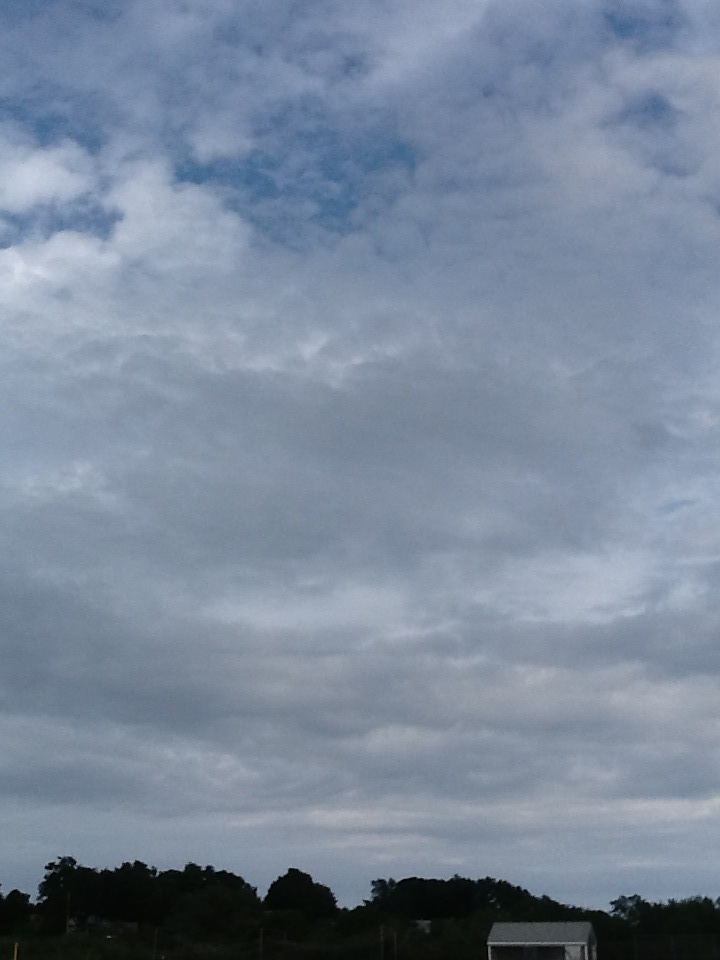
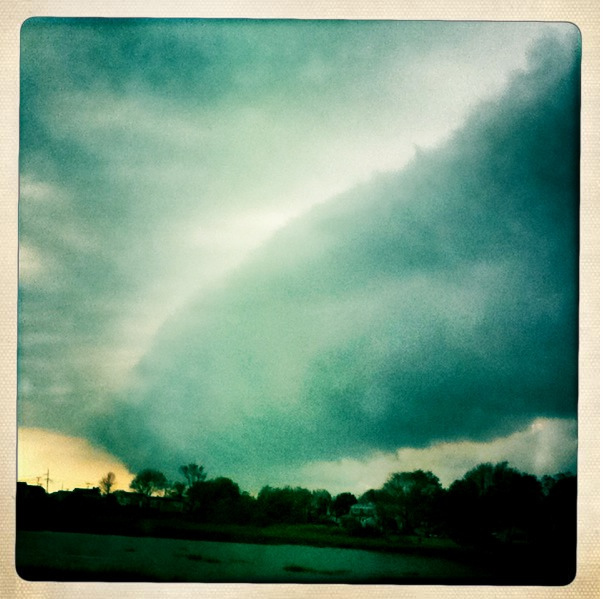
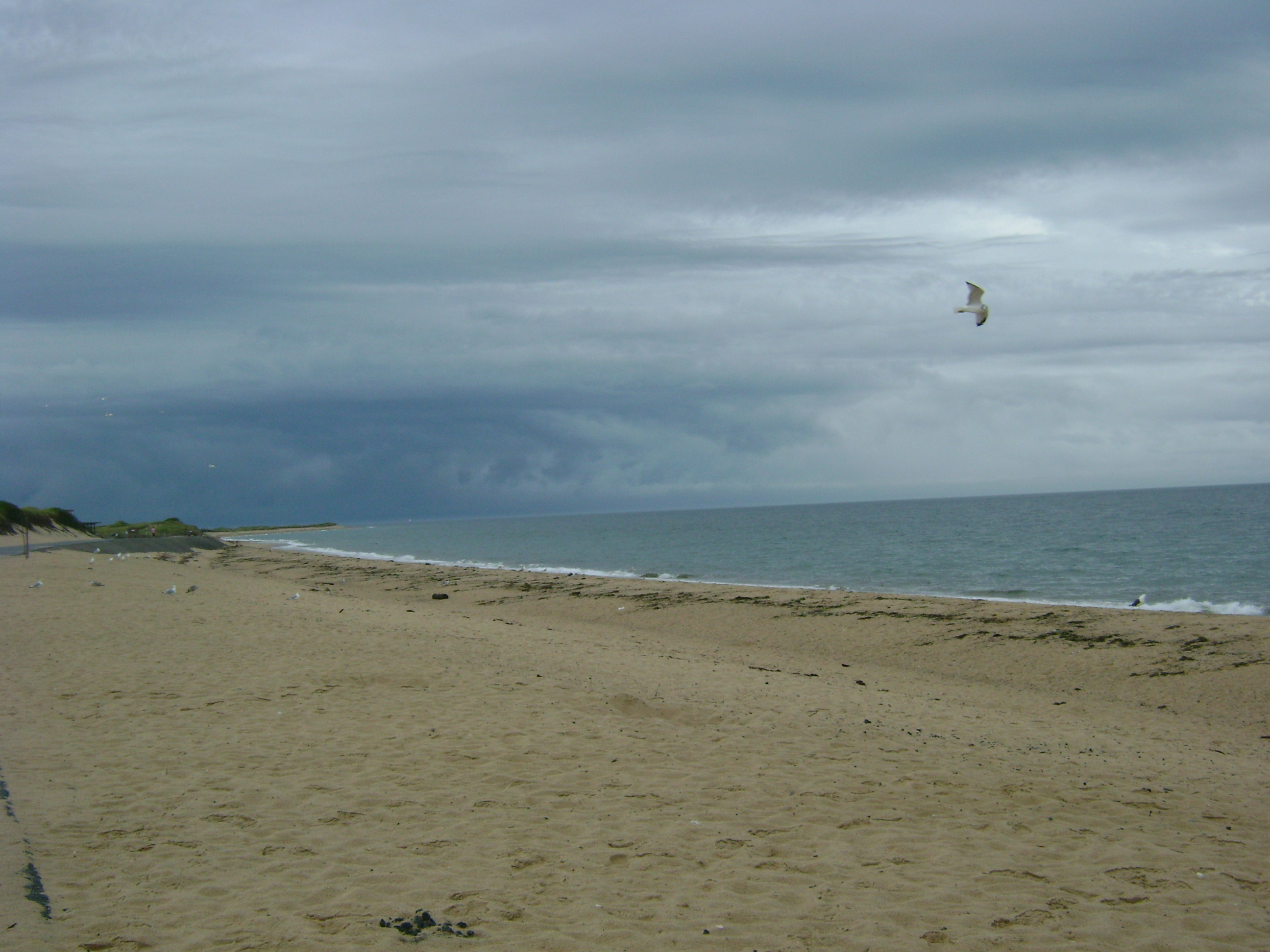
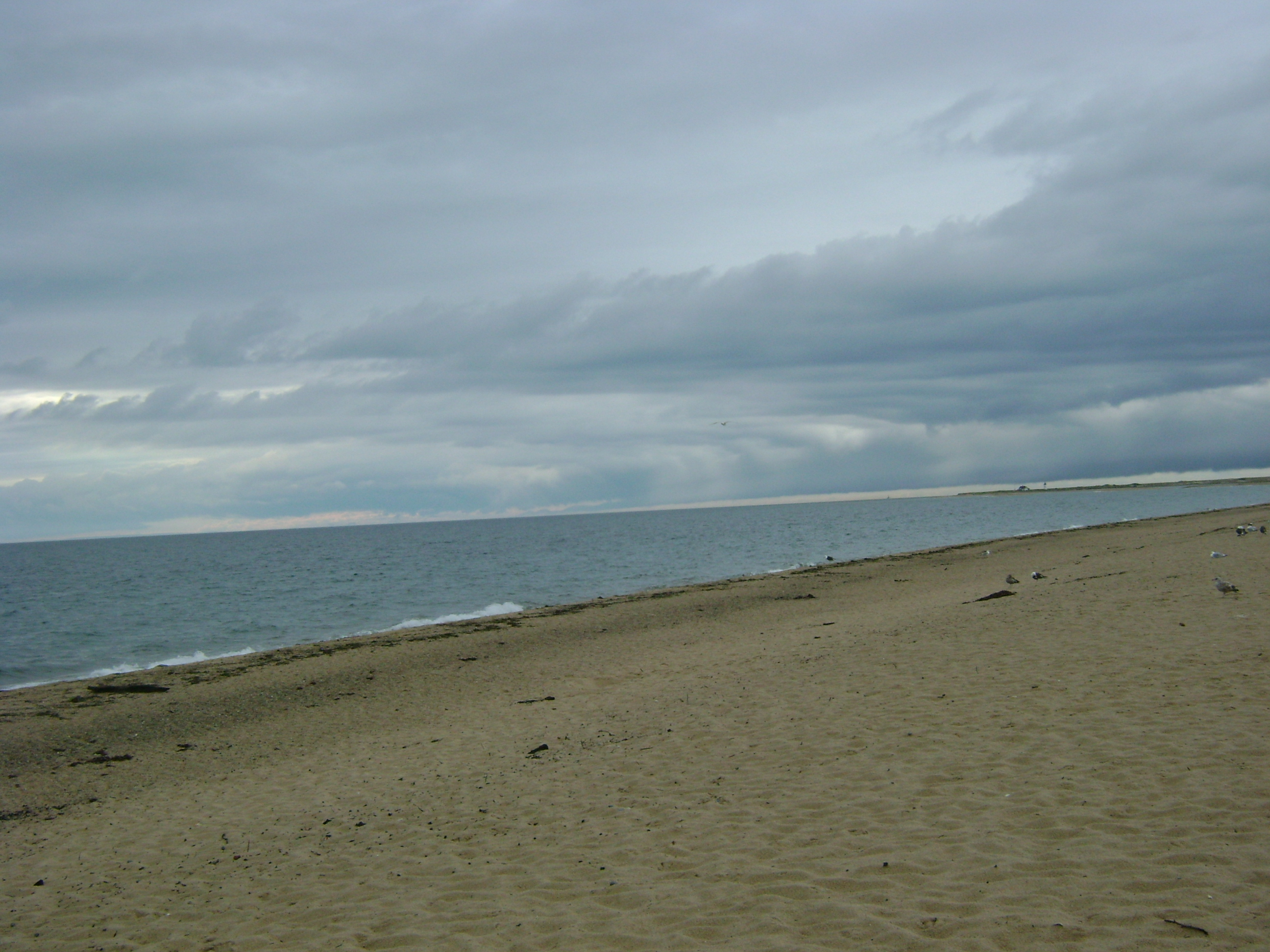
Storm over Wellfleet Bay, September 2011. I didn’t get any cool photos of the storm during my century ride a few weeks ago, but these images from our trip last year will give some sense of what the Cape Cod sky looks like when it’s about to pour. When this was taken, Jen, Sadie, and I had just walked over the footbridge over Duck Creek, which connects central Wellfleet with Hamblen Island/Cannon Hill. This funnel of a cloud swept over the area inside of 10 minutes, and the air over the small island became still and eerie and the light turned murky and green. Oddly, it didn’t rain on us, not even a drop.

Riding in such absurd weather does have its upsides.  For the century ride, so long as I stayed off Route 6, the main local highway (itself only two lanes for much of its duration, one each direction, and four lanes for only a few brief segments), I had the roads almost entirely to myself. Some part of me also liked the challenge of it. The terrain for most of my century route is pretty flat, except for some rolling hills in the dune areas of Truro and near Race Point in Provincetown, so the headwind and the rain added a level of difficulty to a ride whose primary difficulty is added distance—about 25 to 30 miles more than I usually ride. And at a certain point, being that soaked to the bone, so long as the temperature is pretty mild, as it was that day in Wellfleet, and so long as I know my route as well as I do those roads on Cape Cod, becomes joyful. Comical. There’s a bizarre elation to it, possibly because I have so little control, my focus becomes concentrated and my concerns hone in on the present moment. The water cleanses me temporarily of my ego’s concerns—about the time or speed I’m hitting, about what I look like. My long list of anxieties—about the ride, work, my personal life, the things I’m doing but not doing well, the things I’m not doing but should be doing, life goals I’ve been tap-dancing around for years upon years, the calls I haven’t made, the emails I haven’t sent, people I’ve disappointed including and especially myself—all recede.

Storm passing over Wellfleet, near Duck Creek and Hamblen Island, September 2011. No wonder artists like Edward Hopper flocked to this landscape to paint.

During those stormy hours, I zip along on familiar roads, peeling through rainwater, sometimes with glee and exhilaration, other times with irritation and weariness; either way, there’s little to contemplate but what’s right in front of me. I look out for my usual needs when cycling in any weather: to pay attention to the route to know where I’m going; to my body’s need for fuel, hydration, a bathroom break, or a rest so I don’t bonk; to the road, weather, and traffic for safety); beyond that, there’s only the tension between the determination to keep going or the possible decision to stop. That meditative calm happens on my bike in beautiful weather, too, but riding through a rainstorm forces an even more stripped-down simplicity to my thinking that’s liberating.

The rain kept coming down in sheets all morning. It settled into a steady heavy patter after my break for lunch at Mile 45 and didn’t stop until I was in North Truro, a handful of miles from Provincetown. As a result, I have very few images from my century ride because the water would have ruined the camera, and visibility was so poor, not much would have come through anyway. The sun did peep out for about an hour, though, and the images directly below were taken then, at Herring Cove in the West End of Provincetown.

The first of the limited series of photos I took during my Cape Cod century ride, at about Mile 75 of 104 miles total, Herring Cove, the West End of Provincetown, September 2012. The thunderstorm I had been riding through finally passed over Herring Cove Beach and headed east out to sea.

Facing south, Herring Cove Beach, Provincetown, September 2012.

Storm clouds over the dunes, Herring Cove Beach, Provincetown, September 2012.

The skies clearing up, Herring Cove Beach, Provincetown, September 2012.

From the parking lot at Herring Cove, facing Race Point, the neighboring beach, Provincetown, September 2012.

Herring Cove Beach, Provincetown, September 2012. Local seals, my ocean animal friends, coming to greet me and congratulate me on riding through 75 miles of downpour just to come and visit them. On my calm, pleasant days, if I were an animal, I’d be a seal. On my other days, I’d be a tiger.

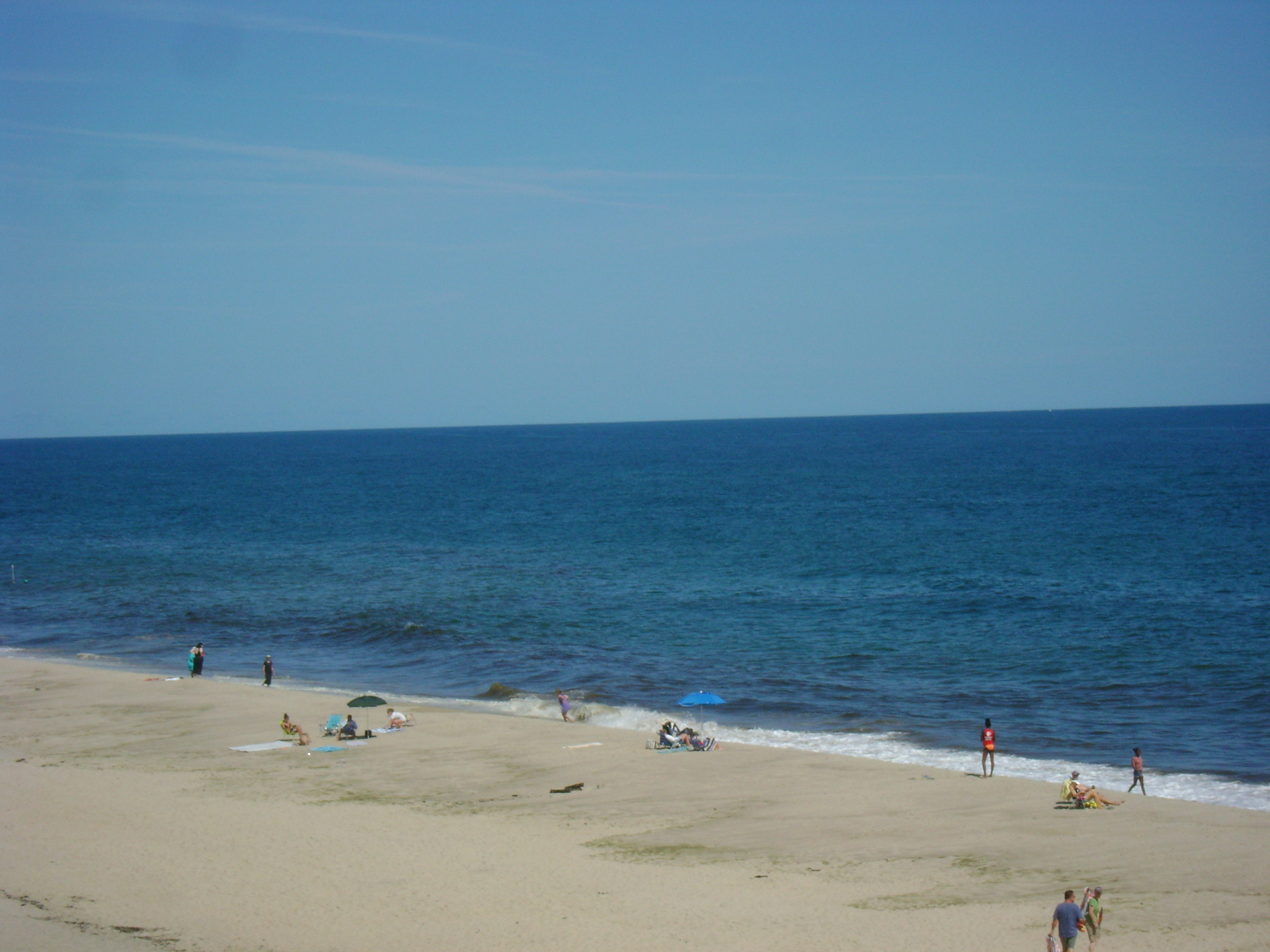
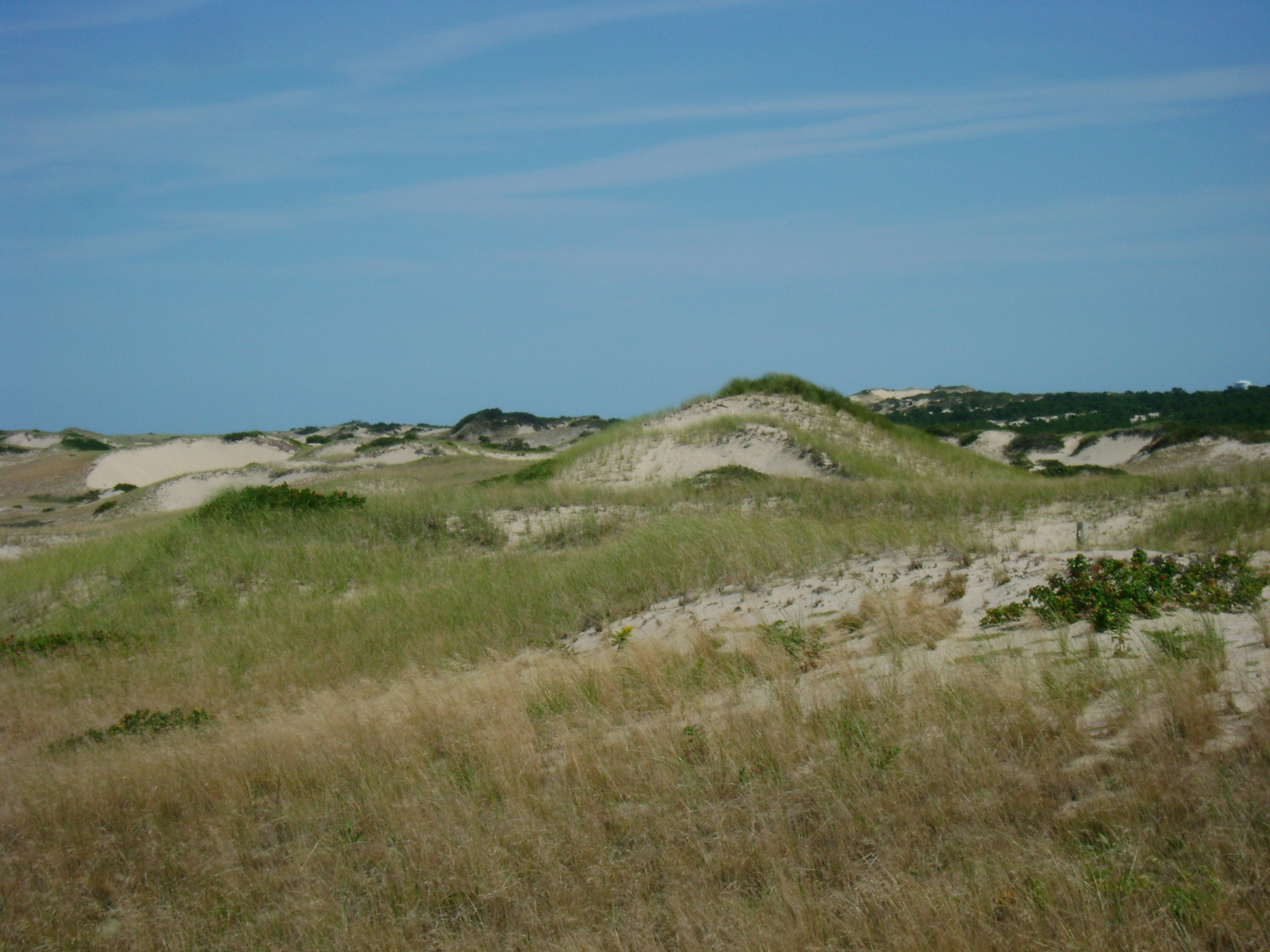
The remaining images that follow here are what my rides and my time on Cape Cod looked like the rest of the week: full of Magritte skies, the smell of sand toasted all day by the sun, churning waves, the shushing sound of wind moving through the green tufts of bramble and tall grass on the moors, naps on the beach, salt water drying on my skin, the shiny black heads of seals swimming near shore poking their heads up to breathe the air and say hello to us. I’m posting these fair-weather photos partly because they are beautiful, and partly because I hope they will usher in good weather for my long, multi-day journey later this week. Fingers crossed.

Maguire Landing, Wellfleet, Massachusetts, September 2012.

View of the Atlantic from Maguire Landing, Wellfleet, Massachusetts, September 2012.

Low tide, Maguire Landing, Wellfleet, September 2012. The silhouettes on the far left are two boys who zigzagged back and forth, skimming over the shallow pools of sea water with their boards.

White Crest Beach, Wellfleet, September 2012.

The Atlantic Ocean, from White Crest Beach, Wellfleet, September 2012.

From Route 6A, North Truro, September 2012. The day before I did my century ride, I did a 50-miler (half-century) from Wellfleet through the hilly sections of Truro and up to Provincetown and back. This was taken from the shore road at the crest of a hill from which one can see Provincetown in the distance.

The view of Provincetown center, from Route 6A, the shore road, just over the Truro-Provincetown line, September 2012.

The West End of Provincetown, overlooking the moors. When Jen and I got married in May 2010, in the back garden of a beautiful house across the street from here, this was the view.

Lighthouse (Race Point Lighthouse, I believe?), from the West End moors, Provincetown, September 2012.

The dunes from the biking trail at Race Point, Provincetown, September 2012.

Marsh grasses and the Atlantic, from the biking trail, Race Point Beach, Provincetown, September 2012.

Old Harbor Life Saving Museum, Race Point Beach. Provincetown, September 2012.

Race Point Beach, Provincetown, September 2012. I took a few minutes to rest and admire the landscape before biking back to Wellfleet.

Race Point Beach, Provincetown, September 2012.

Race Point, Provincetown, September 2012. This is the home at the end of the world to me.

A Bike Training Lesson: Cooking in the Devil’s Kitchen, or, Climbing Platte Clove Road

Last month, my partner Jen and I drove up to the Catskills to spend a weekend with friends. The house in Palenville, New York overlooked the Niobe Waterfalls, and we could hearing the sound of the river water cascading over the rocks from every room. The river has several swimming holes, including a spot where I got the equivalent to a deep-tissue massage standing under one of the bigger waterfalls. Even Sadie, our dog, who is something of a princess and not one who takes to water, took a dip.

Dexter and Sadie, guarding us from the wild beasts in the woods and in the river, Palenville, New York, August 2012.

Dexter and Sadie, snoozing together, Palenville, New York, August 2012.

The weather was beautiful during the few days we were there. We hadn’t been away all summer, so our main priority was to relax and enjoy time with our friends. No one else besides me was a cyclist, I had done some serious riding the previous weekend, and I didn’t want to spend a full day away from all the people I’d driven up there to spend time with. If this all sounds like a justification for taking a weekend off without doing a long ride, it is. I know that life happens, but during training season, I have to justify, if only to myself, the handful of weekend days I choose not to train, or not to put in a lot of miles.

Niobe Falls, located on the property where we spent a weekend in Palenville, New York, last month.

My concession to myself that weekend was that we were in the mountains. Mountains, as in hills. Big ones. A few years ago, Jen and I had rented a different house in the same area near Woodstock, and while we were there, I did some hill work. As I’ve said before, when cycling up hills, I’ll slow down to a snail’s crawl when I need to, but I don’t stop. This isn’t an act of bravery so much as a survivalist mentality. Once you stop on a hill—because you’re tired, because your muscles give out, because you fall over, because the grade (steepness) is too severe, because you’re out of breath, whatever the reason—it’s even harder to start up it again on the bike. Psychologically and sometimes physically as well. When cyclists are forced to stop mid-hill, more often than not, they end up walking the rest of it.

Niobe Falls, Palenville, New York, August 2012. We could hear the roaring sound of what you see here from every room in the house where we stayed.

The funny thing about the definition of failure in my world is that it only applies to me and my own endeavors and not to other people. Stopping mid-hill and walking the rest carries no stigma, no shame, and no failure—so long as it’s someone else we’re talking about. The trek I made up Meads Mountain Road in July 2010 goes up Overlook Mountain and spans roughly two miles, with around 1,100 vertical feet of climbing. I mention it now because up until last month, that was the hardest climb I’ve ever attempted—the first hill that was so grueling, I had to stop once along the way. The grade had become so steep, I couldn’t complete one of my pedal rotations, and I clipped out and had to stop before I lost my balance. I also almost fell over a second time trying to start again. I weaved and teetered for 10 to 15 feet before I was able to clip into my pedals fully and use my weight to steady myself and start the momentum of pulling myself up again. Stopping and starting again was humbling, but I didn’t end up walking any of it. I made it up to the top on my bike, and at the summit, I rewarded myself with a rest, with my admiration for the view, and then finally, with the joy of coasting down the same hill I’d climbed. In some ways, reaching the top felt even better once I got there because I almost hadn’t made it. When I looked up my route later on online, I found out the grade of Meads Mountain Road exceeded 11% most of the way, with a stretch of some 400 vertical feet with a 13% grade.

View of the valley near Woodstock, New York. Jen and I spent a long weekend here in July 2010, and while we were there, I cycled up Meads Mountain Road, a hill that almost beat me.

Even after cycling a lot for five consecutive seasons, I need a concrete point of comparison to appreciate what hill grades mean. Professionally, I come from an industry that relies on sales numbers to measure success; in that context, percentages below 50% sound small to me. They sound like nothing. Out of context, when I hear a hill has an 8% grade, that doesn’t mean much to me. The percentage is so low, it doesn’t sound too bad. To put these numbers in some perspective:

  • A 0% grade is easy to fathom. It’s flat. Likewise, a grade of 1-2% is barely noticeable.
  • At around 3%, you’ll start to feel the effect. While most riders will zip up inclines of 3-4% fairly easily, hills of this steepness will absorb a fair amount of their power.
  • With a 10% grade, only cyclists in good shape are making it up without having to walk it, and unless they are hard-core racers, they’re struggling and using all their power to do it.

Data on some real-life hills can also help make the impact of grades more palpable and real:

  • The Harlem Hill in the northwest section of Central Park is just shy of one-third of a mile, with 84 feet of vertical climbing at a 4.4% grade. It is regarded by many as the toughest hill in the six-mile outer loop of the park. Runners and cyclists do repeats of this segment for hill-training purposes. For me, it’s a good way to ease my way into the re-entry of a new training season in March and April.
  • Palisades Park’s Alpine Hill, the toughest hill at the northern end of River Road in New Jersey, which I wrote about in a previous post, runs a little over a mile, with 400 feet of vertical climbing and a grade of 7.1%.

    Pro cyclists making their way up Fillmore Street during the San Francisco Grand Prix in 2002. Reportedly, the climb has an average grade of 18%.

  • The Fillmore Street Hill in San Francisco averages at an 18% grade. The photo above of cyclists climbing up this street was taken during the San Francisco Grand Prix, a race that was held annually for five years, from 2001 to 2005. Fillmore Street was considered to be one of the two most challenging hills in the race, whose participants included Lance Armstrong (who didn’t win during any of the five years this race existed, by the way). The other major hill on the course was on Taylor Street, and this is what top cyclist George Hincapie looked like going up it in 2002.
  • The climbs in the Tour de France are slotted into five categories. From easiest to hardest, the first four are Category 4 through Category 1, and they correspond to the gear you’d need to be in to drive an old car up the hill. The toughest is Category HC, which stands for hors catégorie, or “beyond categorization,” and those are so steep, a car can’t traverse it. For some comparison, I looked into the relative levels of difficulty of the hills on the Tour. Of course, one needs to keep in mind that one major factor in the hill categorization is their length; most of these hills span between 4 and 23 kilometers, or between 2.5 miles and 14.3 miles. That said, it’s eye-opening that the average grades on most of these climbs are 6 or 7%, and the steepest portions max out at 11% and 13%.

Mind you, I don’t tend to look up hill grades before I seek out a route. It’s possible I should, but I certainly didn’t when I was in Palenville last month. That Saturday morning, I sipped my coffee and stared out the picture window at the Niobe Falls, then typed in basic search terms for local hills and cycling on my iPad. I researched only enough to discover that Platte Clove Road was seen as challenging and was only about eight miles from the house—perfect for my purposes. I could do some hill work and be back in less than a few hours. I finished breakfast, suited up shortly thereafter, took a couple of puffs on my still-new-ish asthma inhaler, and rode out.

Platte Clove Road/Devil’s Kitchen, Tannersville, New York, August 2012. It’s deceptive, isn’t it? Through a camera lens, it doesn’t look that bad. But it was. And it got harder as I went.

The ride from Palenville to the base of Platte Clove Road in Tannersville is fairly forgiving, mostly flat with a few gentle inclines and rollers. The moment one turns onto Platte Clove, however, the grade shifts. At first it’s deceptively gradual. Then there is a clear point at which the suburban looking houses that are spaced closely together for the first mile stop, the forest tree line begins, and the road grade shifts upward dramatically. Even though the road is paved, there’s no mistaking the fact that you are climbing a mountain. For most of the way up, Platte Clove has no shoulder on either side; it’s just wide enough for two cars to pass each other driving in opposite directions, and in certain places, even that looks iffy. The asphalt ribbon of the road twists and turns, and the overall trajectory and grade shifts move continually up and up, so you can’t gauge how far you are from the peak of a given hill segment much less from the summit. What appears to be a brief crest and decrease in grade turns out not to be.

I didn’t know any of that before I attempted Platte Clove Road. I noticed one or two seasonal signs as I rode: The road is so narrow, so winding, steep, and difficult to navigate that it is closed to all traffic between November 1 and April 15. That was all I knew.

Platte Clove Road beat me. It didn’t take very long either. I was less than a mile into the mountain segment of it before I had to stop. The incline felt more like a wall than a mountain road. I was so short of breath, I thought I’d hyperventilate. Sweat stung my eyes and dropped from my chin, from my elbows. I let myself stand there at the side of the road for long enough to catch my breath, and then I tried to continue. Unlike my Meads Mountain Road climb, however, I couldn’t get going again. I tried, I weaved, and I started to fall over, along with my bike. I couldn’t get enough power to fully rotate the bike pedals.

I don’t know why I didn’t turn around. Stubborn and willful, I begrudgingly walked up the incline instead, for 10, 20, 30 feet. I felt terrible—hot, breathless, exhausted, achy, disappointed. Even pushing my bike while walking up the hill kept me panting. As I walked, I made myself think of all the BTC cyclists I knew who had had to walk up some or all of Mount Archer in East Lyme, Connecticut. I thought of the novice riders I’d seen stopping and walking Harlem Hill, and Alpine Hill, and the tough climb along Route 9W going south out of Piermont, New York and up to the New York-New Jersey state line. They did what they could and stopped when they had to—and then they kept going. They weren’t failures to me, and the world didn’t come to an end when they walked it.

The part that I hadn’t expected was that while the hill didn’t end, or even flatten really, the steepness did ease off ever so slightly. It hadn’t occurred to me that I might walk a portion of the climb, then get back on the bike and cycle up some more of it. I thought, “Maybe that was the worst of it.” I kind of knew I was kidding myself, but at that point, I was willing to say anything to myself to find a way to keep going. When the grade decreased, I got back on the bike and to my surprise, I was able to make a go of it.

Higher up on Platte Clove Road/Devil’s Kitchen, Tannersville, New York, August 2012.

The satisfaction and relief were short lived. Less than a few minutes later, I had to stop again and get off my bike. This time, I had to pull over to the little ditch on the inner side of the road, and I stayed put for several minutes to catch my breath. A number of cars zipped by, wheezing their way up, most of them taking the curves too fast.

At that point, a big part of me wanted to say, “Fuck it. This hill beat me. I’m done.” I was almost in tears, possibly as much from physical exertion as from disappointment. My lungs were on fire. I looked at my odometer; I was only about nine or 10 miles from the house. I was plagued by the thought of not finishing what I’d come there to do.

Still higher on Platte Clove Road/Devil’s Kitchen, Tannersville, New York, August 2012.

But another part of me was curious. What if I walked a bit, until the steepness dissipated again? Would I be able to climb further? How high could I go using this painful stop-and-go method? Even more, how long would my self-esteem hold out? How much ego-bruising could I stand? Conversely, what might it feel like to keep going in assuming failure, knowing failure, embracing failure and physical pain, repeatedly? What it would be like to sit with and in the belly of disappointment, and still keep going? Would it feel more like failure to stop, rest, and walk again? What if I could continue to walk a bit, then ride a bit, then walk a bit if I needed to? What would happen to me?

I won’t lie. Most of the journey continued to feel lousy. My legs hurt from pedaling uphill for what felt like years. My arms hurt from trying to use my grip to gain some forward stability and momentum. My head ached. I was drenched with sweat. My bike felt like an anvil weighting me down. I felt as small as I ever have.

I did have to stop again. Three times? Maybe four? I don’t recall.

It’s hard to reconstruct what I was thinking as I plodded along. My mind may have drifted off to a Zen place where what was right in front of me was all I could focus on. On some less conscious level, I think I was testing my own dueling senses of agency and despair, as well as my physical limitations. I wanted to allow myself the space to fall short and to choose to sit with whatever that brought—discomfort, sadness, self-doubt. I haven’t been adept at giving myself that latitude and that freedom in other areas in my life. I wanted to do it, not because I wanted to suffer, but because I needed to know I could, and that afterward, I could still pick myself up and start again.

This all seems very obvious in the telling. Like something out of a self-help best-seller I’d never read. Knowing what’s meaningful and true and wise is one thing. Living it is far harder and the journey is more elusive.

People who are battling serious illness have to live some version of Platte Clove every day. The difference is they don’t have the option of getting off whatever rocky, merciless mountain road they’re on in favor of terrain that’s softer on their bodies and their spirits. They get to choose how to face it, battle it, and bear it. They get to choose who and what brings them a level of peace and grace as they traverse a hard, long journey with no maps and little comfort. That’s all. And they get to make those conscious decisions over and over again. That’s real bravery.

I didn’t know I had been in the Devil’s Kitchen until after I finished trying to climb it.

On my way down Platte Clove, the angle of the path was so bumpy and severe, I had to ride my brakes to slow myself down in order to not lose control of the bike. Even the downhill on this one wasn’t any fun. My body stayed tense until I made the left turn back onto the road leading back to the house.

About halfway back to the Waterfall House, I passed a copse of trees, and two deer bounded out to say hello, a doe and her fawn. That was the loveliest moment of the whole ride.

Later on, I did further digging online about the route I’d taken. I found out that the alternate name for Platte Clove Road was Devil’s Kitchen. It spans 2.2 miles and the climb is 1,280 vertical feet, 1,400 if you begin farther east. One website described it as “quite possibly the most hellacious climb in New York State, and one of the most difficult climbs in the Northeast, with over 1,200 feet of climbing, most of it steeper than 12% grade. Several sections exceed 22% grade.” Pro riders in the Tour de Trump reportedly ended up walking sections of it. The short video above is of pro riders making the climb during the Tour of the Catskills race.

How was the view from Platte Clove when I stopped? As breathtaking and beautiful as it would have been if I had sped all the way up:

The view looking down Platte Clove Road/Devil’s Kitchen, Tannersville, New York, August 2012. This photo doesn’t do it justice. The little bluish strip under the bright spot in the sky at the center of the image is the expanse of the Hudson valley, which was visible for miles into the distance from where I was standing.

View of the neighboring mountain, from Platte Clove Road/Devil’s Kitchen, Tannersville, New York, August 2012.

Sources:

Reasons to Ride, Reason 7 of ??: Braking the Cycle’s 10th Anniversary

This year marks the tenth anniversary of the Braking the Cycle AIDS rides.

Like any milestone anniversary associated with a life-threatening illness, the decade marker for an annual bike ride raising much-needed money to support AIDS/HIV services is a bittersweet one.

I am in awe of the folks at Global Impact Productions who have made this ride happen every year for a decade.

Rider Tommie Stringer, who calls himself “Team Turtle.” I met Tommie on the road during my first Braking the Cycle ride. Unlike me, he is always smiling, and it’s infectious.

I am inspired that the collective efforts of this small community have played a crucial role in saving and bettering the lives of so many who need the help. My inspiration is tempered by the equal amount of sadness I feel that this work has been necessary and even more, that there is any need for the ride to continue into another decade.

Still, I couldn’t be more proud to be part of this band of riders and volunteer crew members. Indeed, I am honored and privileged to ride in it.

I want to call particular note to the size of the BTC group. Braking the Cycle isn’t a big ride; it doesn’t register thousands of people the way the remarkable AIDS/LifeCycle event in California does. Most years, the number of BTC participants falls somewhere between 100 and 150.

That means the feel of the ride itself is intimate and unbelievably well-supported.

Fearless crew leader Christian Miller. He makes it all look so easy. Sadly, during the ride, my first reaction to seeing Christian is to hop on my bike and pedal away from him, given that his presence at a rest stop is usually accompanied by the warning, “Riders, you have 5 minutes to leave this oasis!”

My first BTC ride was in 2008. When I signed up that April, I knew no one. I was willing to go it alone, and I sort of mentally prepared to do so—both the fourth months of training and all three days of the ride itself—but in truth, the prospect of that solitude scared the hell out of me.

Those anxieties were unfounded. By early July, I had over a dozen regular training buddies, some new riders and a number of veterans. During the ride itself, I was equally astonished to discover that I met most of the participants. By Day 2, most riders and crew knew me by name, and vice versa. I met the same people on the road again and again.

This experience was very different from the Pallotta TeamWorks AIDS ride Jen and I did in the late 1990s. The infectious energy of those rides was derived largely from their size; over 3,500 people participated the year we rode. We met a lot of people. On the other hand, we rarely encountered the same ones twice.

My friend Clay Williams, who, like Tommie Stringer, I did not meet until the ride itself. We kept passing each other on the route all three days. Who knew that a conversation about chafing would ever be the beginning of a beautiful friendship?

The comparatively modest BTC stats make these figures all the more impressive:

  • In its first nine years, with participation usually spanning between 100 and 150 riders and crew total each year, Braking the Cycle has delivered over $3 million in support of AIDS/HIV services.
  • In 2011, BTC raised a staggering $462,000.
  • The percentage of returning Braking the Cycle riders every year is mind-boggling. I’m coming back for my fourth year, and every year, at least one-half the participants have done it before.

My tenth anniversary wishes for Braking the Cycle are easy:

  • May we all ride hard, ride proud, and ride safely.
  • May BTC raise a massive sum for Housing Works, this year’s beneficiary.
  • May the BTC ride never reach its twentieth anniversary because the AIDS/HIV epidemic is finally over.

Reasons to Ride, Reason 5 of ??: A Lil Help from My Friends

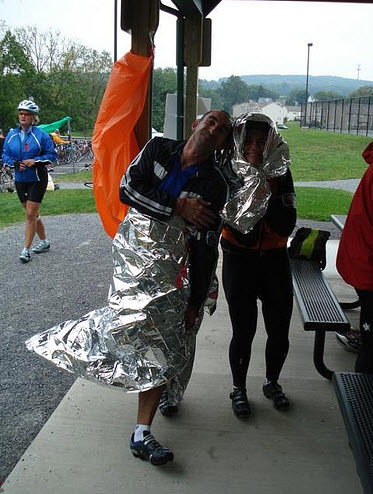
Cycling: ALL ABOUT FASHION. Me and a fellow rider wearing shiny mylar duds, BTC 2008.

This one reason alone might be incentive enough to spend my weekends from April through September doing things that would seem crazy otherwise—drinking smoothies by 6am, cycling out into the morning while the sun is coming up and I’m still half-asleep, having “lunch” before 11am, spending five or six hours riding instead of eating brunch with my spouse, and wearing Fashion Victim cycling spandex, cycling shoes, and a helmet for most of the day: The people, the people, the people. The number of fabulous people I come into contact with because of the ride and the training it necessitates is staggering. Here’s who I’m talking about:

The people at Housing Works, the beneficiary to the ride this year: amazing. They do everything in the name of fighting homelessness and AIDS. Housing. Medical care. Behavioral health services. You name it. They do a ton of stuff locally—many of you know them through their numerous retail thrift stores around the city, but they do a lot more than that so it’s worth checking out the NYC section on the primary website—and they do a great deal of national work (e.g., lobbying Congress on AIDS/HIV-related legislation) and international work as well (e.g., they have been doing major initiatives with Haitian activists living with AIDS since 2008).  The scope of their programs surprised even me and made me proud to be working to support all they do.

The Braking the Cycle participants who ride and crew this ride, which supports what Housing Works does: amazing.They are my fellow riders, and many have become close friends who are more like family. Cliché as it is, they make me smile and laugh, they inspire me, and they give me a hug and comfort me when I cry. They also dress in drag and ride bicycles (yes, some of them at the same time!), which is a definite plus, too, though it’s somewhat dispiriting when a gay man in fish nets has better legs than I do.

And yes, all the people like you, dear Reader, who have supported me in the past and who are supporting me doing this ride: amazing. A million thank-yous wouldn’t be enough to express my gratitude and how much your encouragement helps. Donations and contributions are coming in from family, from friends, from old friends who have resurfaced, from colleagues, from second-hand connections I’ve never met. Case in point: Just the other day I had an email exchange with the lovely people at the jewelry shop when Jen and I got our wedding rings, and I mentioned the ride when I was asked what was new with me; I didn’t even think to ask for a donation in that moment, but the ride links are in my email signature, and the next day, a contribution was posted on my First Giving page. All my supporters out there, each and every one of you: you rock.

Equally important, I’ve been in touch with hundreds of people about this cause and in the process, I’ve gotten more messages of love and support and cheer-leading from all of you than I ever could have imagined. As I’ve noted, it’s been a physically challenging season, so the gestures of support really been a wonderful boost. Your words keep me going on the days when I’m exhausted, cranky, or feeling demoralized and wondering why the hell I’m doing this. So thank you thank you and thank you again—and keep it all comin’… I’ve still got a month to go here before the ride! Hundreds of miles and thousands of dollars to go before I take a ten-minute break and sit on something that isn’t a bike saddle.

If I listed all the lives touched through this process, my individual Braking the Cycle process alone—of training, of asking for donations, of blogging, of talking about AIDS and Housing Works, of reminding people to donate—all by name, you would be scrolling for eons through pages and pages of names.

Instead I’ll leave you with a photo array of images from the three Braking the Cycle rides I’ve done in past years. They are far from comprehensive and only begin to scratch the surface of what the actual Braking the Cycle ride experience is like, but they are a concrete reminder of why showing up is always worthwhile and meaningful. You never know what will happen on the road, where the possibility of change is ever-present; what seems impossible one morning can feel welcoming the next.

When I signed up the first time in April 2008, I had no idea it would change my life. I didn’t know a bike ride of all things could change me. I truly hadn’t a clue that four years later, I’d have logged nearly 9,000 miles on a bicycle and raised nearly $30K to support services for those affected by AIDS/HIV. (That $30K figure does *not* include this year’s ongoing fundraising, by the way, which exceeds $4K as of this writing and, like me on my bike The Blue Streak, keeps climbing.)  I get kind compliments from people sometimes about what I’m doing and what I’m giving, and it’s flattering and energizing to be praised. But the fact is, I’ve always received and gotten back far more from doing this than I’ve given, for which my gratitude is immeasurable. The pictures will, I hope, give you just a tiny taste of what I mean by that.

Yep, that’s me in the foreground. So fast I’m blurry… When arm warmers come back into fashion, I will be so ready.

The fabulous Tim Fitzpatrick who kicks my ass going up hills every time. My better half Jen, also a Braking the Cycle crew member, is giving him a pep talk.

Yes. Photographic evidence. I hollered my way up this beast of a hill in Connecticut. Twice. In 2009. And then again in 2010. Successfully. Perhaps the screaming helps? Mount Archer (AKA Mount Eric), which I’ll be facing again on September 29, still scares the crap out of me.

William Thompson, flat on his back, for a change. Would you believe this guy has done multiple marathons, triathlons, and Ironman events? He always looks as fresh as a daisy, too. I am certain a painting of him is sitting in a closet somewhere, aging.

Trust me. Simon Chung, who does, in fact, ride his bike very well in outfits like this, is a very, very Bad Witch. He also has fabulous legs.

Believe what you read. 90 miles and still smiling.

If you’re friends after 300 miles on the road, most of it through rain, you’re really friends: Terry Christopher, Kerri Fox, Gregg Passin,me, Rich D’Amico.

Look! A Braking the Cycle ride day when it’s not raining! We look pretty decent considering we’re about four miles from the end of the ride. Thomas Capobianco, me, Gregg, Rich Monreal, Terry, Kerri, John Gonzalez, ?, Steve Kolbo.

My friend Clay Williams hugging previous BTC rider Greg Baker at closing ceremonies.

This isn’t a photo from the ride. Obviously. But this is my family, and all this biking and training and fundraising and all the rest wouldn’t be possible without their love.

How often does one get to participate in something that make one feel like this?

Reasons to Ride, Reason 4 of ??: In Memory of Dennis (1950–1987)

Dennis was the first person I knew who was HIV+. He is also the first person I knew who died of AIDS.

I was nearly 15 when Dennis became ill. I don’t even know how long Dennis was sick before he died. My hazy memory and my instincts tell me it wasn’t very long.

In point of fact, I didn’t and don’t know much about Dennis first-hand, except that he was a constant in the thread of my family’s history while I was growing up. He was a journalist, and he spent most of his adulthood traveling the world, hopping from one political conflict and hotspot to the next to report on what was happening. So I didn’t see him often, but I had known him my entire life. Dennis was one of my mother’s best friends from childhood. My mother, who was born in Bucharest, had only two friends who date back to that early part of her life. Dennis was one of them. When the two of them got together in person, the air was filled with a dizzying barrage of Romanian. My mother has no siblings, and Dennis as close to an uncle as I ever had on that side of the family. Which is what he was, really. Family.

My mother could say a lot more about who Dennis was than I could and has enough personal memories of him to make up a book. These are the things I know about Dennis:

Silence = Death Digital ID: ps_mss_cd15_218. New York Public Library

Silence = Death ACT UP poster, c. 1987-1995. Courtesy of New York Public Library Digital Gallery.

  • He was funny.
  • His full laugh was a high-pitched giggle that went on and on and somehow gave everyone in the room permission to laugh no matter how silly it sounded.
  • He was fiercely intelligent.
  • He loved politics and debating.
  • He loved holding court with people.
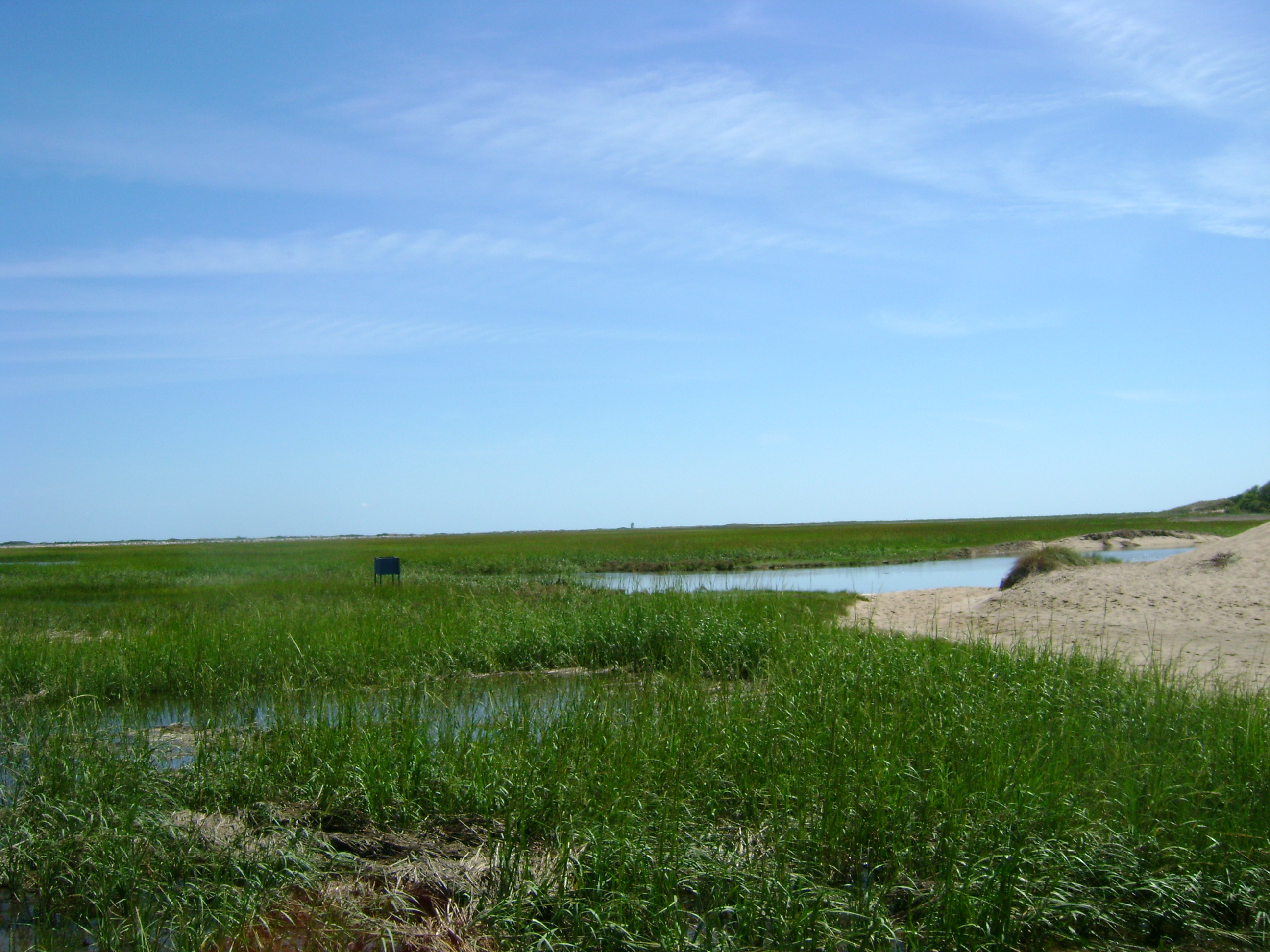
  • He had secrets.  Before moving into journalism, he worked for the State Department. He was often evasive about where he was going for work and why. But it seemed that wherever major political trouble was brewing, there he was. I remember my mother musing that it wouldn’t surprise her at all to discover Dennis was some kind of covert ops spy.
  • He knew many languages.
  • He seemed to know everyone and have friends everywhere.
  • He wasn’t handsome, but he had a kind face.
  • He loved to have fun. One of my few concrete memories of Dennis takes place at a party. I remember Dennis’ insistence on dancing, even though no one else was.
  • He was closeted, both about his sexual orientation and later on about his HIV status.
  • No one talked about Dennis being gay.
  • No one talked openly about the cause of Dennis’ mysterious illness when he got sick. His obituary in The New York Times was three paragraphs long and said he died of cancer.

Dennis was 37 years old when he died. I am nearly three years older than that now. If he had a romantic partner, his obit didn’t mention it.

A lot of things were different in December 1987:

AIDS and HIV had been around for six years, since 1981.

AIDS Treatment for All!  ACT U... Digital ID: 1635828. New York Public Library

An ACT UP poster, c. 1987-1995. Courtesy of New York Public Library Digital Gallery.

President Ronald Reagan had been in office since 1981.

By December 1987, 71,751 cases of AIDS had been reported to the World Health Organization. The greatest number, 47,022 (65.5%) were reported by the United States. Both those figures are cumulative, since the first cases of the disease were reported in 1981.

When you contracted HIV in 1987, you were pretty certain you’d not only die, but die relatively quickly.

AZT, the first antiretroviral drug to treat AIDS, had only been FDA-approved for nine months.

ACT UP (AIDS Coalition to Unleash Power), the influential advocacy group devoted to working on behalf of people with AIDS and to shaping public policy, medical research, and treatment for the AIDS pandemic, had only existed for nine months.

The American Foundation for AIDS Research (amFAR) had only existed for two years.

Silence = Death Digital ID: 1577323. New York Public Library

Silence = Death, Keith Haring, 1989. Courtesy of New York Public Library Digital Gallery.

Artist Keith Haring was still alive and would be for another 27 months.

Housing Works, this year’s Braking the Cycle beneficiary, had not yet been founded.

Gay rights activist Cleve Jones made the first panel for what would become the AIDS quilt, in memory of his friend Martin Feldman.

April 1, 1987, marked the first time Reagan gave a public speech on the disease.

Reagan’s second major address about AIDS was given on May 31, 1987, at a dinner honoring the American Foundation for AIDS Research (amFAR).

Abstinence and morality were emphases in both of Reagan’s speeches.

Even if Reagan’s claim on May 31 that “spending on AIDS has been one of the fastest growing parts of the budget,” was accurate, it was because there was nowhere for the numbers to go but up. The proposed allocated monies for AIDS in 1987 was $416 million, and only half of that was at the urging request of the Reagan Administration; Congress requested the other half.

United States government federal budget, 1987. Federal funding for AIDS accounted for .0038% of the total health budget for that year and .000416% of the overall federal budget.

Without any context, $416 million might not sound so bad. To put it in perspective, total federal spending on health that year was $110 billion, 11% of a $1 trillion ($1,000,000,000,000) federal budget. What that means? The federal budget’s spending in 1987 on AIDS, which Reagan boldly pronounced to be “Public Health Enemy #1,” accounted for .0038% of the federal government’s spending on health and .000416% of the overall federal budget. So little it wouldn’t even show up as a sliver on the pie chart reproduced here.

Federal defense spending in 1987 was 33% of the budget, or $330 billion.

People were so scared of HIV at the time and the ignorance about how one got it was still so common, many were afraid to touch with someone with HIV. Which is why it was a big deal that in 1987 UK Secretary of State for Social Services Norman Fowler became the first person to publicly shake hands with an AIDS patient. Even some of the educated, knowledgeable friends and family of those with HIV or AIDS were terrified they would contract it because at some point, they’d kissed the patient on the lips as a social greeting.

United States government federal budget, 2012. Federal funding for AIDS accounted for .034% of the total health budget and .0075% of the overall federal budget.

It’s 2012. Federal spending on health today is 22% of a budget of $3.8 trillion, or $836 billion. Of that, some $28.4 billion is being spent on AIDS and HIV, for both domestic and global activities combined.

Compared to where we were in 1987, that’s a huge leap. And yet: That’s a mere .034% of the health budget and .0075% of the overall federal budget.

Today, the reports that are released each year tout the fact that the annual rate of new HIV infections in the U.S. is relatively stable, as opposed to increasing each year. This is regarded as the good news. It is good news, but that number isn’t a reason to celebrate when you examine the historical trajectory either. Some 50,000 Americans become newly infected each year. That stable annual rate is bigger than the total number of AIDS cases reported in this country by the end of 1987.

Here is a fact that’s neither good news nor bad news, and after 31 years, it’s not even news at all: We still have a long road and a lot of work to do.

Sources: PBS Frontline; federal budget spending data from usgovernmentspending.com, 1987 and 2012AIDS.govAIDS/HIV data from The Henry J. Kaiser Family Foundation.

Inhaler Deeply: On Reassessing Goals

It’s been weeks since I wrote a post focused on my actual physical training. Despite my blogosphere silence, I have been diligently putting in weekend miles the past month, and I’ve been riding to work when I can as well.

It’s telling that I wince at the thought of admitting to physical training challenges. And humbling. It has been, and remains, an uneven, tough season. The causes are the predictable ones:

  • I started late. My riding season began in April, but the methodical, bulldog-like, and progressive training that I fall into when I have an event on the horizon began later than usual this year, in early July.
  • We traveled in June, which is atypical, and I didn’t ride much for the first half of the month.
  • I’ve been busy with work and life and out-of-town visitors, too, and my night-owlish tendencies have been worse than usual.
  • The erratic, hot weather hasn’t helped. Our air conditioner usually stays in storage until mid-July; this summer, it was going full blast before mid-June.

I didn’t think much of it at first that my riding wasn’t feeling strong most weekends in July. In previous years, I’ve experienced some kind of boost in June or by mid-July, rides during which the time and effort I’ve been putting in kicks in visibly—faster average speeds, better stamina, stronger performances on hills. Sometimes, it’s been as amorphous as feeling fantastic and fearless while riding, as though I could ride on for hours even if it is 100 degrees out.

Nothing like that happened this season. I haven’t been putting in the miles and time consistently as I had in past years, and I figured that was catching up with me. The hills felt harder. The heat felt hotter. It all felt harder. I assumed I knew all the reasons why.

The above reasons have been playing their part, no question. But the past month, a new, unexpected factor emerged: mild, intermittent asthma.

An advantage of riding the same route frequently is that I have a good sense of my performance at various, specific geographic points on a given day. On a strong day, I might be able to take a certain stretch of road at 18 mph instead of 16 mph. Or I can eat a hill like it’s a delicious breakfast one week, but the next, I feel like I’m the martyred Robert De Niro character from The Mission, dragging myself up a cliff while weighted down with heavy metal weaponry, slipping every few steps.

Robert De Niro as Rodrigo Mendoza, The Mission (1986). Mendoza schleps a net full of metal weaponry up the cliffs of Iguazu Falls. On difficult days, of which there have been many, this is what training has felt like this season.

On July 22, when I rode on a Sunday after taking the previous day off, I felt okay but not great. Slow. Easily winded. Hot. Nothing dramatic happened, but I noticed I was dragging a little. My pace on hills wasn’t great. I didn’t feel right. My chest felt a twinge tight. I had a slight cough and a tickle in my throat. I figured I had picked up a low-grade version of the virus floating around my office.
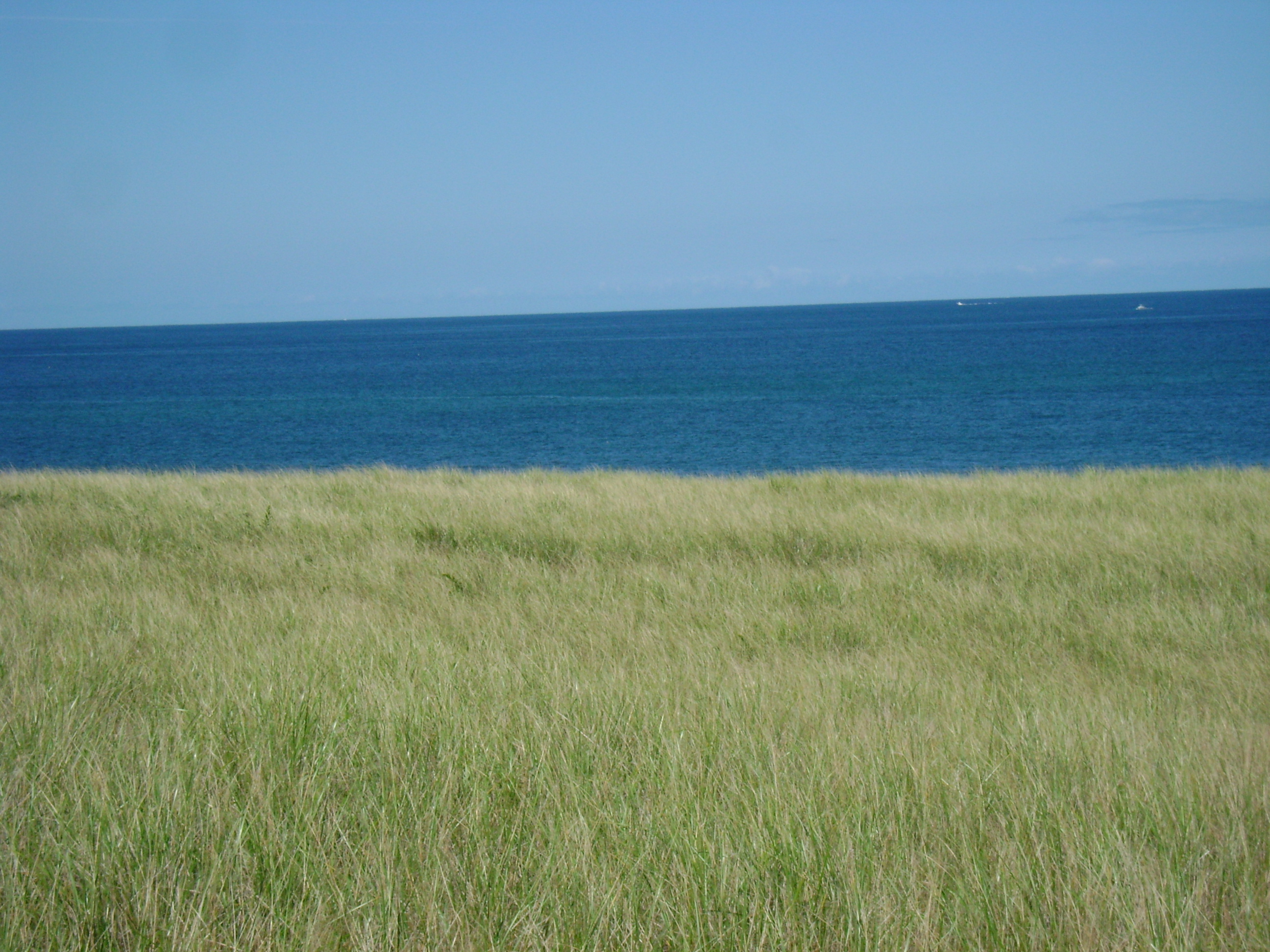
That week, I continued to feel iffy, more tired than usual, but then again, so did everyone else. It was a hazy and soupy July. No one on the streets or the subway or in my office looked energetic. They looked put upon. I was still bothered by an intermittent barking cough. Stranger still, my chest stayed tight. A few times during the nights that week, I was awoken by something that was halfway between a cough and a choking episode, as though I had swallowed water the wrong way in a dream and woken up in the middle of it.

The following Saturday was much the same as the previous one, except that it was humid as well as hot, and the uneasy feeling I had while riding the previous week kicked in again full force. I was meeting my friend Terry, who lives in New Jersey, we meet at the southern entrance of Palisades Park. It’s roughly 15 miles between my Brooklyn apartment and the park entrance.

Because the West Side bike path is pretty heavily trafficked any time after 7:30am and because the terrain is flat and forgiving, a lot of cyclists refer to these miles getting out of the city as “junk miles.”

As early as pancake flat Mile 6, where I ride by Chelsea Piers, I was having trouble keeping up my usual pace. I was winded, sweaty, lethargic. I felt awful. I was 15 to 20 minutes late to meet Terry even though I left on time. I hadn’t slept well the night before and was riding on less than five hours of rest. At first I chalked up my exhaustion to that and to the humidity. I stopped with Terry for a few minutes to catch my breath, cool off, and drink some Gatorade, and then we rolled out again.

The eight-mile stretch of road through Palisades Park, also known as River Road, is popular with cyclists because it’s scenic and beautiful, trafficked by few cars, and it offers enough hills along the way to be excellent training for athletic goals and events of all kinds. Two of those hills are generally regarded as the most challenging: Dyckman Hill, which is moderate enough in duration but is still the first incline that’s visibly steep enough to make me take a deep breath if I haven’t been on my bike in a while, and Alpine Hill, which is a mile-long climb at the northern end of the park. Alpine is a little like the Magic 8-ball of hills. It can kick my ass on a tough day, it can still feel arduous even on a decent day, and it’s also the hill where it shows if I’ve been putting in a lot of time and am starting to make notable progress.

A cyclist going up Dyckman Hill Road, Palisades Park, New Jersey.

Dyckman Hill felt like Alpine Hill to me. I was able to pull myself up, but I sagged the whole way. Inside, I felt like my body was creaking. I stared at my odometer the whole time to keep myself from focusing on the remaining distance up the hill. It didn’t register in my head until later on that my speed uphill was a solid half-mile to full mile slower than usual. This summer, Terry has been in the best shape he’s been in since we met. He zipped his way up the hill. I didn’t try to catch him. My chest felt tighter than it had before. It occurred to me that the chest tightness from the previous week had never fully left me at all.

Alpine Hill was harder still. Terry was out of eyeshot quickly. Knowing I’d meet him up at the park rangers station where we usually stop for water and a bathroom run, I let him go. I cranked up at my own meager pace, frustrated, pedal rotation after pedal rotation. A few other cyclists passed me going up, but soon enough, I was too tired to care. I just wanted to make it without stopping. I cycled up Alpine the first time in 1999, and I’ve done it with regularity since 2006 or 2007; in my worst shape, without training, riding on a mountain bike that might as well have been made out of cast iron, I’ve never stopped mid-hill.

The view from near the crest of Alpine Approach Road, Palisades Park, New Jersey, July 2012.

I had brought a camera with me to take some photos along the road for this blog. The last hiccup of the Alpine Hill incline has a bend in it, so I stopped just shy of that and turned around so I could get some clear shots of the rise of the hill grade and of a few cyclists pedaling up it. As soon as I heard the shutter click on the last photo, a wave of dizziness, sweats, and nausea rolled over me. I almost thought I was going to pass out. I leaned over my bike frame and waited until it passed, but I was shaken by it, literally and emotionally. Something wasn’t right.

Another view of Alpine Approach, Palisades Park, July 2012. I took this photo right after I cycled up the hill myself, and I almost passed out right after hearing the shutter on my camera click.

Someone who isn’t me might have turned around after that and gone home. But I was 24 miles from home, at least 10 miles from any decent public transportation, and I was hungry. It made more sense to continue to Nyack, get something to eat, take whatever rest I needed, and then make my way home as slowly as I needed to. That’s what I did. Nothing remarkable happened except that I was now afraid. Even on a strong day, the five miles between Piermont and Alpine, headed south to go home, are the hardest for me out of the whole 70-mile trip. The road out of Piermont is a series of climbs of varying length and grade, one after the other; perhaps because of their back-to-back succession, as well as their appearance more than halfway through the route, they all seem more difficult than any of the hills in Palisades Park. So my only goal was to take my time and make it home safely.

My friend and one of my training partners, Terry Christopher, kicking back at one of the outdoor tables at the Strictly Bicycles bike shop. Don’t let the easygoing look he has fool you. He is a fierce rider. About two minutes after I snapped this, the sky opened up, and it poured so hard, we huddled together under the table umbrella.

I did it, but it felt the same as the first 35 miles had. Like the cycling equivalent to a root canal. The sun burned off the cloud cover on the way back. By the time we got back to the GW Bridge area, it was sweltering so we stopped at the bike shop near the bridge for water and to cool off. At that point I didn’t care what time it was, or how slow I was going; I wanted to rest. Terry and I chatted and caught up. He made me promise to call the doctor first thing on Monday. I didn’t argue with him. We sat long enough for a storm to sweep in, and it poured and poured, hard enough that we waited until it lightened before we headed out again.

In an email exchange later that same day with my brother, he pointed out that any number of environmental factors could be causfor of the symptoms I was having, too: the heat, the humidity, old air filters in the air conditioners, high pollen count, dust and detritus from the building construction site down the block.

Terry, ever loyal, sent me messages in the two days that followed, as he promised he would, imploring me to make sure I made an appointment and kept it. I went to the doctor that Tuesday. She checked me out, had me blow into a spirometer, asked questions.

The semi-likely verdict: mild exercise-induced asthma. She gave me the choice between coming in for more pulmonary testing to narrow the possible causes or trying an albuterol inhaler before exercising. She said that asthma was the most likely cause because my symptoms were intermittent and only really showing up during exercise, with bouts in between during which I felt fine. “If it was anything more serious, it would be more constant and it would be progressive,” she said, “getting worse the longer it went untreated.” She told me the inhaler wouldn’t hurt me, and if it didn’t help, I could still come back in for more testing. I got the prescription filled the same day.

My new albuterol inhaler.

I’ve used the albuterol inhaler every weekend since then, before each of my long rides. It’s a simple enough device and yet the detailed instructions and diagrams seem worthy of a Master’s Degree. Nothing on them says what I’m supposed to do about the fact that, as I try, per the instructions, to coordinate simultaneously depressing the canister on the inhaler, sealing my lips over the mouthpiece, and breathing in deeply, fully, and quickly, my tongue gets in the way. In the 20 seconds that the two inhales of magic medicine take, I am overcome by the nagging feeling I often get when I do my own taxes or fill out bureaucratic forms at work: that I’m doing it wrong. Still, whatever level of albuterol is making it into my system, it seems to help. For which I’m grateful.

Of course, I’m still slower than I’ve been in past years. I’m just no longer dizzy and winded. I try to keep in mind that all the other factors—exhaustion, weather, inadequate training time—are still influencing my performance. It’s occurred to me that these symptoms may have been with me for longer than I realized. My lungs feel more expansive, which is great, but it also means that I notice the effects of my broken nose more. I’ve broken my nose multiple times, and the result is that my nasal passages are stuffed up most of the time. It never mattered much until I started getting more serious about athletic pursuits. I’ve had a referral to finally get my nose fixed since last December. It’s time to make the call.

I know how lucky I am that the physical health obstacles I’m encountering are minor and manageable. Everything I’m experiencing is treatable. It’s not even close to a small glimpse of what it must be like to wake up each day with a genuine, progressive illness, not knowing whether today is a day when your own body is going to betray you.

I’m also aware that the timing of all this means I need to recalibrate my own expectations for the actual Braking the Cycle Ride in September. At some point during the past month, Jen observed to me, gently, “You know, you might not have the ride you want to have this year.”

The first time I did Braking the Ride in 2008, I trained like hell from April onward, but I still went into the event terrified that I wouldn’t be able to ride every mile. Completion was my only goal. I was more shocked than anyone that as hard as the ride was, I could do it. The second year I signed up to do the ride, I experienced some injuries partway through the summer, and it also rained torrentially all season; I wasn’t sure what to think going into the ride itself, but again, I surprised myself by exceeding my expectations. Not only did I finish, I rode strong and fast, faster than I ever thought possible. That was a big deal because I think I needed to prove to myself that the first year I rode wasn’t a fluke. My third year, I knew I could complete the ride, and I trained less than in previous years, but I still put in a lot of bike time and miles. As always, I was nervous going in—a lot can happen in 300 miles, after all. The obstacles were different from previous years; I had a futzy stomach the whole ride, and the heat got to me and slowed me down. I still rode every mile, though.

Jen wasn’t trying to tell me not to ride or to give up or to stop training. She was trying to get me to come to terms with the possibility that I might bump up against my limitations in a new way this year.

My partner Jen, who is my biggest cheerleader in all things. This photo was taken during Braking the Cycle 2010, on Day 3, Mile 250 or so; Jen was on the volunteer crew. What a huge pleasure it was to ride into a rest stop and be able to see her smiling face. She’s crewing again this year. Lucky me. Photo by Alan Barnett.

Because I know Jen is right, I had a useful chat with my friend and rider coach Blake about the season I’ve been having. Blake Strasser is an athlete extraordinaire. She’s done the New York City Triathlon, the NYC marathon, more long-distance cycling events than I can count. She’s a two-time Ironman finisher. An Ironman is the pinnacle of triathlons: It’s a 2.4-mile swim, followed by a 112-mile bike ride, followed by a full marathon run (yes, that’s 26.2 miles), done in that sequence, without a break. Blake has been a hardcore, disciplined athlete for a long time, so I figured she’d also run into her share of challenges along the way.

I told Blake I was nowhere near where I’d like to be or where I’ve been in the past, that the riding has been harder, physically, than it’s been any other season. I know this comes with the territory sometimes, but it’s frustrating. So I asked her, “How do you deal with it psychologically when, for whatever reasons, you have a tough season?”

Superhero Blake Strasser, my friend and the Braking the Cycle rider coach, who convinced me to sign up for my first Braking the Cycle ride in 2008. At the time, I knew no one on the ride and had never attempted anything this physically ambitious. Blake is a hero of a human being and a kick-ass athlete to boot. I am posting this photo from BTC 2011 partly in the hopes that she will wear this outfit again during this year’s ride. If you are a  marathoner and two-time Ironman finisher, you too can look this h-o-t!

Blake didn’t tell me anything I didn’t know, but it helped to hear it from someone who has attempted and succeeded at events far more arduous than anything I’ve done. The main thing with tough seasons, she said, is to reassess goals and remember why I’m doing it. She also shared that she’s had a lousy training year, too—some big health issues and few smaller things, which led to being under-trained, under-rested, etc.

It all sounded very familiar to me.

“My body is just not responding to training,” Blake said. “I’m getting it done, but not seeing gains. I started the year gunning to finish my Ironman in under 13 hours. Now I’m just going to finish it—be healthy, have some fun, help some people along the way. And enjoy a beautiful route. New plan. Good plan. A not-beating-myself-up plan.”

Blake is one of my heroes. And she and Jen are both right. So it’s time to reassess my reasons for riding.

This reassessment isn’t about giving up. It’s not even really about changing my goals exactly. It’s more about recalibrating how I deal with roadblocks as they arise and the possibility, likelihood even, of not achieving what I’d like. It’s about showing up even when I’m not sure if I can get it done—and showing up anyway. And riding my hardest anyway.

  • I ride to raise money that makes a huge difference for a lot of people who get services through Housing Works.
  • I ride to raise awareness about a disease that’s been with us for far too long.
  • I ride because people with bigger obstacles and challenges ride despite those difficulties. When they can’t ride, they walk. When they can’t do that, they cheer on other riders. They show up, however they are able. That inspires me.
  • I ride because I love the compassionate, courageous riders and crew who do this ride.
  • I ride because even on my worst day, I love to ride and have a great time.
  • I ride because showing up when I’m struggling and feeling weak and trying my hardest to ride strong anyway might be a bigger act of will and grit and even courage than riding when I’m feeling my healthiest.

My literal goals aren’t any different than they’ve been any other year. I am committed to reaching my fundraising target. I have been training and will continue to train every week. I will put in a 100-miler while I’m on Cape Cod next week. On the Braking the Cycle ride itself, I remain committed to riding healthy and strong, having fun with my friends along the way, and doing my best to complete every mile. Along the way, I will have to trust my body, my self, my training, the support of all the folks on the ride and on the road.

The rest isn’t up to me. That’s always been true. But in all my years of doing this, this might be the first time that I’ve fully acknowledged my lack of control over the outcome of all the efforts involved. It also might be the first time that is okay with me.

Past Braking the Cycle rides for me were about testing the waters in terms of my own fear, my determination, and largely, my own expanding sense of my physical capabilities. This ride is about those things, too, but the real challenge is about acceptance of and surrender to the many things that are out of my hands and still being willing to be present and curious about what I can do.

I’ve got a month left to fundraise and train. And then: Who knows what will happen? Not me. But I’m looking forward to finding out…