Cape Cod Cycling Diary: A Photo Essay

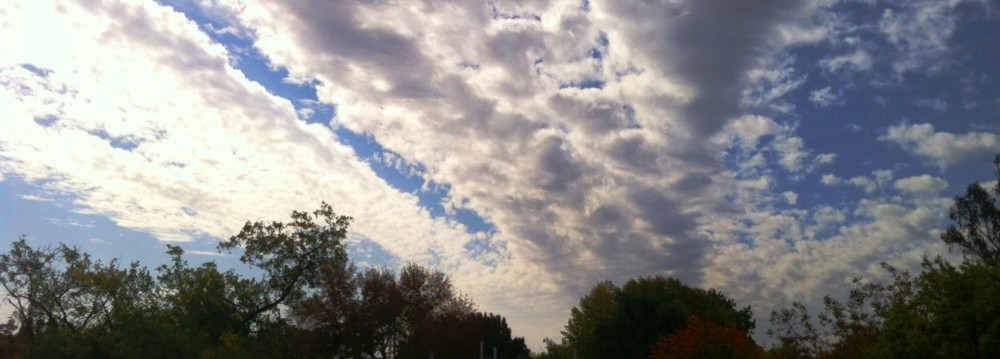
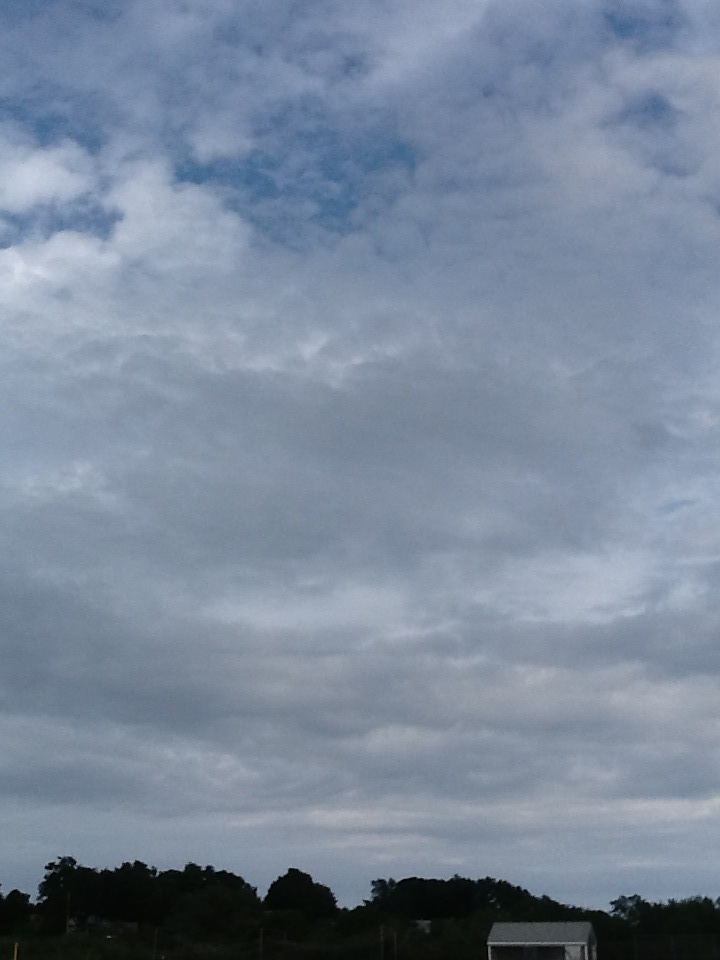
View from the Wellfleet soccer field, where our dog Sadie likes to chase her stinky tennis ball, near Wellfleet Bay, September 2012.

We spend a week on Cape Cod every September, and most years, this has meant that our vacation coincides with the time period during which I need to log in at least one  century (100-mile) training ride. After that, during week or two immediately prior to my actual Braking the Cycle ride, I still put in some 70-milers and short bike rides, and I commute to and from work, but I’m tapering. The century ride is as useful psychologically as it is physically. What better way to reassure those doubting voices inside that wonder whether this time, I can still do nearly 300 miles of cycling in three, back-to-back days? This year, I needed that confidence more than ever. In past years, I’ve done at least one other century ride earlier in the summer, and during a couple of seasons, I had two under my belt before I got to Cape Cod. This year, I did long rides, 70- and 80-milers, as well as back-to-backs some weekends, but Cape Cod was going to be my only 100-miler.

This year, we arrived in Wellfleet on Saturday, September 1. I did some shorter rides on Monday and Tuesday. Jen and I made our other plans for the rest of the week, and Wednesday made the most sense for my century. I should have paid more attention to the weather report. I woke up in the middle of the night a few hours before I was supposed to begin my ride to the drubbing of a downpour on the roof and skylights of our cottage.

My century ride route: From South Wellfleet, near Drummers Cove, I rode the Cape Cod Rail Trail to Dennis and back, which adds up to about 45 miles, stopped home for lunch, then looped the other way and made my way to Provincetown, adding some scenic detours in central Wellfleet and Truro and to Race Point and Herring Cove in Provincetown to tack on some additional mileage.

Riding in a thunderstorm is about as pleasurable as you’d imagine. Which is to say I still have a pretty damn good time because I love being on my bicycle, but it’s better when it’s sunny. It poured for most of the 104 miles I rode that day. It was good that almost no one was out on the Cape Cod Rail Trail, the 22-mile bike and jogging path converted from a former railroad line that stretches between Wellfleet and the town of Dennis—a few walkers and runners in rain slickers and one or two other lunatic cyclists like myself. The rain was so bad I could hardly see. I had put on a brand-new pair of cycling socks that morning; the socks were black, but they had a strip of white trim at the top. Not the wisest choice on my part. The spray as I tore through puddles on the path kicked up sand and mud—on my legs, my saddle, my rear end, my back. The trim on those socks became a grimy, silty brown within an hour. It took two washings for the trim color to return to something like white.

Storm over Wellfleet Bay, September 2011. I didn’t get any cool photos of the storm during my century ride a few weeks ago, but these images from our trip last year will give some sense of what the Cape Cod sky looks like when it’s about to pour. When this was taken, Jen, Sadie, and I had just walked over the footbridge over Duck Creek, which connects central Wellfleet with Hamblen Island/Cannon Hill. This funnel of a cloud swept over the area inside of 10 minutes, and the air over the small island became still and eerie and the light turned murky and green. Oddly, it didn’t rain on us, not even a drop.

Riding in such absurd weather does have its upsides.  For the century ride, so long as I stayed off Route 6, the main local highway (itself only two lanes for much of its duration, one each direction, and four lanes for only a few brief segments), I had the roads almost entirely to myself. Some part of me also liked the challenge of it. The terrain for most of my century route is pretty flat, except for some rolling hills in the dune areas of Truro and near Race Point in Provincetown, so the headwind and the rain added a level of difficulty to a ride whose primary difficulty is added distance—about 25 to 30 miles more than I usually ride. And at a certain point, being that soaked to the bone, so long as the temperature is pretty mild, as it was that day in Wellfleet, and so long as I know my route as well as I do those roads on Cape Cod, becomes joyful. Comical. There’s a bizarre elation to it, possibly because I have so little control, my focus becomes concentrated and my concerns hone in on the present moment. The water cleanses me temporarily of my ego’s concerns—about the time or speed I’m hitting, about what I look like. My long list of anxieties—about the ride, work, my personal life, the things I’m doing but not doing well, the things I’m not doing but should be doing, life goals I’ve been tap-dancing around for years upon years, the calls I haven’t made, the emails I haven’t sent, people I’ve disappointed including and especially myself—all recede.
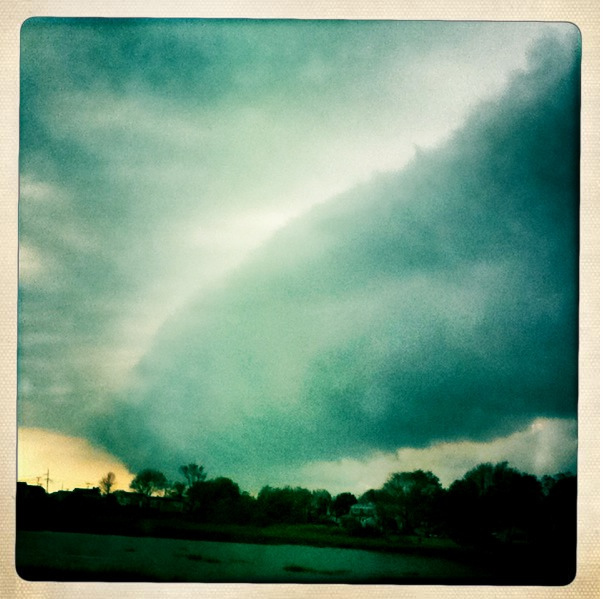
Storm passing over Wellfleet, near Duck Creek and Hamblen Island, September 2011. No wonder artists like Edward Hopper flocked to this landscape to paint.

During those stormy hours, I zip along on familiar roads, peeling through rainwater, sometimes with glee and exhilaration, other times with irritation and weariness; either way, there’s little to contemplate but what’s right in front of me. I look out for my usual needs when cycling in any weather: to pay attention to the route to know where I’m going; to my body’s need for fuel, hydration, a bathroom break, or a rest so I don’t bonk; to the road, weather, and traffic for safety); beyond that, there’s only the tension between the determination to keep going or the possible decision to stop. That meditative calm happens on my bike in beautiful weather, too, but riding through a rainstorm forces an even more stripped-down simplicity to my thinking that’s liberating.

The rain kept coming down in sheets all morning. It settled into a steady heavy patter after my break for lunch at Mile 45 and didn’t stop until I was in North Truro, a handful of miles from Provincetown. As a result, I have very few images from my century ride because the water would have ruined the camera, and visibility was so poor, not much would have come through anyway. The sun did peep out for about an hour, though, and the images directly below were taken then, at Herring Cove in the West End of Provincetown.
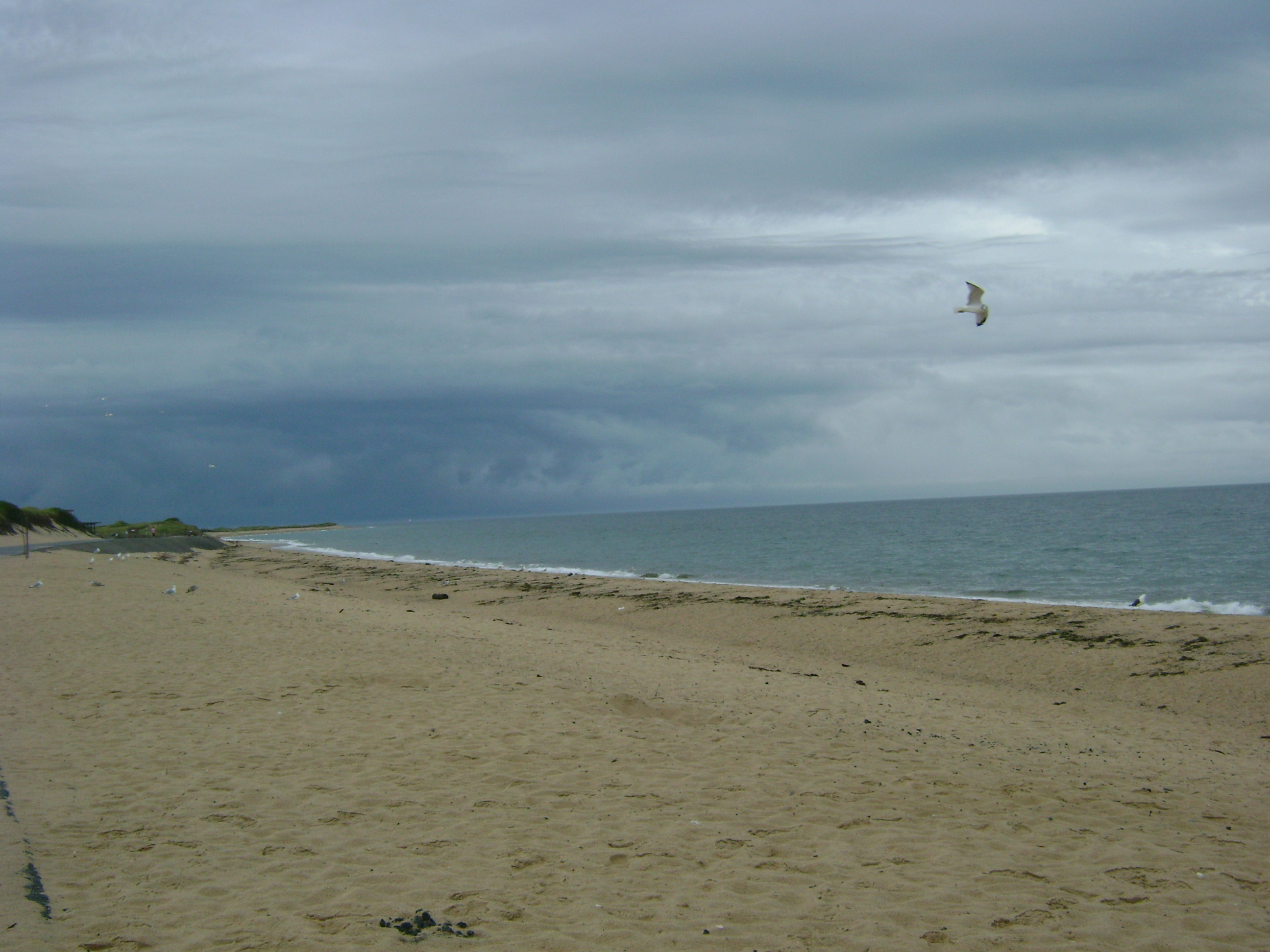
The first of the limited series of photos I took during my Cape Cod century ride, at about Mile 75 of 104 miles total, Herring Cove, the West End of Provincetown, September 2012. The thunderstorm I had been riding through finally passed over Herring Cove Beach and headed east out to sea.
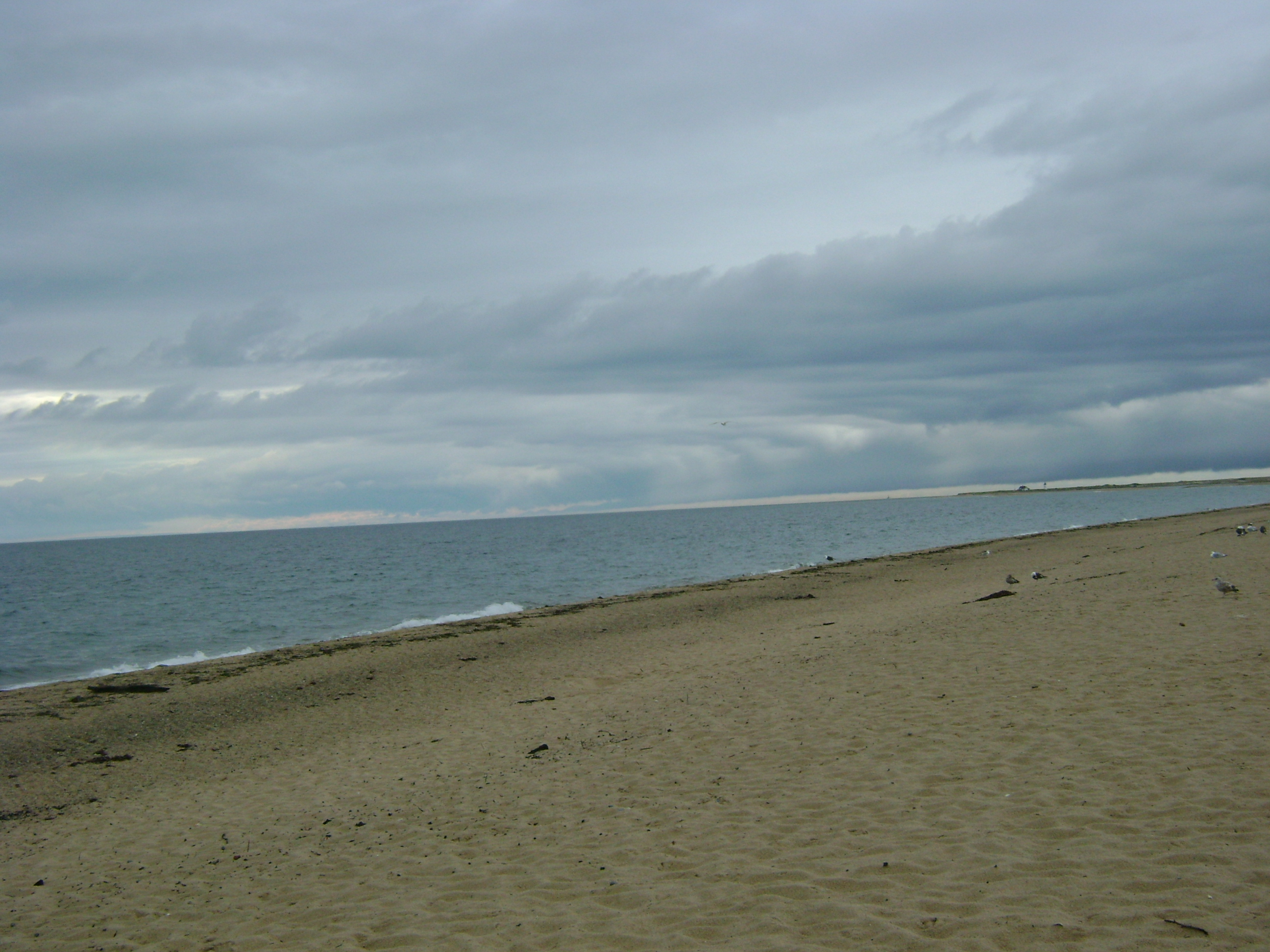
Facing south, Herring Cove Beach, Provincetown, September 2012.

Storm clouds over the dunes, Herring Cove Beach, Provincetown, September 2012.
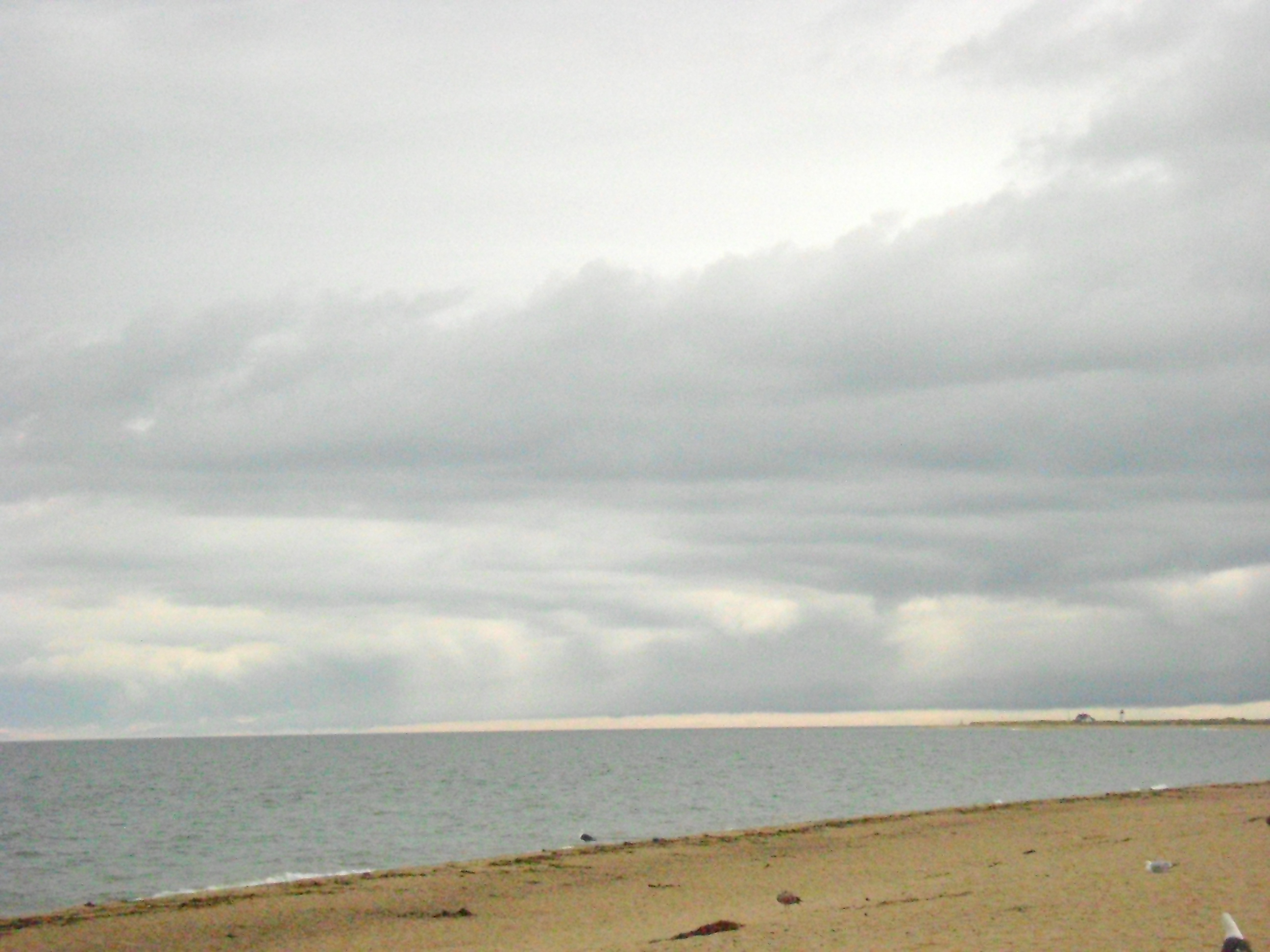
The skies clearing up, Herring Cove Beach, Provincetown, September 2012.

From the parking lot at Herring Cove, facing Race Point, the neighboring beach, Provincetown, September 2012.
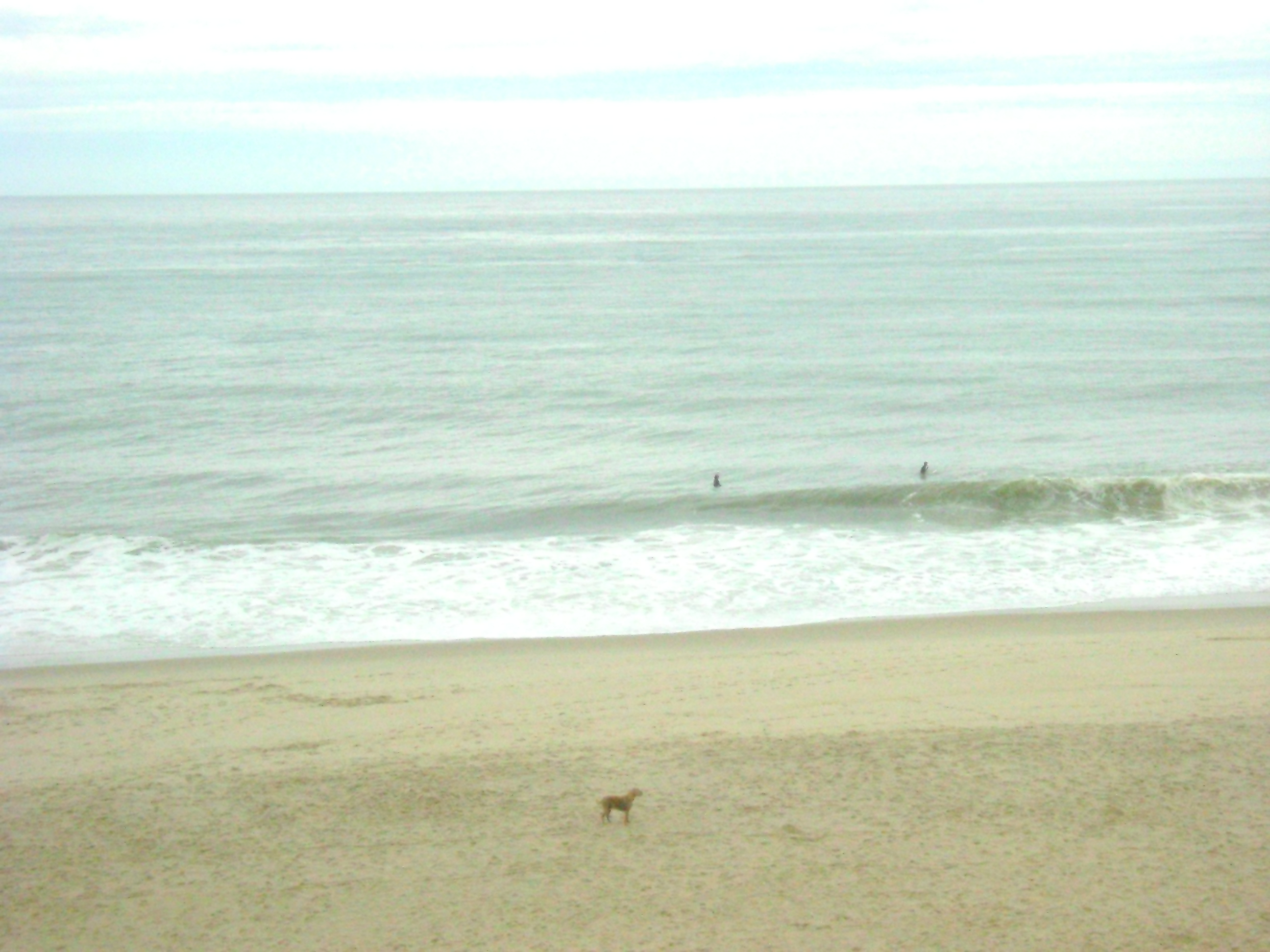
Herring Cove Beach, Provincetown, September 2012. Local seals, my ocean animal friends, coming to greet me and congratulate me on riding through 75 miles of downpour just to come and visit them. On my calm, pleasant days, if I were an animal, I’d be a seal. On my other days, I’d be a tiger.

The remaining images that follow here are what my rides and my time on Cape Cod looked like the rest of the week: full of Magritte skies, the smell of sand toasted all day by the sun, churning waves, the shushing sound of wind moving through the green tufts of bramble and tall grass on the moors, naps on the beach, salt water drying on my skin, the shiny black heads of seals swimming near shore poking their heads up to breathe the air and say hello to us. I’m posting these fair-weather photos partly because they are beautiful, and partly because I hope they will usher in good weather for my long, multi-day journey later this week. Fingers crossed.

Maguire Landing, Wellfleet, Massachusetts, September 2012.

View of the Atlantic from Maguire Landing, Wellfleet, Massachusetts, September 2012.

Low tide, Maguire Landing, Wellfleet, September 2012. The silhouettes on the far left are two boys who zigzagged back and forth, skimming over the shallow pools of sea water with their boards.
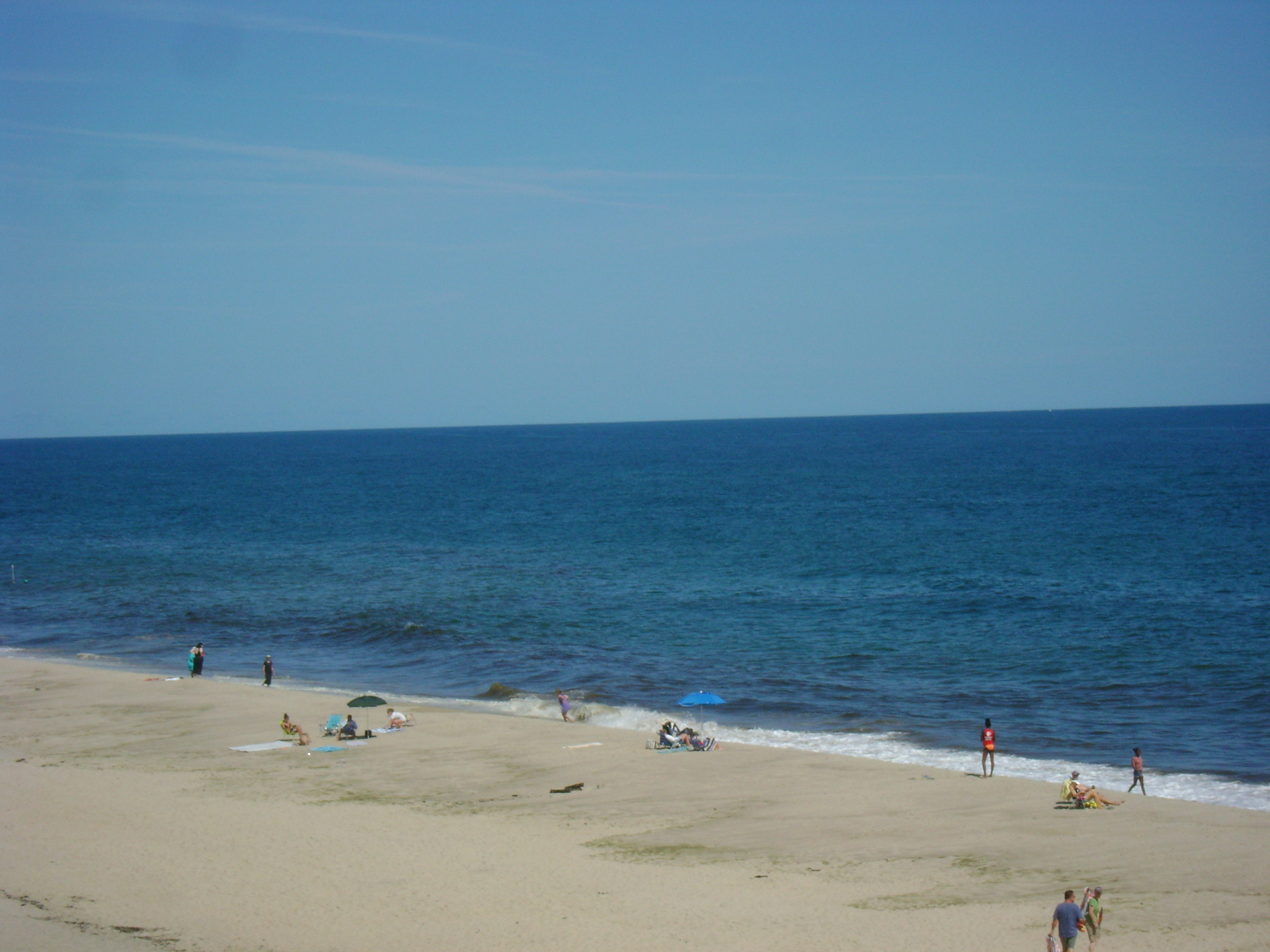
White Crest Beach, Wellfleet, September 2012.

The Atlantic Ocean, from White Crest Beach, Wellfleet, September 2012.

From Route 6A, North Truro, September 2012. The day before I did my century ride, I did a 50-miler (half-century) from Wellfleet through the hilly sections of Truro and up to Provincetown and back. This was taken from the shore road at the crest of a hill from which one can see Provincetown in the distance.

The view of Provincetown center, from Route 6A, the shore road, just over the Truro-Provincetown line, September 2012.
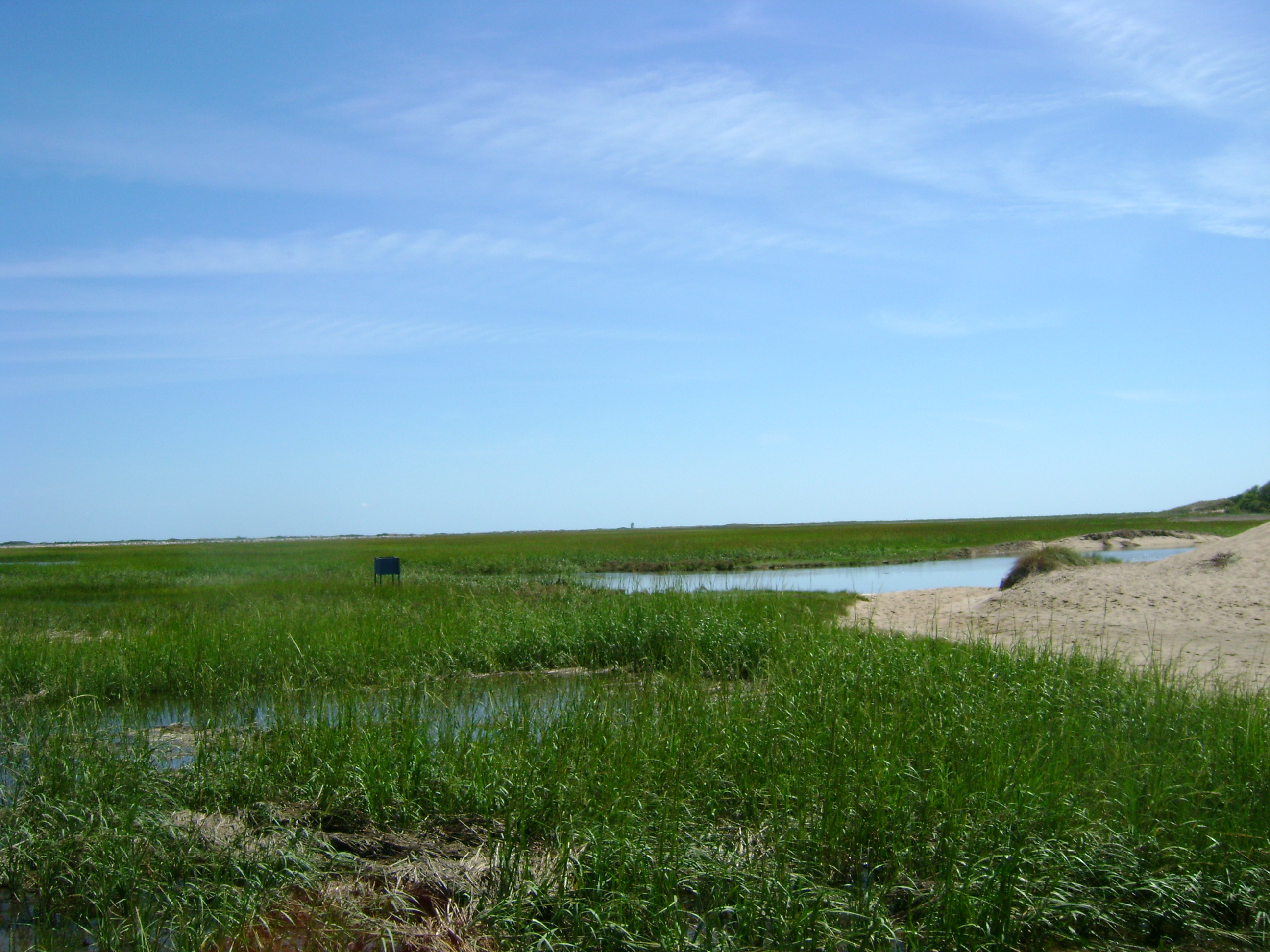
The West End of Provincetown, overlooking the moors. When Jen and I got married in May 2010, in the back garden of a beautiful house across the street from here, this was the view.

Lighthouse (Race Point Lighthouse, I believe?), from the West End moors, Provincetown, September 2012.
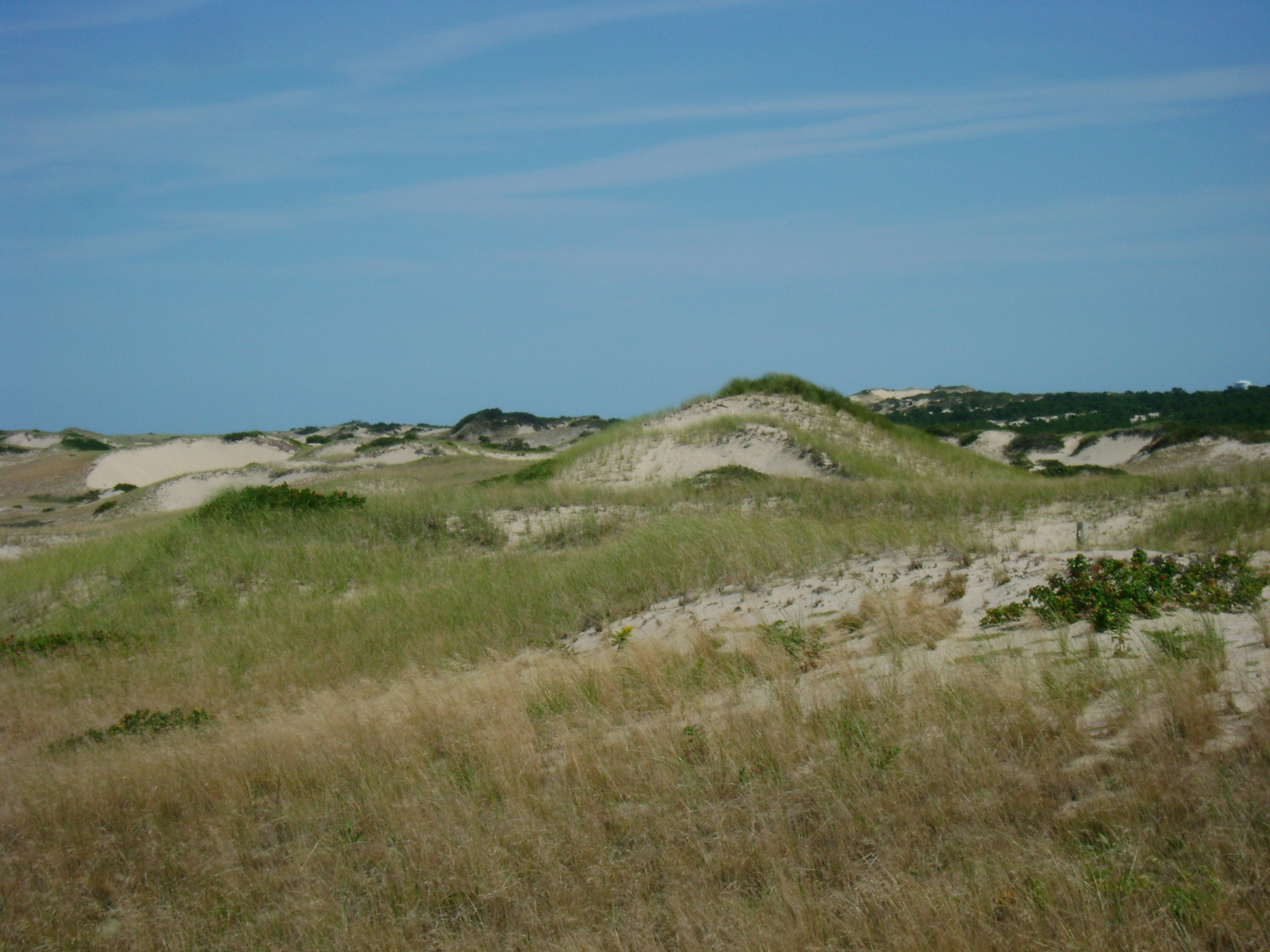
The dunes from the biking trail at Race Point, Provincetown, September 2012.
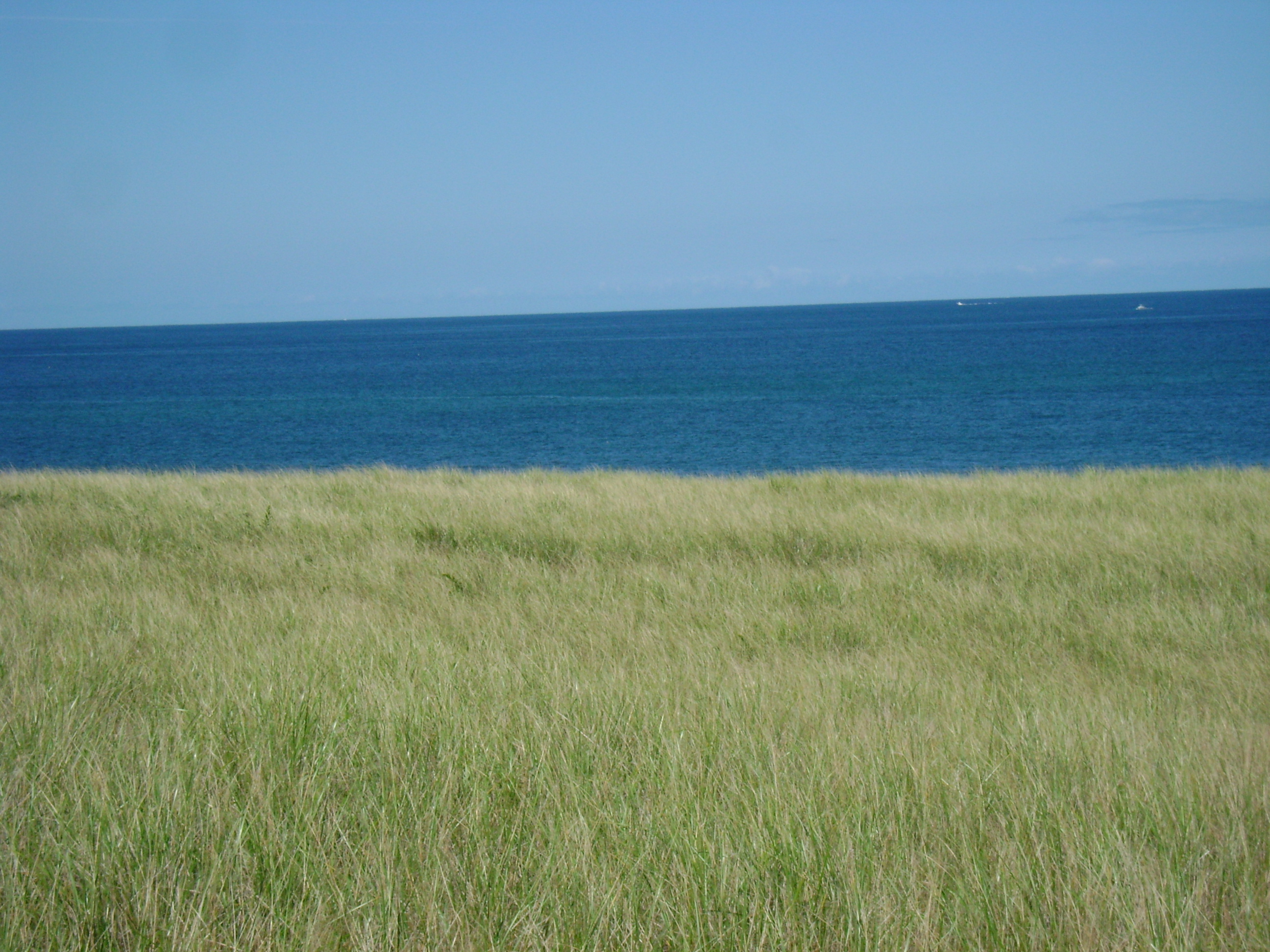
Marsh grasses and the Atlantic, from the biking trail, Race Point Beach, Provincetown, September 2012.

Old Harbor Life Saving Museum, Race Point Beach. Provincetown, September 2012.

Race Point Beach, Provincetown, September 2012. I took a few minutes to rest and admire the landscape before biking back to Wellfleet.

Race Point Beach, Provincetown, September 2012.
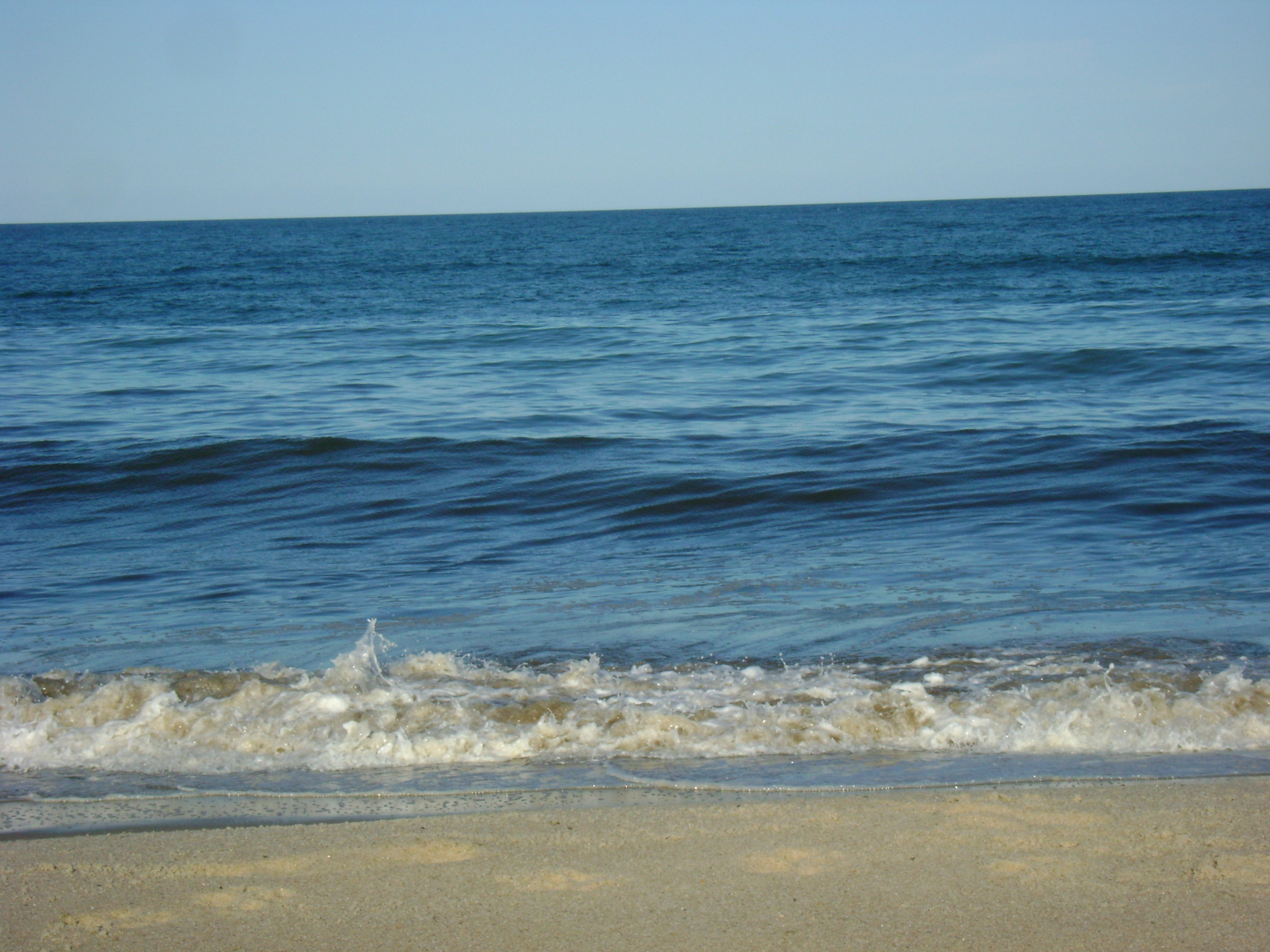
Race Point, Provincetown, September 2012. This is the home at the end of the world to me.

A Bike Training Lesson: Cooking in the Devil’s Kitchen, or, Climbing Platte Clove Road

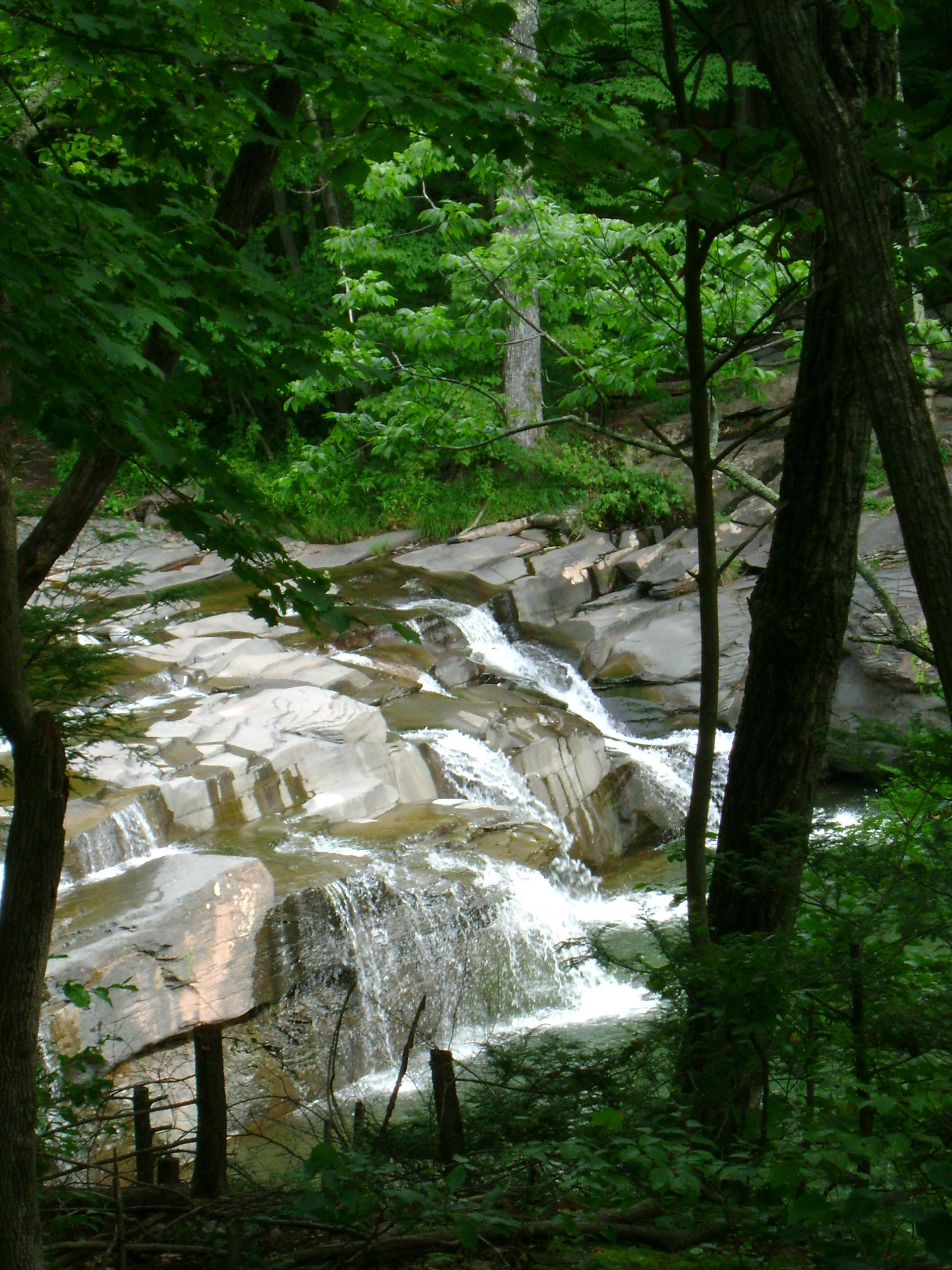
Last month, my partner Jen and I drove up to the Catskills to spend a weekend with friends. The house in Palenville, New York overlooked the Niobe Waterfalls, and we could hearing the sound of the river water cascading over the rocks from every room. The river has several swimming holes, including a spot where I got the equivalent to a deep-tissue massage standing under one of the bigger waterfalls. Even Sadie, our dog, who is something of a princess and not one who takes to water, took a dip.

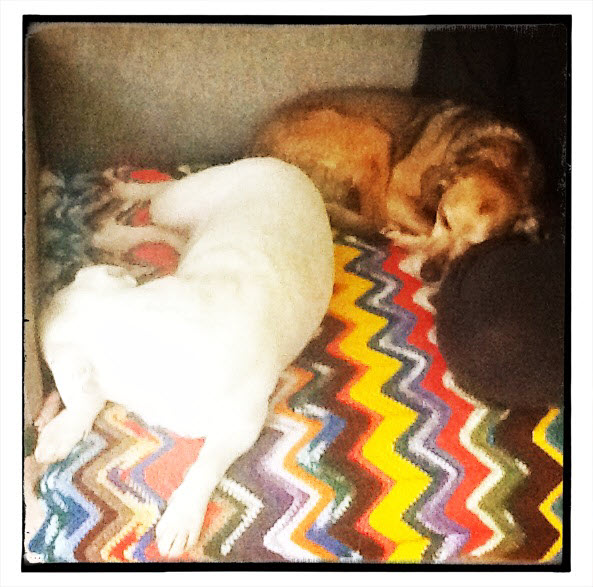
Dexter and Sadie, guarding us from the wild beasts in the woods and in the river, Palenville, New York, August 2012.

Dexter and Sadie, snoozing together, Palenville, New York, August 2012.

The weather was beautiful during the few days we were there. We hadn’t been away all summer, so our main priority was to relax and enjoy time with our friends. No one else besides me was a cyclist, I had done some serious riding the previous weekend, and I didn’t want to spend a full day away from all the people I’d driven up there to spend time with. If this all sounds like a justification for taking a weekend off without doing a long ride, it is. I know that life happens, but during training season, I have to justify, if only to myself, the handful of weekend days I choose not to train, or not to put in a lot of miles.

Niobe Falls, located on the property where we spent a weekend in Palenville, New York, last month.

My concession to myself that weekend was that we were in the mountains. Mountains, as in hills. Big ones. A few years ago, Jen and I had rented a different house in the same area near Woodstock, and while we were there, I did some hill work. As I’ve said before, when cycling up hills, I’ll slow down to a snail’s crawl when I need to, but I don’t stop. This isn’t an act of bravery so much as a survivalist mentality. Once you stop on a hill—because you’re tired, because your muscles give out, because you fall over, because the grade (steepness) is too severe, because you’re out of breath, whatever the reason—it’s even harder to start up it again on the bike. Psychologically and sometimes physically as well. When cyclists are forced to stop mid-hill, more often than not, they end up walking the rest of it.

Niobe Falls, Palenville, New York, August 2012. We could hear the roaring sound of what you see here from every room in the house where we stayed.

The funny thing about the definition of failure in my world is that it only applies to me and my own endeavors and not to other people. Stopping mid-hill and walking the rest carries no stigma, no shame, and no failure—so long as it’s someone else we’re talking about. The trek I made up Meads Mountain Road in July 2010 goes up Overlook Mountain and spans roughly two miles, with around 1,100 vertical feet of climbing. I mention it now because up until last month, that was the hardest climb I’ve ever attempted—the first hill that was so grueling, I had to stop once along the way. The grade had become so steep, I couldn’t complete one of my pedal rotations, and I clipped out and had to stop before I lost my balance. I also almost fell over a second time trying to start again. I weaved and teetered for 10 to 15 feet before I was able to clip into my pedals fully and use my weight to steady myself and start the momentum of pulling myself up again. Stopping and starting again was humbling, but I didn’t end up walking any of it. I made it up to the top on my bike, and at the summit, I rewarded myself with a rest, with my admiration for the view, and then finally, with the joy of coasting down the same hill I’d climbed. In some ways, reaching the top felt even better once I got there because I almost hadn’t made it. When I looked up my route later on online, I found out the grade of Meads Mountain Road exceeded 11% most of the way, with a stretch of some 400 vertical feet with a 13% grade.

View of the valley near Woodstock, New York. Jen and I spent a long weekend here in July 2010, and while we were there, I cycled up Meads Mountain Road, a hill that almost beat me.

Even after cycling a lot for five consecutive seasons, I need a concrete point of comparison to appreciate what hill grades mean. Professionally, I come from an industry that relies on sales numbers to measure success; in that context, percentages below 50% sound small to me. They sound like nothing. Out of context, when I hear a hill has an 8% grade, that doesn’t mean much to me. The percentage is so low, it doesn’t sound too bad. To put these numbers in some perspective:

  • A 0% grade is easy to fathom. It’s flat. Likewise, a grade of 1-2% is barely noticeable.
  • At around 3%, you’ll start to feel the effect. While most riders will zip up inclines of 3-4% fairly easily, hills of this steepness will absorb a fair amount of their power.
  • With a 10% grade, only cyclists in good shape are making it up without having to walk it, and unless they are hard-core racers, they’re struggling and using all their power to do it.

Data on some real-life hills can also help make the impact of grades more palpable and real:

  • The Harlem Hill in the northwest section of Central Park is just shy of one-third of a mile, with 84 feet of vertical climbing at a 4.4% grade. It is regarded by many as the toughest hill in the six-mile outer loop of the park. Runners and cyclists do repeats of this segment for hill-training purposes. For me, it’s a good way to ease my way into the re-entry of a new training season in March and April.
  • Palisades Park’s Alpine Hill, the toughest hill at the northern end of River Road in New Jersey, which I wrote about in a previous post, runs a little over a mile, with 400 feet of vertical climbing and a grade of 7.1%.

    Pro cyclists making their way up Fillmore Street during the San Francisco Grand Prix in 2002. Reportedly, the climb has an average grade of 18%.

  • The Fillmore Street Hill in San Francisco averages at an 18% grade. The photo above of cyclists climbing up this street was taken during the San Francisco Grand Prix, a race that was held annually for five years, from 2001 to 2005. Fillmore Street was considered to be one of the two most challenging hills in the race, whose participants included Lance Armstrong (who didn’t win during any of the five years this race existed, by the way). The other major hill on the course was on Taylor Street, and this is what top cyclist George Hincapie looked like going up it in 2002.
  • The climbs in the Tour de France are slotted into five categories. From easiest to hardest, the first four are Category 4 through Category 1, and they correspond to the gear you’d need to be in to drive an old car up the hill. The toughest is Category HC, which stands for hors catégorie, or “beyond categorization,” and those are so steep, a car can’t traverse it. For some comparison, I looked into the relative levels of difficulty of the hills on the Tour. Of course, one needs to keep in mind that one major factor in the hill categorization is their length; most of these hills span between 4 and 23 kilometers, or between 2.5 miles and 14.3 miles. That said, it’s eye-opening that the average grades on most of these climbs are 6 or 7%, and the steepest portions max out at 11% and 13%.

Mind you, I don’t tend to look up hill grades before I seek out a route. It’s possible I should, but I certainly didn’t when I was in Palenville last month. That Saturday morning, I sipped my coffee and stared out the picture window at the Niobe Falls, then typed in basic search terms for local hills and cycling on my iPad. I researched only enough to discover that Platte Clove Road was seen as challenging and was only about eight miles from the house—perfect for my purposes. I could do some hill work and be back in less than a few hours. I finished breakfast, suited up shortly thereafter, took a couple of puffs on my still-new-ish asthma inhaler, and rode out.

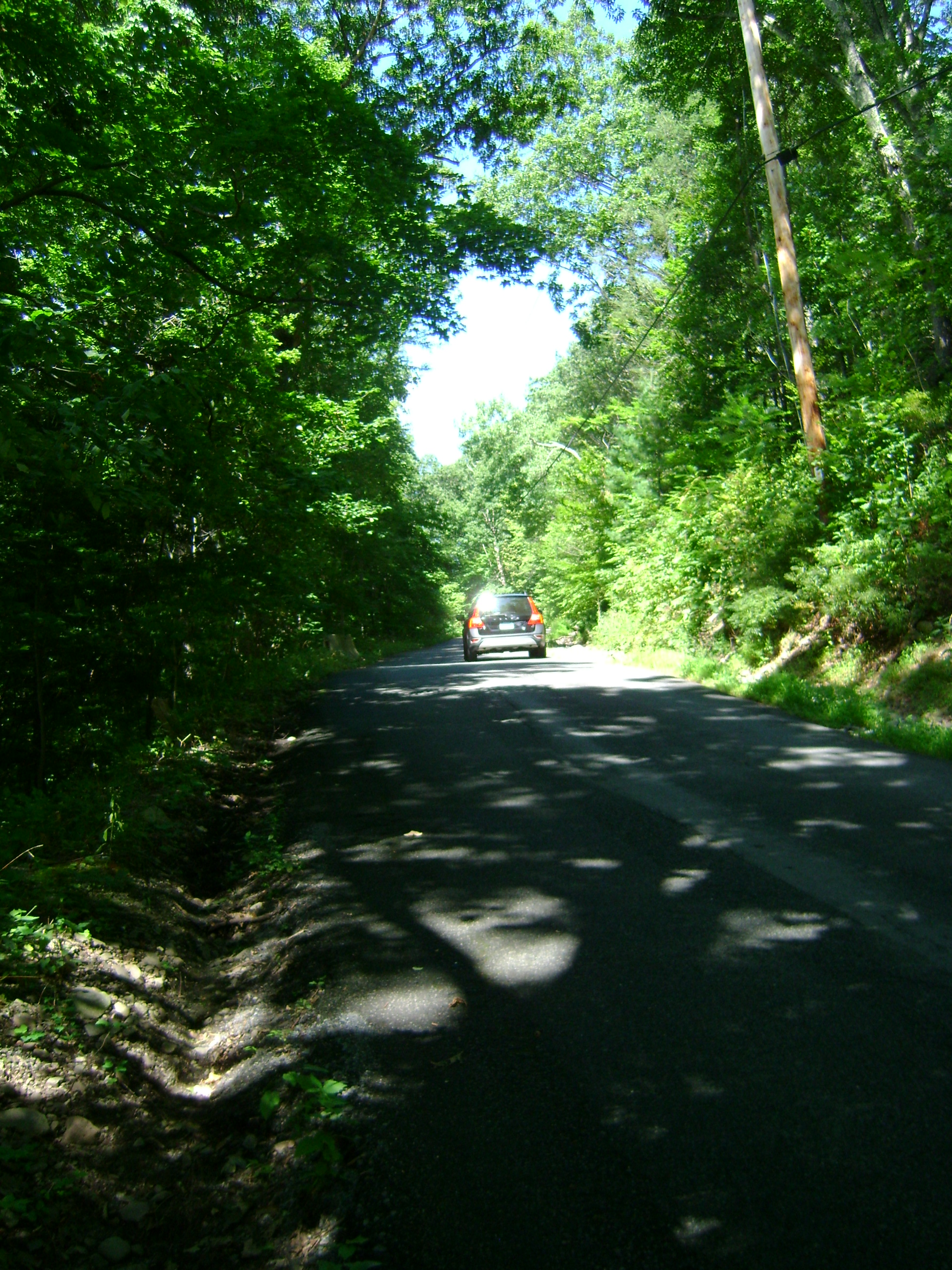
Platte Clove Road/Devil’s Kitchen, Tannersville, New York, August 2012. It’s deceptive, isn’t it? Through a camera lens, it doesn’t look that bad. But it was. And it got harder as I went.

The ride from Palenville to the base of Platte Clove Road in Tannersville is fairly forgiving, mostly flat with a few gentle inclines and rollers. The moment one turns onto Platte Clove, however, the grade shifts. At first it’s deceptively gradual. Then there is a clear point at which the suburban looking houses that are spaced closely together for the first mile stop, the forest tree line begins, and the road grade shifts upward dramatically. Even though the road is paved, there’s no mistaking the fact that you are climbing a mountain. For most of the way up, Platte Clove has no shoulder on either side; it’s just wide enough for two cars to pass each other driving in opposite directions, and in certain places, even that looks iffy. The asphalt ribbon of the road twists and turns, and the overall trajectory and grade shifts move continually up and up, so you can’t gauge how far you are from the peak of a given hill segment much less from the summit. What appears to be a brief crest and decrease in grade turns out not to be.

I didn’t know any of that before I attempted Platte Clove Road. I noticed one or two seasonal signs as I rode: The road is so narrow, so winding, steep, and difficult to navigate that it is closed to all traffic between November 1 and April 15. That was all I knew.

Platte Clove Road beat me. It didn’t take very long either. I was less than a mile into the mountain segment of it before I had to stop. The incline felt more like a wall than a mountain road. I was so short of breath, I thought I’d hyperventilate. Sweat stung my eyes and dropped from my chin, from my elbows. I let myself stand there at the side of the road for long enough to catch my breath, and then I tried to continue. Unlike my Meads Mountain Road climb, however, I couldn’t get going again. I tried, I weaved, and I started to fall over, along with my bike. I couldn’t get enough power to fully rotate the bike pedals.

I don’t know why I didn’t turn around. Stubborn and willful, I begrudgingly walked up the incline instead, for 10, 20, 30 feet. I felt terrible—hot, breathless, exhausted, achy, disappointed. Even pushing my bike while walking up the hill kept me panting. As I walked, I made myself think of all the BTC cyclists I knew who had had to walk up some or all of Mount Archer in East Lyme, Connecticut. I thought of the novice riders I’d seen stopping and walking Harlem Hill, and Alpine Hill, and the tough climb along Route 9W going south out of Piermont, New York and up to the New York-New Jersey state line. They did what they could and stopped when they had to—and then they kept going. They weren’t failures to me, and the world didn’t come to an end when they walked it.

The part that I hadn’t expected was that while the hill didn’t end, or even flatten really, the steepness did ease off ever so slightly. It hadn’t occurred to me that I might walk a portion of the climb, then get back on the bike and cycle up some more of it. I thought, “Maybe that was the worst of it.” I kind of knew I was kidding myself, but at that point, I was willing to say anything to myself to find a way to keep going. When the grade decreased, I got back on the bike and to my surprise, I was able to make a go of it.

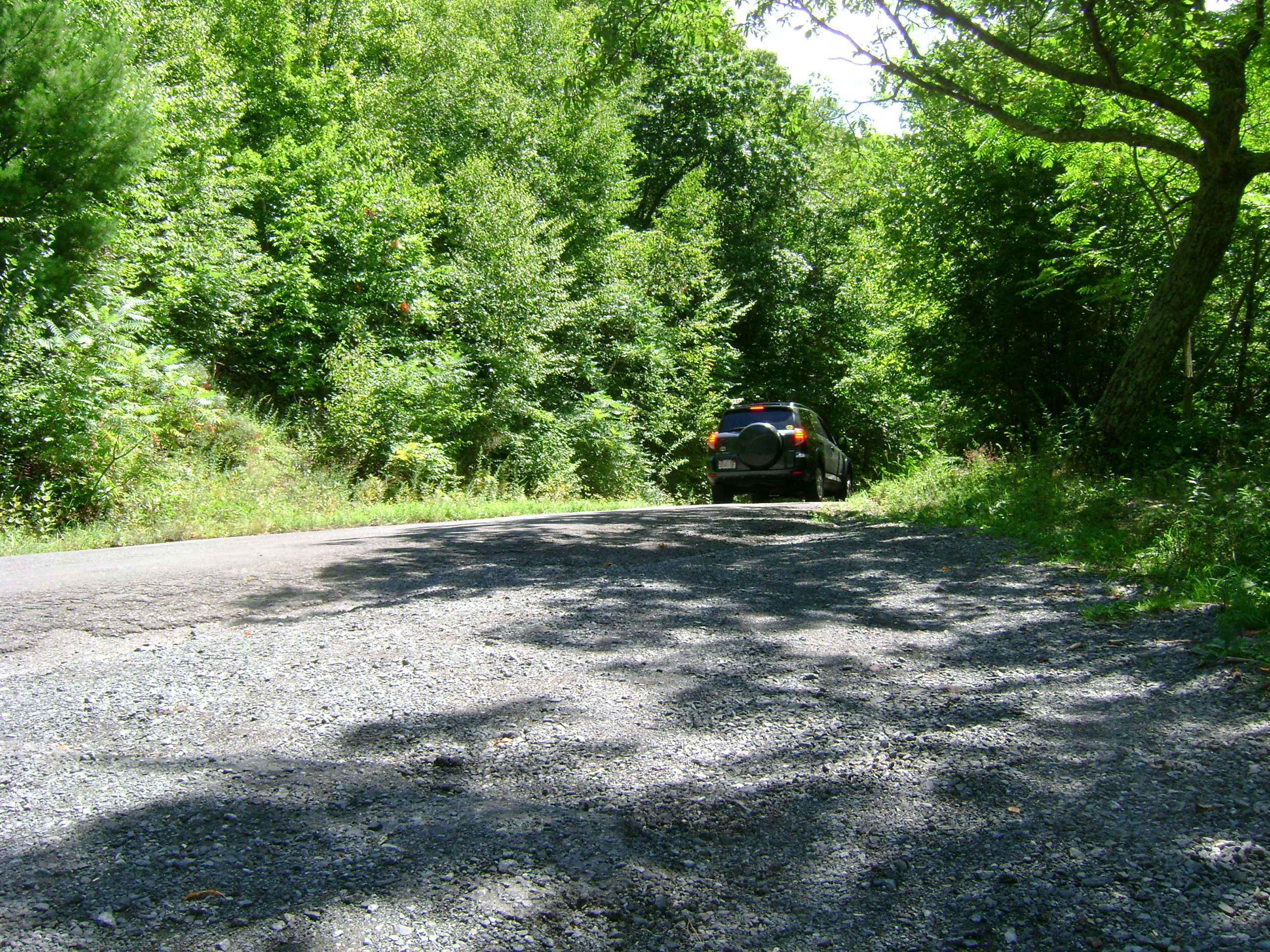
Higher up on Platte Clove Road/Devil’s Kitchen, Tannersville, New York, August 2012.

The satisfaction and relief were short lived. Less than a few minutes later, I had to stop again and get off my bike. This time, I had to pull over to the little ditch on the inner side of the road, and I stayed put for several minutes to catch my breath. A number of cars zipped by, wheezing their way up, most of them taking the curves too fast.

At that point, a big part of me wanted to say, “Fuck it. This hill beat me. I’m done.” I was almost in tears, possibly as much from physical exertion as from disappointment. My lungs were on fire. I looked at my odometer; I was only about nine or 10 miles from the house. I was plagued by the thought of not finishing what I’d come there to do.

Still higher on Platte Clove Road/Devil’s Kitchen, Tannersville, New York, August 2012.

But another part of me was curious. What if I walked a bit, until the steepness dissipated again? Would I be able to climb further? How high could I go using this painful stop-and-go method? Even more, how long would my self-esteem hold out? How much ego-bruising could I stand? Conversely, what might it feel like to keep going in assuming failure, knowing failure, embracing failure and physical pain, repeatedly? What it would be like to sit with and in the belly of disappointment, and still keep going? Would it feel more like failure to stop, rest, and walk again? What if I could continue to walk a bit, then ride a bit, then walk a bit if I needed to? What would happen to me?

I won’t lie. Most of the journey continued to feel lousy. My legs hurt from pedaling uphill for what felt like years. My arms hurt from trying to use my grip to gain some forward stability and momentum. My head ached. I was drenched with sweat. My bike felt like an anvil weighting me down. I felt as small as I ever have.

I did have to stop again. Three times? Maybe four? I don’t recall.

It’s hard to reconstruct what I was thinking as I plodded along. My mind may have drifted off to a Zen place where what was right in front of me was all I could focus on. On some less conscious level, I think I was testing my own dueling senses of agency and despair, as well as my physical limitations. I wanted to allow myself the space to fall short and to choose to sit with whatever that brought—discomfort, sadness, self-doubt. I haven’t been adept at giving myself that latitude and that freedom in other areas in my life. I wanted to do it, not because I wanted to suffer, but because I needed to know I could, and that afterward, I could still pick myself up and start again.

This all seems very obvious in the telling. Like something out of a self-help best-seller I’d never read. Knowing what’s meaningful and true and wise is one thing. Living it is far harder and the journey is more elusive.

People who are battling serious illness have to live some version of Platte Clove every day. The difference is they don’t have the option of getting off whatever rocky, merciless mountain road they’re on in favor of terrain that’s softer on their bodies and their spirits. They get to choose how to face it, battle it, and bear it. They get to choose who and what brings them a level of peace and grace as they traverse a hard, long journey with no maps and little comfort. That’s all. And they get to make those conscious decisions over and over again. That’s real bravery.

I didn’t know I had been in the Devil’s Kitchen until after I finished trying to climb it.

On my way down Platte Clove, the angle of the path was so bumpy and severe, I had to ride my brakes to slow myself down in order to not lose control of the bike. Even the downhill on this one wasn’t any fun. My body stayed tense until I made the left turn back onto the road leading back to the house.

About halfway back to the Waterfall House, I passed a copse of trees, and two deer bounded out to say hello, a doe and her fawn. That was the loveliest moment of the whole ride.

Later on, I did further digging online about the route I’d taken. I found out that the alternate name for Platte Clove Road was Devil’s Kitchen. It spans 2.2 miles and the climb is 1,280 vertical feet, 1,400 if you begin farther east. One website described it as “quite possibly the most hellacious climb in New York State, and one of the most difficult climbs in the Northeast, with over 1,200 feet of climbing, most of it steeper than 12% grade. Several sections exceed 22% grade.” Pro riders in the Tour de Trump reportedly ended up walking sections of it. The short video above is of pro riders making the climb during the Tour of the Catskills race.

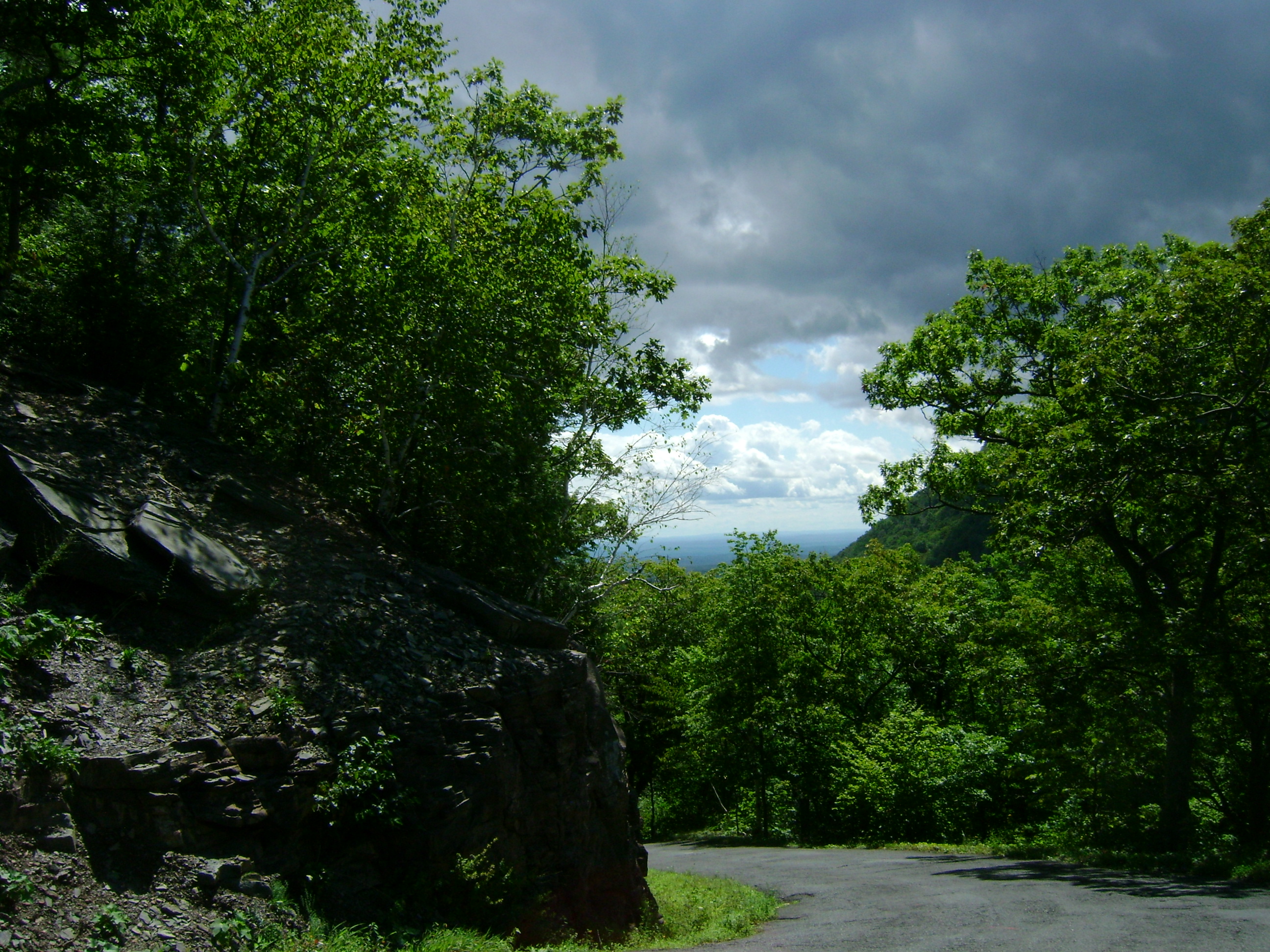
How was the view from Platte Clove when I stopped? As breathtaking and beautiful as it would have been if I had sped all the way up:

The view looking down Platte Clove Road/Devil’s Kitchen, Tannersville, New York, August 2012. This photo doesn’t do it justice. The little bluish strip under the bright spot in the sky at the center of the image is the expanse of the Hudson valley, which was visible for miles into the distance from where I was standing.

View of the neighboring mountain, from Platte Clove Road/Devil’s Kitchen, Tannersville, New York, August 2012.

Sources:

Reasons to Ride, Reason 7 of ??: Braking the Cycle’s 10th Anniversary

This year marks the tenth anniversary of the Braking the Cycle AIDS rides.

Like any milestone anniversary associated with a life-threatening illness, the decade marker for an annual bike ride raising much-needed money to support AIDS/HIV services is a bittersweet one.

I am in awe of the folks at Global Impact Productions who have made this ride happen every year for a decade.

Rider Tommie Stringer, who calls himself “Team Turtle.” I met Tommie on the road during my first Braking the Cycle ride. Unlike me, he is always smiling, and it’s infectious.

I am inspired that the collective efforts of this small community have played a crucial role in saving and bettering the lives of so many who need the help. My inspiration is tempered by the equal amount of sadness I feel that this work has been necessary and even more, that there is any need for the ride to continue into another decade.

Still, I couldn’t be more proud to be part of this band of riders and volunteer crew members. Indeed, I am honored and privileged to ride in it.

I want to call particular note to the size of the BTC group. Braking the Cycle isn’t a big ride; it doesn’t register thousands of people the way the remarkable AIDS/LifeCycle event in California does. Most years, the number of BTC participants falls somewhere between 100 and 150.

That means the feel of the ride itself is intimate and unbelievably well-supported.

Fearless crew leader Christian Miller. He makes it all look so easy. Sadly, during the ride, my first reaction to seeing Christian is to hop on my bike and pedal away from him, given that his presence at a rest stop is usually accompanied by the warning, “Riders, you have 5 minutes to leave this oasis!”

My first BTC ride was in 2008. When I signed up that April, I knew no one. I was willing to go it alone, and I sort of mentally prepared to do so—both the fourth months of training and all three days of the ride itself—but in truth, the prospect of that solitude scared the hell out of me.

Those anxieties were unfounded. By early July, I had over a dozen regular training buddies, some new riders and a number of veterans. During the ride itself, I was equally astonished to discover that I met most of the participants. By Day 2, most riders and crew knew me by name, and vice versa. I met the same people on the road again and again.

This experience was very different from the Pallotta TeamWorks AIDS ride Jen and I did in the late 1990s. The infectious energy of those rides was derived largely from their size; over 3,500 people participated the year we rode. We met a lot of people. On the other hand, we rarely encountered the same ones twice.

My friend Clay Williams, who, like Tommie Stringer, I did not meet until the ride itself. We kept passing each other on the route all three days. Who knew that a conversation about chafing would ever be the beginning of a beautiful friendship?

The comparatively modest BTC stats make these figures all the more impressive:

  • In its first nine years, with participation usually spanning between 100 and 150 riders and crew total each year, Braking the Cycle has delivered over $3 million in support of AIDS/HIV services.
  • In 2011, BTC raised a staggering $462,000.
  • The percentage of returning Braking the Cycle riders every year is mind-boggling. I’m coming back for my fourth year, and every year, at least one-half the participants have done it before.

My tenth anniversary wishes for Braking the Cycle are easy:

  • May we all ride hard, ride proud, and ride safely.
  • May BTC raise a massive sum for Housing Works, this year’s beneficiary.
  • May the BTC ride never reach its twentieth anniversary because the AIDS/HIV epidemic is finally over.